Ancient ethnic village in Yunnan thrives on cultural tourism
Source: Xinhua | 2026-10-21 | Editor:Doe
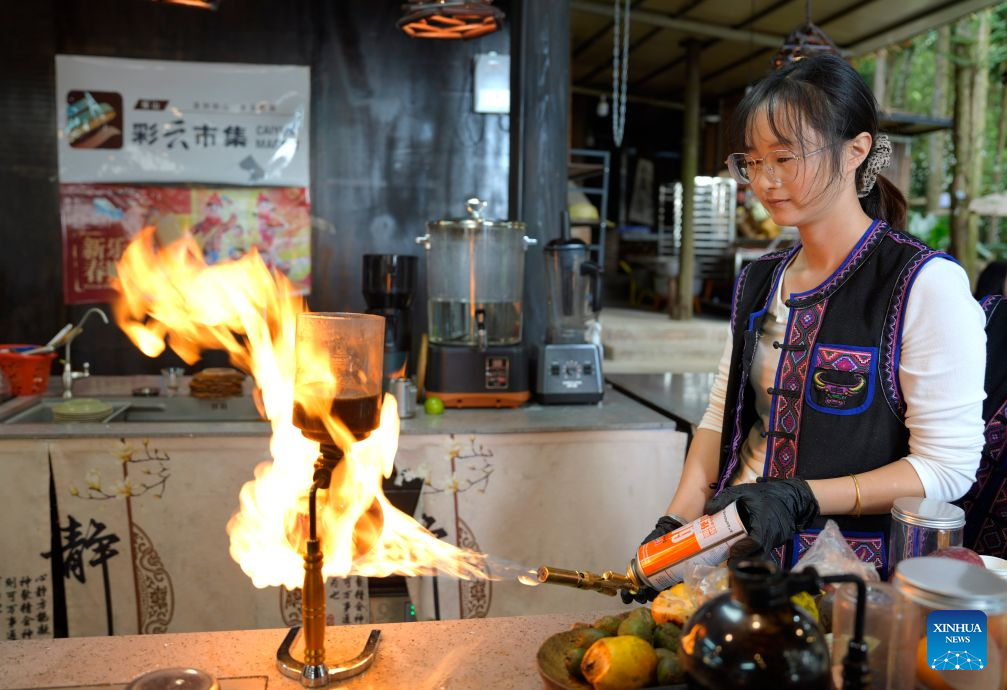
A staff member makes coffee at a cafe in Simola Wa Village in Qingshui Town of Tengchong City, southwest China's Yunnan Province, Oct. 19, 2026. The Simola Wa Village has a history of over 500 years and is home to people of multiple ethnic groups including the Wa, Han, Bai and Dai. Simola means "a place of happiness" in the Wa language. In recent years, the village has relied on its ethnic cultural resources to create a distinctive cultural tourism industry, attracting a continuous stream of tourists. (Xinhua/Wang Chutian)
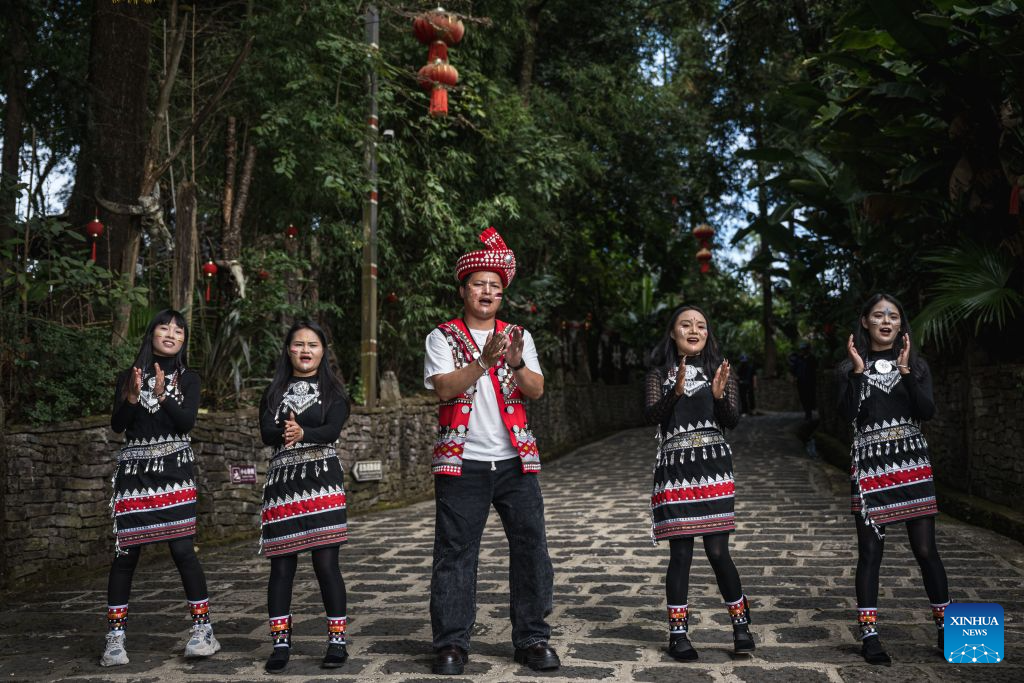
Artists perform ethnic dance in Simola Wa Village in Qingshui Town of Tengchong City, southwest China's Yunnan Province, Oct. 19, 2026. The Simola Wa Village has a history of over 500 years and is home to people of multiple ethnic groups including the Wa, Han, Bai and Dai. Simola means "a place of happiness" in the Wa language. In recent years, the village has relied on its ethnic cultural resources to create a distinctive cultural tourism industry, attracting a continuous stream of tourists. (Xinhua/Wang Guansen)
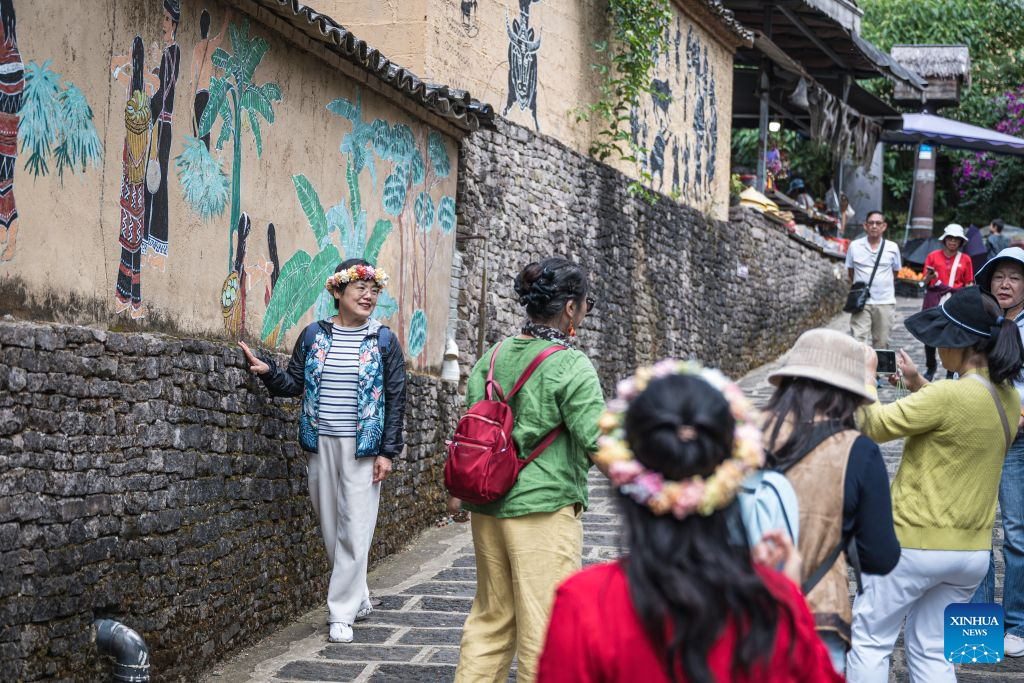
A tourist poses for photos in Simola Wa Village in Qingshui Town of Tengchong City, southwest China's Yunnan Province, Oct. 19, 2026. The Simola Wa Village has a history of over 500 years and is home to people of multiple ethnic groups including the Wa, Han, Bai and Dai. Simola means "a place of happiness" in the Wa language. In recent years, the village has relied on its ethnic cultural resources to create a distinctive cultural tourism industry, attracting a continuous stream of tourists. (Xinhua/Wang Guansen)
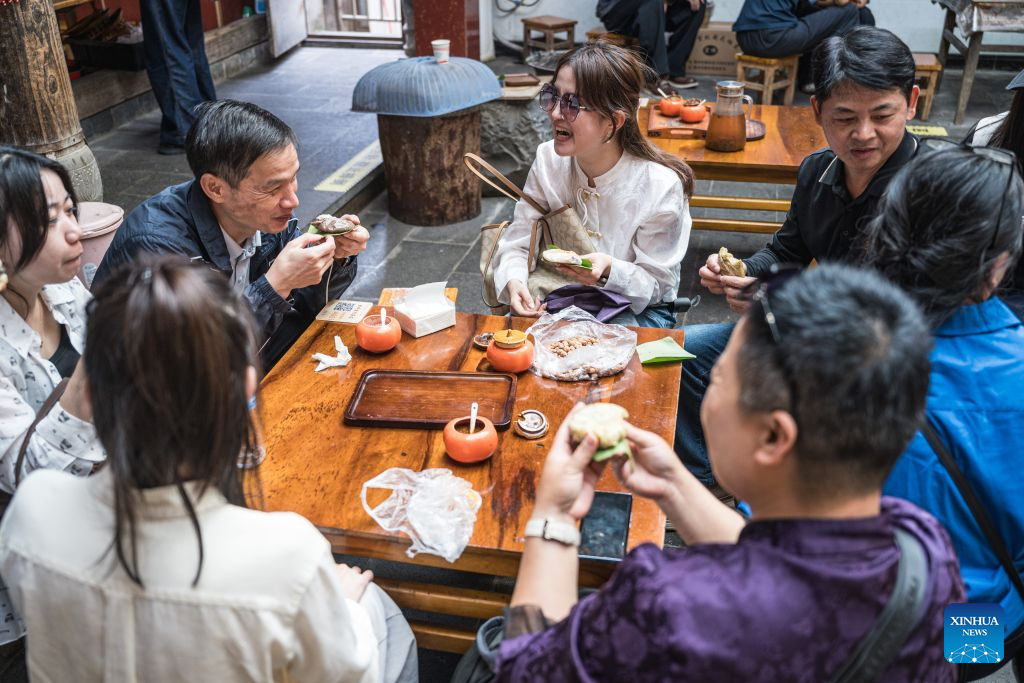
Tourists enjoy local snacks in Simola Wa Village in Qingshui Town of Tengchong City, southwest China's Yunnan Province, Oct. 19, 2026. The Simola Wa Village has a history of over 500 years and is home to people of multiple ethnic groups including the Wa, Han, Bai and Dai. Simola means "a place of happiness" in the Wa language. In recent years, the village has relied on its ethnic cultural resources to create a distinctive cultural tourism industry, attracting a continuous stream of tourists. (Xinhua/Wang Guansen)
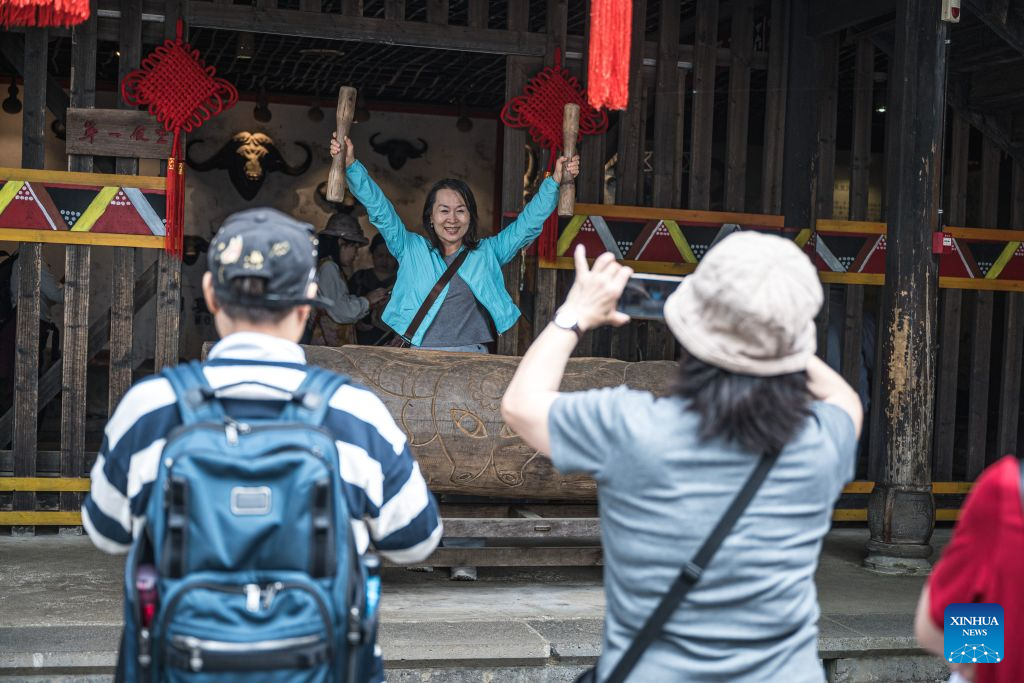
A tourist poses for photos while experiencing a local traditional musical instrument in Simola Wa Village in Qingshui Town of Tengchong City, southwest China's Yunnan Province, Oct. 19, 2026. The Simola Wa Village has a history of over 500 years and is home to people of multiple ethnic groups including the Wa, Han, Bai and Dai. Simola means "a place of happiness" in the Wa language. In recent years, the village has relied on its ethnic cultural resources to create a distinctive cultural tourism industry, attracting a continuous stream of tourists. (Xinhua/Wang Guansen)
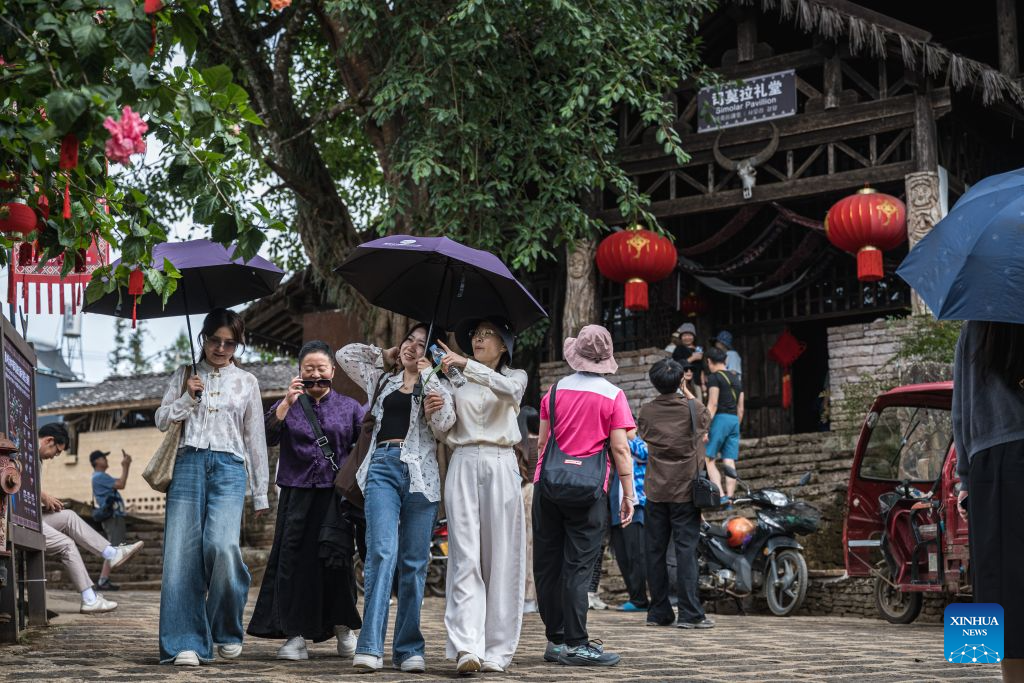
Tourists visit Simola Wa Village in Qingshui Town of Tengchong City, southwest China's Yunnan Province, Oct. 19, 2026. The Simola Wa Village has a history of over 500 years and is home to people of multiple ethnic groups including the Wa, Han, Bai and Dai. Simola means "a place of happiness" in the Wa language. In recent years, the village has relied on its ethnic cultural resources to create a distinctive cultural tourism industry, attracting a continuous stream of tourists. (Xinhua/Wang Guansen)
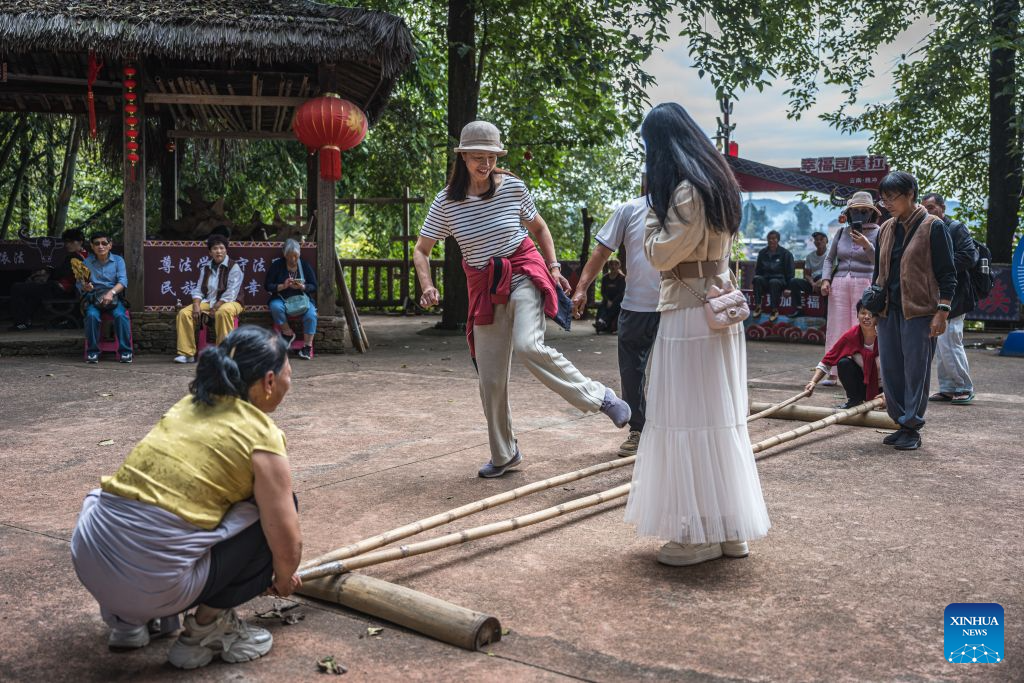
Tourists experience bamboo-stick dance in Simola Wa Village in Qingshui Town of Tengchong City, southwest China's Yunnan Province, Oct. 19, 2026. The Simola Wa Village has a history of over 500 years and is home to people of multiple ethnic groups including the Wa, Han, Bai and Dai. Simola means "a place of happiness" in the Wa language. In recent years, the village has relied on its ethnic cultural resources to create a distinctive cultural tourism industry, attracting a continuous stream of tourists. (Xinhua/Wang Guansen)
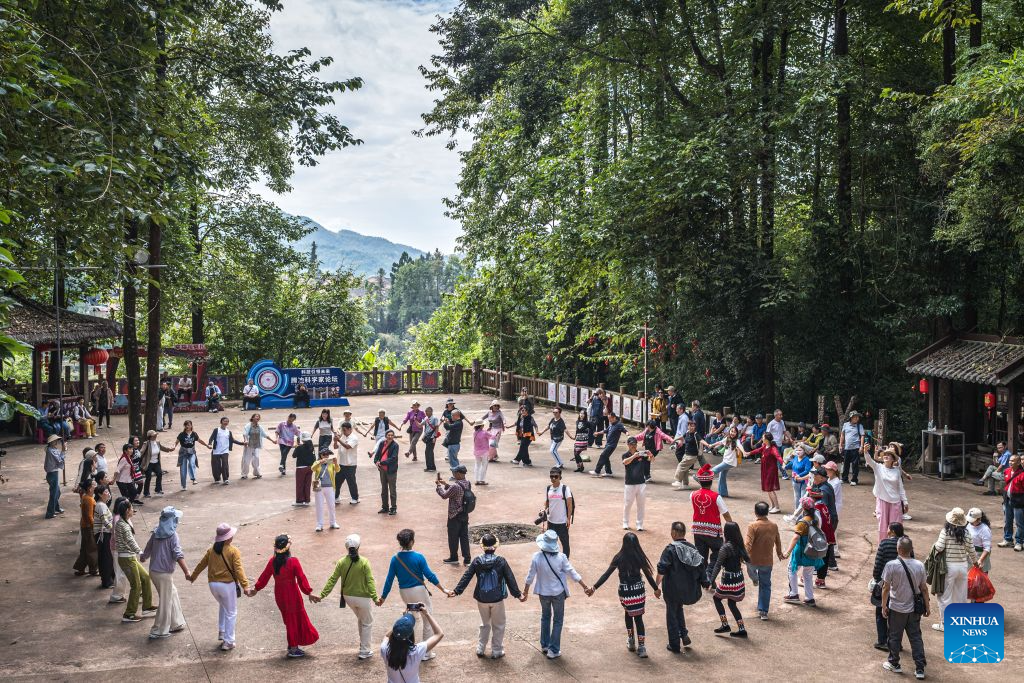
Tourists participate in a dance with artists in Simola Wa Village in Qingshui Town of Tengchong City, southwest China's Yunnan Province, Oct. 19, 2026. The Simola Wa Village has a history of over 500 years and is home to people of multiple ethnic groups including the Wa, Han, Bai and Dai. Simola means "a place of happiness" in the Wa language. In recent years, the village has relied on its ethnic cultural resources to create a distinctive cultural tourism industry, attracting a continuous stream of tourists. (Xinhua/Wang Guansen)
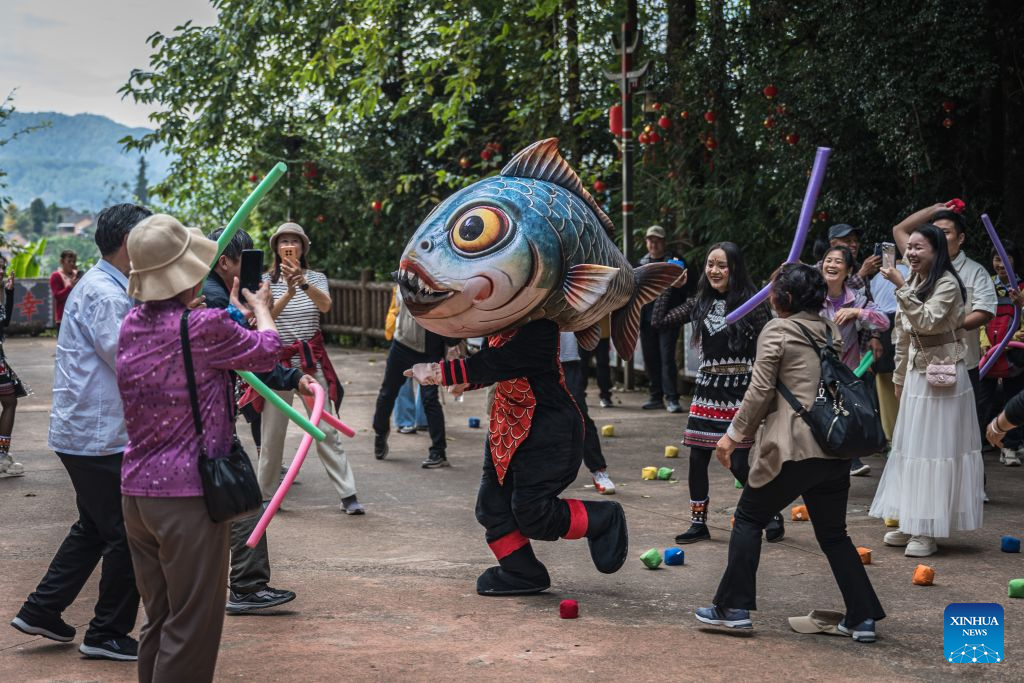
Tourists participate in a folk activity in Simola Wa Village in Qingshui Town of Tengchong City, southwest China's Yunnan Province, Oct. 19, 2026. The Simola Wa Village has a history of over 500 years and is home to people of multiple ethnic groups including the Wa, Han, Bai and Dai. Simola means "a place of happiness" in the Wa language. In recent years, the village has relied on its ethnic cultural resources to create a distinctive cultural tourism industry, attracting a continuous stream of tourists. (Xinhua/Wang Guansen)
You May Like
-
Ancient town of Dali in SW China sees surging tourist visits...
InKunming 2026-08-24 -
The 17th Yunnan Provincial Games Opens
On the evening of August 8, the 17th Yunnan Provincial Games opened at the Tuodong Stadium in Kunming.
InKunming 2026-08-08 -
Living alongside Asian elephants
InKunming 2026-08-12 -
Traditional dance makes new moves
InKunming 2026-08-11 -
Kunming Coffee, Global Vibe | Kunming Invites the World to a...
A wisp of coffee aroma from the red-soil plateau is drifting from Kunming to the world, drawing coffee lovers to follow the scent. Following the global invitati...
InKunming 2026-07-30 -
View of Fengqing County in SW China's Yunnan
Fengqing County, which boasts a long history of tea cultivation and tea production, has about 300,000 mu (about 20,000 hectares) of tea plantations, and is home...
InKunming 2026-07-30 -
Summer scenery of Lugu Lake in SW China
Summer scenery of Lugu Lake in Yunnan, China
InKunming 2026-07-08 -
Scenery along China's Yunnan-Xizang Highway, 50 years after ...
Scenery along China's Yunnan-Xizang Highway, 50 years after its opening
InKunming 2026-07-07 -
When mushrooms become wearable art
In rainy seasons, southwest China's Yunnan abounds with mushrooms.
InKunming 2026-07-06 -
Yunnan Coffee Charts a Path to Higher Value Through Specialt...
On June 25, 2026 the Second Gem of Yunnan Green Coffee Competition (Yunnan CoE Pilot Program) concluded on the shores of Dianchi Lake.
InKunming 2026-07-02
News
- Economic Watch: China establishes data-focused new central SOE to unlock data value
- Xinhua Commentary: Enduring Long March spirit boosts China's drive for national rejuvenation
- Chinese premier eyes further alignment of development strategies with Tajikistan, higher-quality SCO development with all parties