Kunming Welcomes Peak Season for Spring Delicacies as Wild Mountain Flavors Hit the Market
Source: InKunming | 2026-03-18 | Editor:Flynn
As spring unfolds in March, seasonal delicacies have taken center stage. With temperatures continuing to rise, Kunming has entered its annual peak season for "eating spring," a cherished local tradition of savoring fresh spring ingredients. From the bustling Zhuanxin Wet Market to the neat, brightly lit shelves of supermarkets, a dazzling array of wild spring vegetables and edible blossoms—including Chinese toon sprouts (Xiang Chun), common broom, and birch-leaved pear blossoms—has filled the markets. These seasonal specialties have not only claimed the spotlight in local markets but also become trending topics on social media, turning into "limited-edition tastes of spring" eagerly sought after by both residents and visitors.
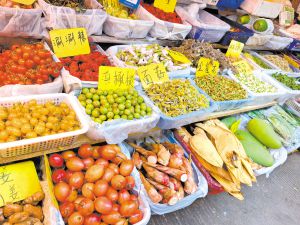
Mid-March visits to several of Kunming’s major farmers’ markets and supermarkets revealed that as locally grown spring vegetables entered their peak harvest period, market supply increased significantly, filling shoppers’ baskets with the fresh, tender flavors of spring.
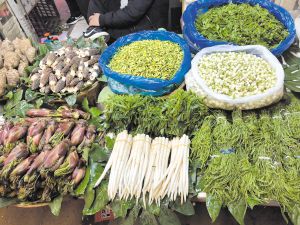
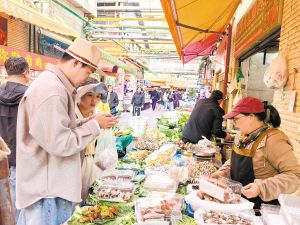
As a bellwether for Kunming’s spring cuisine, Zhuanxin Wet Market is brimming with the vitality of the season. Purplish-red Chinese toon sprouts are tied into small bunches, while golden common broom and glossy white birch-leaved pear blossoms are artfully arranged side by side. More niche spring specialties, such as mulberry flowers and goji shoots, have also made their appearance, drawing large numbers of residents and tourists who stop to select and purchase. The lively chorus of price inquiries and vendors’ calls creates a vivid tableau of urban spring life.
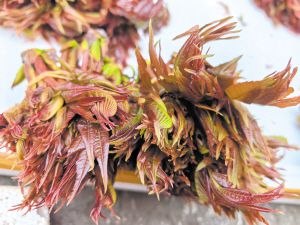
In terms of pricing, as output has risen, the prices of the highly popular Chinese toon sprouts and common broom have fallen markedly from their initial market debut. According to vendors, Chinese toon sprouts are now generally selling for 40 to 50 yuan per kilogram at Zhuanxin Wet Market, with some stalls advertising "8 yuan per bunch, 15 yuan for two bunches" to attract customers. When they first hit the market last month, however, they could fetch as much as 150 yuan per kilogram. The price of common broom has likewise dropped sharply and now ranges from 120 to 180 yuan per kilogram depending on quality, down substantially from over 200 yuan when first introduced. Besides these two star products, Ottelia Acuminata sells for about 10 yuan per bunch, while birch-leaved pear blossoms cost around 25 yuan per kilogram.
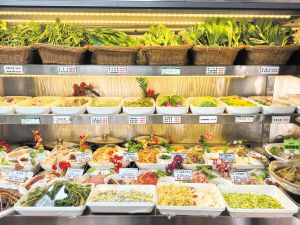
It is also worth noting that supermarkets have become an important channel for residents to buy spring vegetables. At stores such as Freshippo, these seasonal products are displayed on shelves with standardized packaging. Chinese toon sprouts, priced at 5.9 yuan per 100 grams, are roughly in line with prices at traditional markets. Their consistent quality and convenient shopping experience are especially popular with young office workers. Many restaurants have also seized the seasonal opportunity to launch "spring blossom banquets," combining the freshness of wild vegetables with local culinary expertise. Dishes such as chilled Chinese toon sprouts salad and stir-fried dendrobium flowers with lily bulbs are being served, allowing visitors to savor through their taste buds what locals describe as "Yunnan: A many-splendored life."
The strong sales of spring vegetables are not just reflected in people’s shopping baskets; they also mirror the city’s consumer vitality and cultural identity. On March 12, the topic "Yunnan switches into limited-time mode for eating flowers and greens" trended on Kunming’s local Weibo hot list, striking a chord with the general public. Ms. Liu, a tourist from Hunan, said excitedly while choosing common broom at Zhuanxin Wet Market, "After admiring flowers, you can even eat them—in Kunming dialect, that’s absolutely banzha!" For many out-of-town visitors, identifying, selecting, and learning to cook these unique spring vegetables at farmers’ markets has become a distinctive immersive travel experience.
This season-following food culture not only showcases the rich biodiversity of Yunnan, known as the "Kingdom of Plants," but also conveys Kunming’s everyday warmth and romantic charm to more people through the flavors of spring. In this sense, "savoring spring freshness" is gradually becoming a new hallmark of the city’s spring tourism. As temperatures continue to rise, the supply of local spring vegetables is expected to increase further, meaning Kunming’s seasonal tradition of "eating flowers and greens" will last for some time. Amid this vibrant scene of springtime feasting, both residents and visitors are delighting in nature’s generous gift.
(Editors: Rachel,Flynn)
You May Like
-
Settle in the Countryside: A New Way to Experience Kunming
This spring, Wang Ning, Secretary of the CPC Yunnan Provincial Committee, once again wrote a reply to netizens, inviting them to Yunnan to “settle down, start ...
InKunming 2026-03-10 -
Cai claims first gold for China
Chinese Paralympic skier Cai Jiayun is known for two things: a wide, boyish grin that carries him through the grind of training, and a quick temper that once th...
InKunming 2026-03-10 -
Yunnan extends a global invitation: Live, innovate, and purs...
Recently, many travelers on social media have joked about experiencing a curious “Yunnan hangover.”
InKunming 2026-03-10 -
Lineage woven in threads
More than 58 years ago, 16-year-old "educated youth" Deng Qiyao, born in Kunming, Southwest China's Yunnan province, was sent to the China-Myanmar border, a reg...
InKunming 2026-03-06 -
Yunnan border railway station sees surge in Vietnamese touri...
Cross-border tourism between China and Vietnam has surged so far this year, with a railway station on the China–Vietnam border handling over 10,000 Vietnamese ...
InKunming 2026-03-05 -
A Letter from Kunming: How the Spring City Wins Hearts World...
There is always a city that captivates the world at first sight. In February 2026, the "A Letter from Kunming" international communication series event was offi...
InKunming 2026-03-05 -
From The Long Season to Good Times: Why Are Directors Obsess...
As the heartwarming period drama Good Times gains popularity, its depiction of the warmth of everyday life and stories of years gone by is quietly bringing a sm...
InKunming 2026-03-04 -
Mountain quest reveals hidden riches
A convoy of off-road vehicles was winding its way up the mountain road, kicking up clouds of dust that obscured the view. Suddenly, it came to a halt. Wang Tian...
InKunming 2026-03-04 -
Unlocking the "Sister-City Code": A Video Greeting Reveals t...
agreements were exchanged via mail, formally establishing Kunming and Dietzenbach as sister cities. 直到2019年11月14日
InKunming 2026-02-28 -
Spring scenery of Dianchi Lake attracts tourists in SW China...
This photo taken on Feb. 26, 2026 shows the scenery of the Dianchi Lake in Kunming City, southwest China's Yunnan Province.
InKunming 2026-02-27