Y-20 carries pride of nation
Source: China Daily | 2026-06-29 | Editor:Flynn
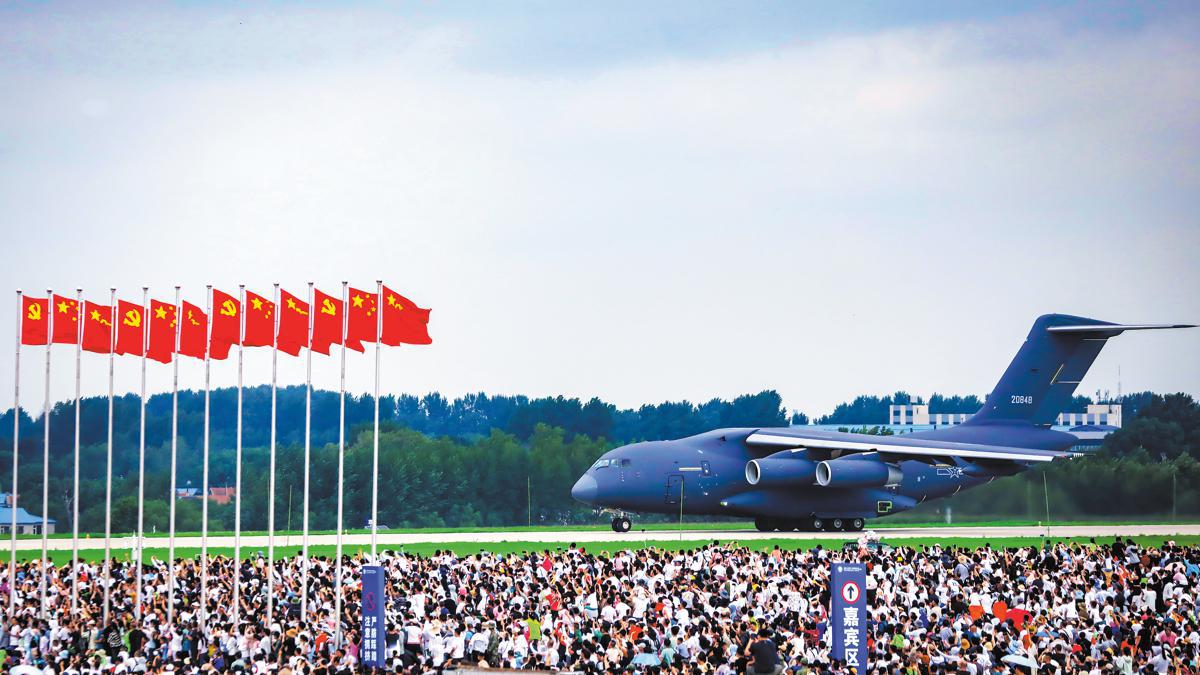
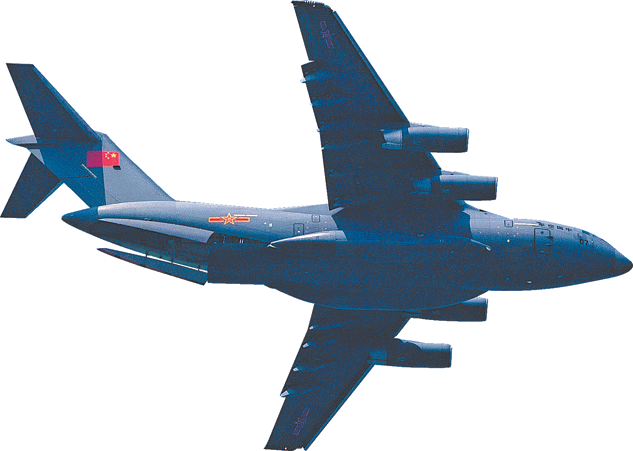
A YY-20A aerial tanker participates in an Air Force open-day event in September in Changchun, Jilin province, last year. TAN SICHENG/FOR CHINA DAILY
Blue signs with white lettering line the staircase of a barracks of an aviation regiment of the People's Liberation Army Air Force — a passage aircrews climb every day. Posted in Chinese and English, they bear phrases pilots must memorize for international operations: "Startup approved", "Cleared for takeoff", "Expedite climb to 1,800 meters".
The signs are a marker of the regiment's international pivot. A decade ago, overseas missions were rare. Pilots could go years without speaking English on the radio. Today, the heavy-lift Y-20 transport plane — capable of flying 4,400 to 4,500 kilometers with a 66-metric-ton payload — has carried the PLA Air Force to more than 40 countries and regions.
A Y-20 transport plane conducts an airdrop exercise. TAN SICHENG/FOR CHINA DAILY
"The Y-20 is a milestone not because it flies, but because it answers to no one — and carries everything we need," said Colonel Pang Rongqi, commander of the regiment.
The Y-20, nicknamed "Kunpeng" after a mythical Chinese giant bird, is China's first homegrown large military transport aircraft. The project started in 2007 by the Aviation Industry Corporation of China's Xi'an Aircraft Industrial Group Co. The prototype first flew in 2013 before entering service in 2016.
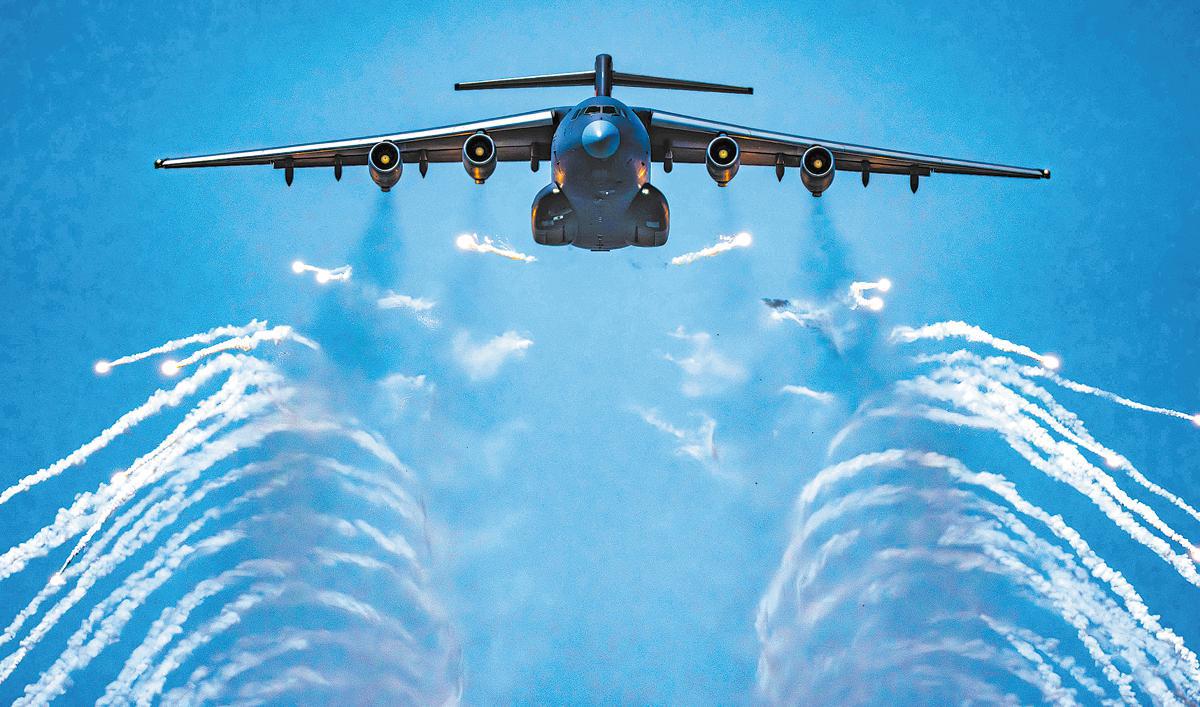
A Y-20 plane releases flares during an exercise. WU LONGFEI/FOR CHINA DAILY
With a maximum takeoff weight of 220 tons and a payload of 66 tons, Chinese pilots affectionately call it "Chubby Girl" for its wide fuselage.
Behind the nickname is a machine that has fundamentally reshaped China's ability to project power beyond its borders.
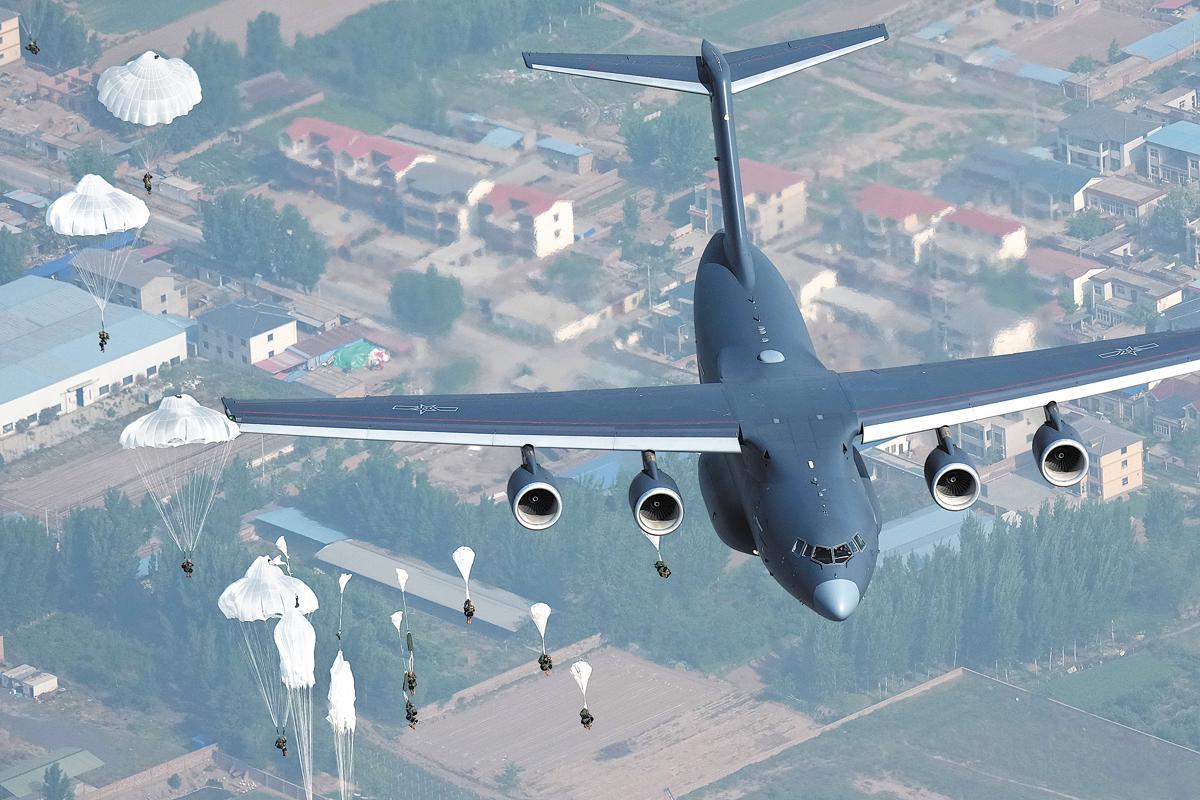
Paratroopers jump out of a Y-20B plane during an exercise. YU HONGCHUN/FOR CHINA DAILY
Global footprint
The regiment's expanding capabilities have translated into a growing global footprint. Pilot Liu Jiajun, one of the regiment's most well-traveled young aviators, said overseas missions have become routine. "We have more overseas missions now than ever before," he said. "The English requirement has become very high."
The most telling measure of the Y-20's impact is the reaction it draws abroad. Pilot Zhao Yingkun, who previously flew the Il-76 before converting to the Y-20 in 2020, said the difference is palpable. "When I flew the Il-76 on overseas missions, Chinese communities abroad were proud to see our flag — yet the plane beneath it was not ours," he said."Now, with the Y-20, we are not just showing a flag — we are showing China's comprehensive aerospace strength."
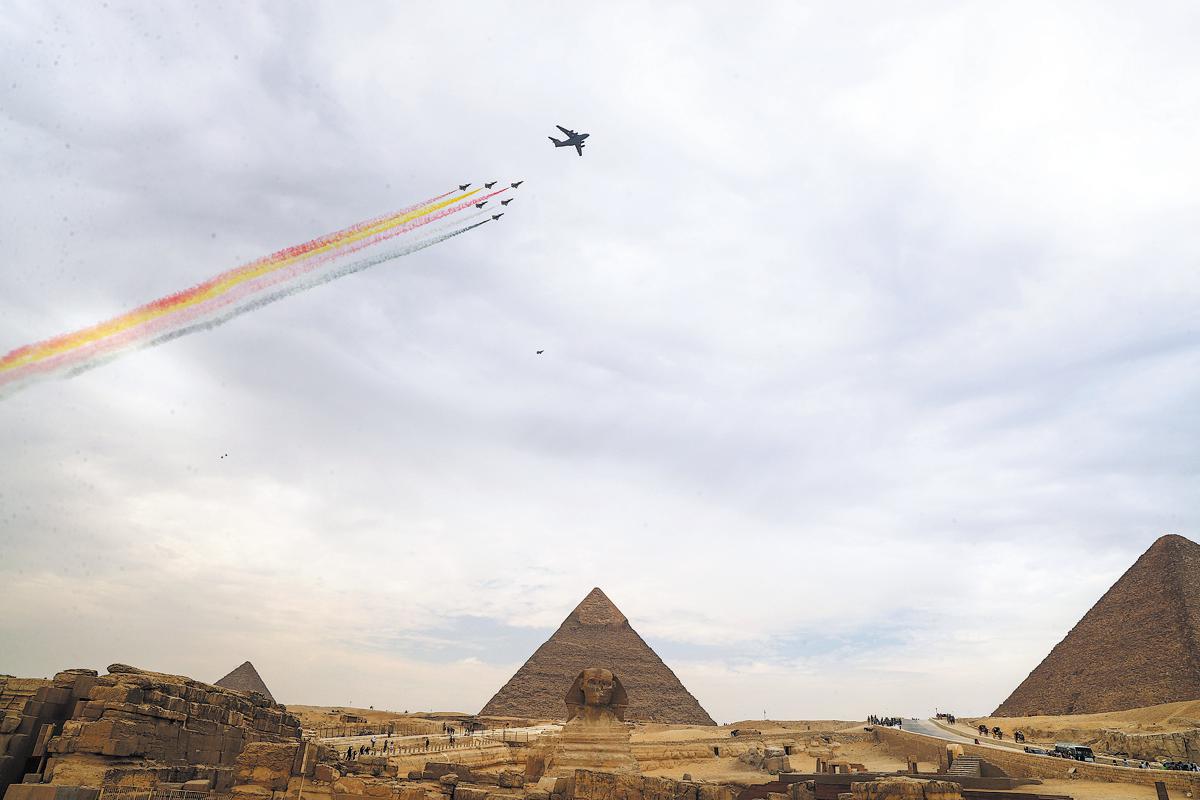
A fleet of one Y-20 transport plane and six J-10 fighters flies over the Sphinx and pyramids in Giza, Egypt, on Aug 28, 2024, upon invitation to participate in the Egypt International Airshow. SUI XIANKAI/XINHUA
Zhao's most memorable mission came in 2024, when he led seven J-10 aerobatic demonstrator aircraft from China to Saudi Arabia for a defense exhibition — a 4,000-km journey. "It was a boundary-testing mission," he said. "It extended our operational radius and proved what this platform can do."
At the Saudi showground, foreign military enthusiasts and experts crowded around the Y-20.
"China is no longer a country that has to borrow designs from foreign-made weapons decades ago. They ask when they can buy our Y-20," Zhao said.
"I stand on the shoulders of giants," he said. "My predecessors gave us a solid foundation. Now we must study this machine thoroughly and build tactics for the future. China's air force must go global — and our equipment must go with it."
Humanitarian missions test the Y-20's tactical boundaries as much as any exercise — and the dangers are real. Technician Zhang Yichao, the regiment's youngest engineer, was on the 2022 mission to deliver relief supplies to Tonga after a volcanic eruption. "We packed the cargo hold as full as we could — every bit of space," the 30-year-old said."We flew across five time zones, a combined total of more than 40,000 km." The flight encountered severe weather — heavy rain, thunderstorms and turbulence. "I remember the rain hitting the fuselage — it was loud, unforgettable. You don't think of humanitarian missions as dangerous, but every flight has its risks."

Soldiers escort caskets containing the remains of Chinese People's Volunteers martyrs in Shenyang, Liaoning province, in September. A Y-20 plane had carried the remains of 30 CPV martyrs who died during the War to Resist US Aggression and Aid Korea (1950-53). WANG HONGFEI/FOR CHINA DAILY
Taking the lead
The regiment operates all three variants of the Y-20 — the original Y-20A, the Y-20B with domestically developed WS-20 engines, and the YY-20A aerial tanker. The Y-20B, which entered service in 2024, represents a milestone as every electronic component, every line of software code, and every engine is made in China."The Y-20B has achieved full domestic production," said Yang Shushuai, an airborne mechanic whose unit was the first to receive the new variant. "The WS-20 engine is fully independently designed and manufactured. The electronic components are all domestically produced."For the ground crew, the shift has been demanding. Zhang, who maintains the Y-20B's communication and navigation systems, started his career on the Y-8, where systems were relatively independent. "The Y-20's systems are intertwined. One system can affect many others. The requirements are much higher."Hao Yingjie, a special equipment technician who also cut his teeth on the Y-8, echoed the sentiment. "The Y-20 is too advanced," he said. Its integrated, computer-driven architecture, he added, demands constant study. "We have to read manuals, learn from designers, learn from manufacturers — through every channel possible."
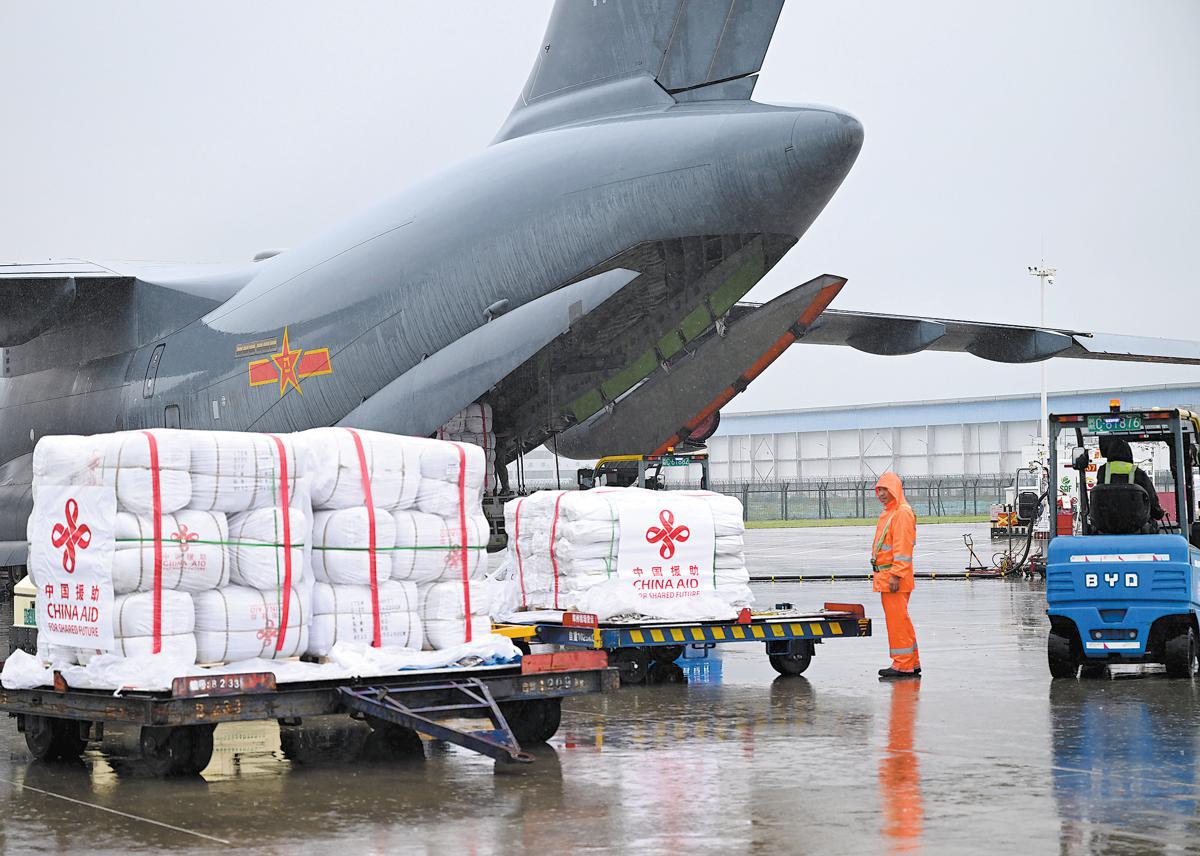
Workers load flood-relief cargo onto a Y-20 plane at Zhengzhou Xinzheng International Airport on Sept 27. The cargo was later flown to Islamabad after Pakistan suffered severe flooding. HAO YUAN/XINHUA
Innovative edge
To keep pace, the regiment has embraced a culture of grassroots innovation. Pilots and ground crew have developed more than two dozen software applications and 3D-printed tools — many designed and built in their spare time.
One of the most widely used is an electronic flight bag that slashes flight planning from hours to minutes. It contains details of hundreds of military and civilian airports, thousands of terminal charts and navigation waypoints. Pilots can input departure and arrival airports, and the software — powered by AI-trained algorithms — generates an optimized route, calculates fuel burn and estimated time of arrival.
Another app helped the regiment during the Victory Day military parade on Sept 3 last year, where Y-20s flew in a tight 80-by-80-meter wedge formation.
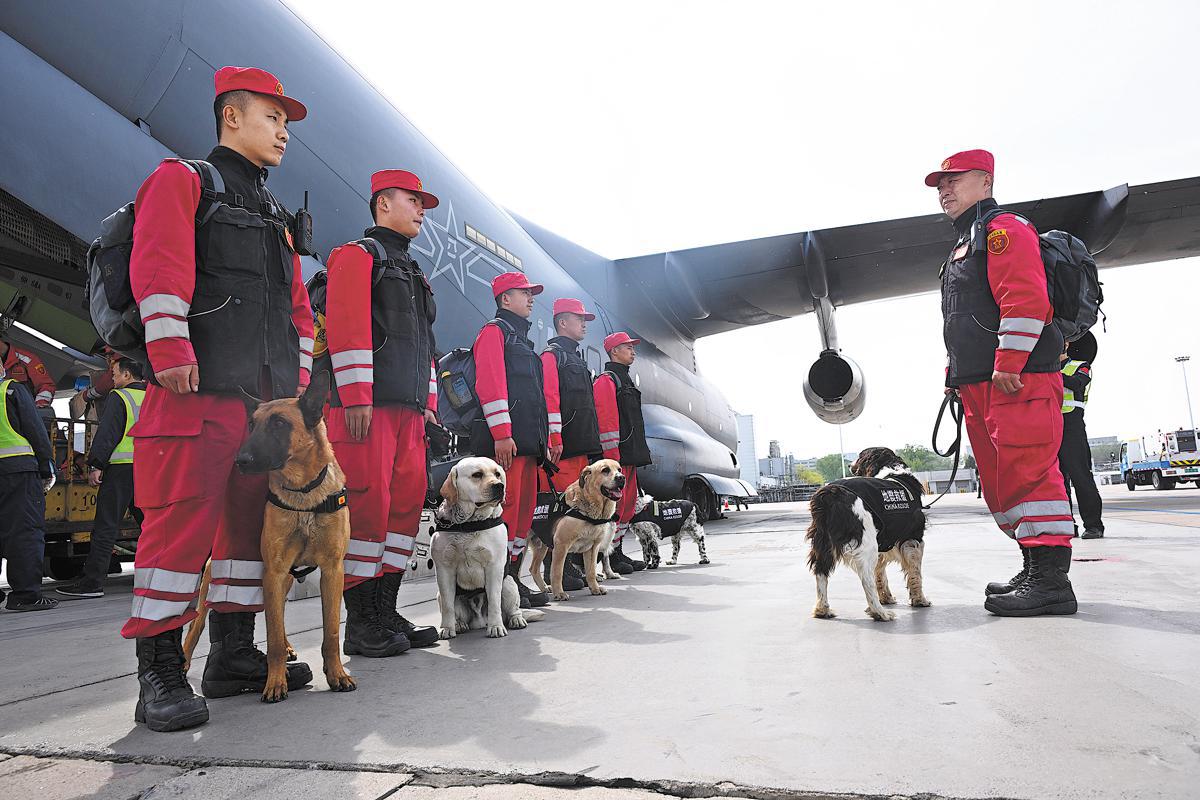
Members of a rescue team return to Beijing via a Y-20 plane on April 9 last year, after completing an earthquake rescue mission in Myanmar. JIN LIANGKUAI/XINHUA
Yuan Bo, the formation's lead pilot for that parade, said the software calculates intercept curves and formation timing with precision that once required hours of manual computation.
Pilots have also designed a 3D-printed tablet mount that clips onto the cockpit side window handle — with tablets now essential for accessing flight plans, charts and real-time data, fumbling for a device during landing had become a risky distraction. Another tool, a fuel nozzle gauge, helps tanker crews judge distance from receiving aircraft during aerial refueling — a task that once relied on naked-eye estimation.
"These are small tools that solve big problems," Liu said.
The regiment has also built a virtual reality debrief system that lets pilots rewatch flights from a first-person perspective — a far cry from dry data readouts of the past.
The innovation push has accelerated talent development. "We've achieved a qualitative leap in combat power incubation and fission," Liu said. Training cycles have shortened dramatically.

Soldiers conduct maintenance work on a military runway. TAN SICHENG/FOR CHINA DAILY
Flight paths traced
Regiment Commander Pang said the unit's goal is simple. "We'll fly the Y-20 wherever our nation's interests lie," he said.He describes the aircraft as more than a transport — it is a "window" for the air force's global outreach and a "calling card" for a rising power. "When our aircraft land at foreign airports, and overseas Chinese and international friends look up with admiration, waving five-star red flags, a sense of pride wells up from the heart — along with a heavy responsibility on our shoulders," he said.
You May Like
-
Summer tradition breezes back into fashion
Although air conditioners across China are humming to life as the summer heat begins to climb, the folding fan that was once pushed to the margins of daily life...
InKunming 2026-06-08 -
Parents embrace calm as millions appear for gaokao
The national college entrance exam, or gaokao, got underway on Sunday with millions of Chinese students appearing for it, while their parents gathered outside e...
InKunming 2026-06-08 -
Sinologists explore Chinese answers to modern challenges at ...
Outside the venue of an international conference in Dunhuang, northwest China, a mini-van became a makeshift traditional Chinese medicine (TCM) clinic for Ger...
InKunming 2026-06-05 -
Sinologists conference kicks off in China's Dunhuang
The Third World Conference of Sinologists opened on Wednesday in Dunhuang, a key hub on the ancient Silk Road in northwest China's Gansu Province. The event h...
InKunming 2026-06-04 -
Confucius and Plato: the quest for modern relevance
InKunming 2026-06-02 -
Stronger China-Laos ties on the horizon
The General Secretary of the Lao People's Revolutionary Party Central Committee and Lao President Thongloun Sisoulith is on a state visit to China from Tuesday ...
InKunming 2026-06-02 -
Xiconomics: How cooperation with China is transforming indus...
President Xi Jinping describes the China-Serbia friendship as "ironclad."
InKunming 2026-05-28 -
Hong Kong, Macao share nation's space pride, sci-tech divide...
Sunday's successful launch of China's Shenzhou-23 crewed spacecraft marked a historic milestone for the Hong Kong and Macao special administrative regions (SARs...
InKunming 2026-05-27 -
Pakistani PM honored for agricultural alliance
Pakistani Prime Minister Shehbaz Sharif was awarded the title of honorary professor by the Chinese Academy of Agricultural Sciences on Tuesday in Beijing.
InKunming 2026-05-27 -
Strengthened China-US AI ties stressed
As China and the United States race to expand their artificial intelligence capabilities, economists said the two countries need closer cooperation on global go...
InKunming 2026-05-26