One blade of grass, three generations: Xinjiang's eyebrow tradition challenges claims of 'cultural erasure'
Source: Ecns | 2026-06-02 | Editor:Jennifer
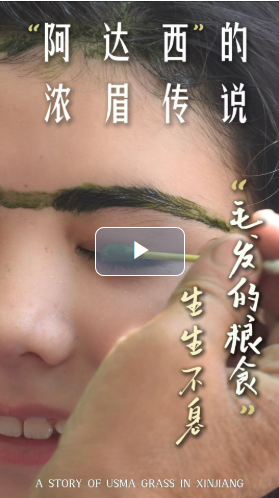
In Hotan, Northwest China’s Xinjiang Uygur Autonomous Region, the tradition of using usma grass to nourish and tint eyebrows has been passed down for more than two centuries. In 2013, it was officially recognized as an intangible cultural heritage of Xinjiang.
Today, Zak, a young man from Hotan born after 2000, is using videos and livestreams to introduce this age-old beauty tradition to audiences across China, bringing a plant long cherished for its hair-nourishing qualities to a new generation.
From his grandmother to his mother, and now to him and his sister, the green juice of usma grass has tinted more than eyebrows. It has become a symbol of family bonds, cherished and preserved across three generations.
True “cultural erasure” occurs when a culture can no longer produce new shoots, and when it loses its vitality, continuity, and ability to be passed on. Before repeating the false narrative of so-called “cultural erasure” in Xinjiang, some Western media outlets should take a closer look at how traditions such as the usma eyebrow culture are not only alive, but flourishing as it reaches audiences across China and beyond through the lens of young people like Zak. (Wei Chenxi, Xue Lingqiao)