From “Seed to Cup”: A Different Perspective on Pu’er Coffee
Source: InKunming | 2025-12-26 | Editor:Rachel
On December 20, 2025, a cultural exchange event centered on coffee kicked off in Pu'er, Yunnan. Coffee professionals and media representatives from Guizhou, known as the “City of Chinese Brewing Champions,” gathered with estate owners and cultural inheritors from Pu'er, the “Coffee Capital of China.” Together, they explored a deeper question beyond the concept of “Seed to Cup”—and from origin to market: How can coffee reconnect land and city, commerce and culture?
Youfeng Coffee|Forst Garden: Look Down at the Insects, Look Up at the Stars
At the launch ceremony, Wu Lin, member of the Standing Committee and Minister of the Publicity Department of the CPC Pu'er Committee, said in her speech: “The bond between Pu’er and coffee has long ceased to feel like that of an outsider.” This sentiment came to life during a subsequent visit to Youfeng Coffee|Forst Garden.
Project manager Ms. Dai explained that this is a rural revitalization initiative themed around coffee, with the core idea of growing and moving forward together with local villagers.” Mr. A Fu represents the new villagers who have joined this initiative. Originally from Beijing, he now lives here full-time, managing the village’s nature experience center. “I simply want children here to look down at insects and look up at stars,” he said. In this place, coffee acts as a thread linking tea spaces, reductive woodcut printing, tie-dye workshops, and eco-farms. The goal is to turn the village into a model for rural revitalization.
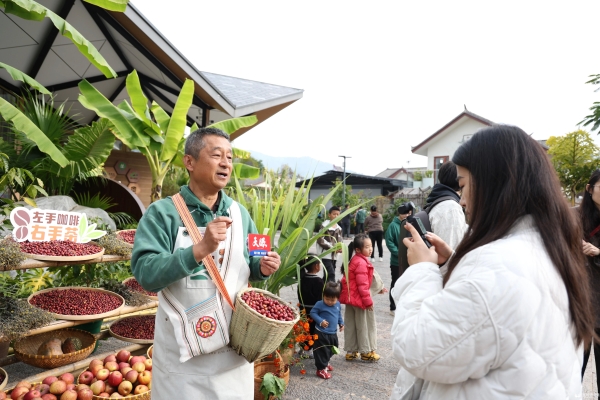
Mr. A Fu (He Yiran), Cultural Tourism Ambassador of Youfeng Coffee|Forst Garden. Photo Supplied by Pu'er Announce WeChat official account
What he takes the most pride in is not the diversity of businesses but the community transformation through “growing together.” Villagers have gone from avoiding outsiders to greeting them proactively; local university students are returning; people from neighboring villages come to work during harvest season, with daily picking earnings exceeding 500 yuan. Even a former diplomat has chosen to settle here long-term. Coffee, no longer merely an agricultural product, has become a bridge connecting urban and rural areas, blending tradition with modern lifestyles, and witnessing the vibrant revitalization of a village.
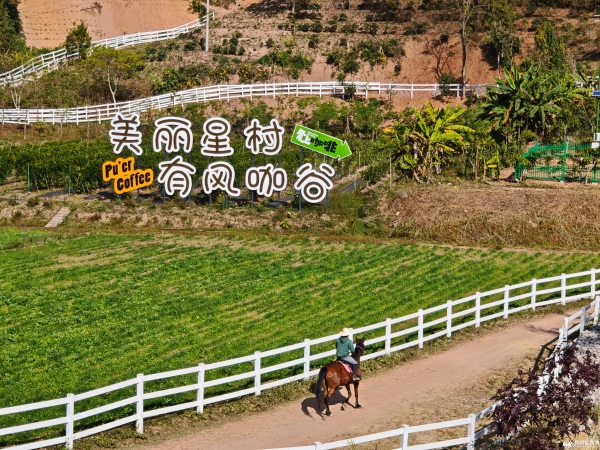
Youfeng Coffee|Forst Garden. Photo taken by reporter Yu Yawen
Wild Duck Pond Valley: Adopt a Coffee Tree
The first stop in the afternoon was Wild Duck Pond Valley Coffee Estate, which demonstrated an exploration that deeply integrates digitalization with emotional connection. The guide presented their key initiative “Adopt a Coffee Tree” program, which allows users to adopt a dedicated tree via a mini-program for 228 yuan, monitor real-time conditions via on-site cameras, and even converse with an AI-powered coffee tree, becoming a “cloud estate owner.” In return, adopters receive three bags of fresh beans annually, and the fee can also be credited toward accommodation costs.
“Nearly 5,000 people adopted trees last year,” the guide added. The estate is leveraging the same platform to connect with other agricultural products, forming a cluster development model of “one industry, one estate,” with the coffee estate at its core.
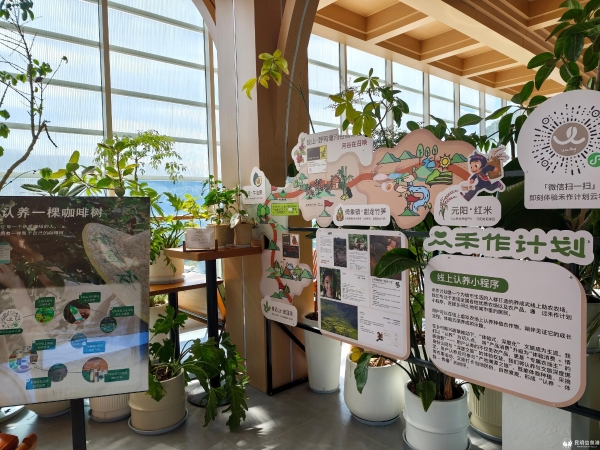
Wild Duck Pond Valley Coffee Estate. Photo taken by reporter Yu Yawen
These practices elevate coffee from a mere “industry” to a warmer and more participatory “culture.” Coffee is no longer just a commodity but a carrier of ecological values, community building, and lifestyle. By blending immersive experiences with digital connections, the estate is reshaping the relationship between people and agriculture, turning coffee estates into an experiential, participatory, and sustainable way of life.
BeanGreat Beigui Coffee Manor: Inclusive Symbiosis and Technology-Enabled Innovation
Mr. Deng of BeanGreat upholds the open and inclusive philosophy of “Whatever you love is good.” By integrating the primary (farming), secondary (processing), and tertiary (tourism experience) industries, he has built a complete industrial ecosystem “Seed to Cup.”
In business, he supplies high-quality coffee beans to the domestic market to enhance local consumption experiences, while relying on mature international channels to export beans meeting international standards. The latter accounts for a significant portion of the company's annual revenue, which exceeds 100 million yuan. Amid the industry downturn of 2002, with prices at 9 yuan per kilo, he pulled the company through thanks to a combination of sheer will and a critical government loan.
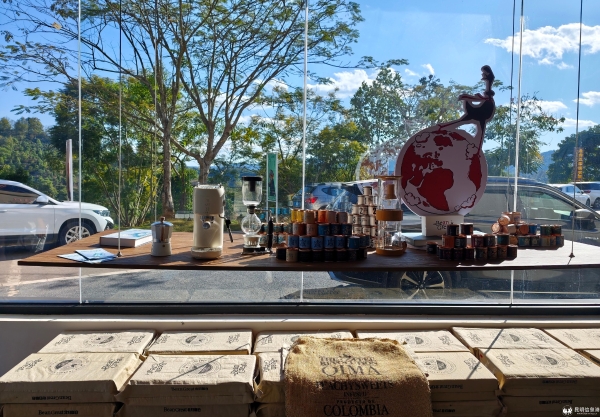
BeanGreat Beigui Coffee Manor. Photo taken by reporter Yu Yawen
Today, he focuses on building industrial resilience, advocating “treasure hunting from waste.” He has successfully developed by-products such as coffee fruit peel tea and coffee wine. At the same time, he continues his over-a-decade-long “space seed” breeding research, which remains in a long-term experimental phase. In his view, the future lies not in the price of a single bean, but in unlocking value at every stage of the chain so that farmers can live with dignity, regardless of market swings.
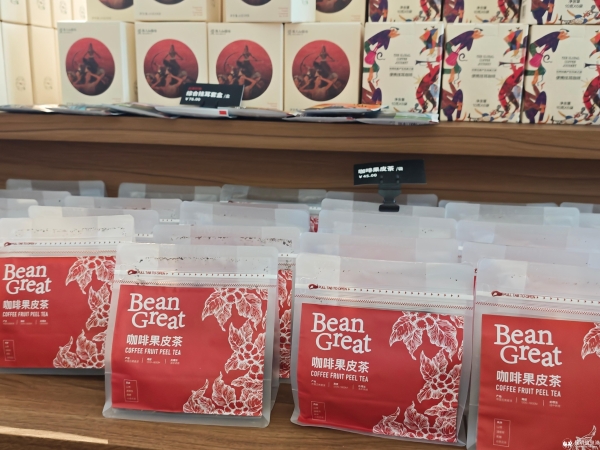
Coffee Fruit Peel Tea in BeanGreat Beigui Coffee Manor. Photo taken by reporter Yu Yawen
Looking ahead, he plans to empower the entire industrial chain with technology, deepen by-product development and eco-friendly utilization, and explore pathways for the coffee industry to drive employment and sustainable development. He firmly believes in the immense potential of China’s coffee market and looks forward to growing together with the industry.
Xiaowaozi Coffee Estate: Coffee Bean Kissed by Fireflies
At the final stop, Xiaowaozi Coffee Estate, the themes of ecological stewardship and cultural communication found their fullest expression. Grandpa Liao Xiugui has refrained from using chemical agents for 28 years, creating the ecological miracle of “every coffee bean kissed by fireflies”—a globally recognized indicator of a pesticide-free, clean farm.
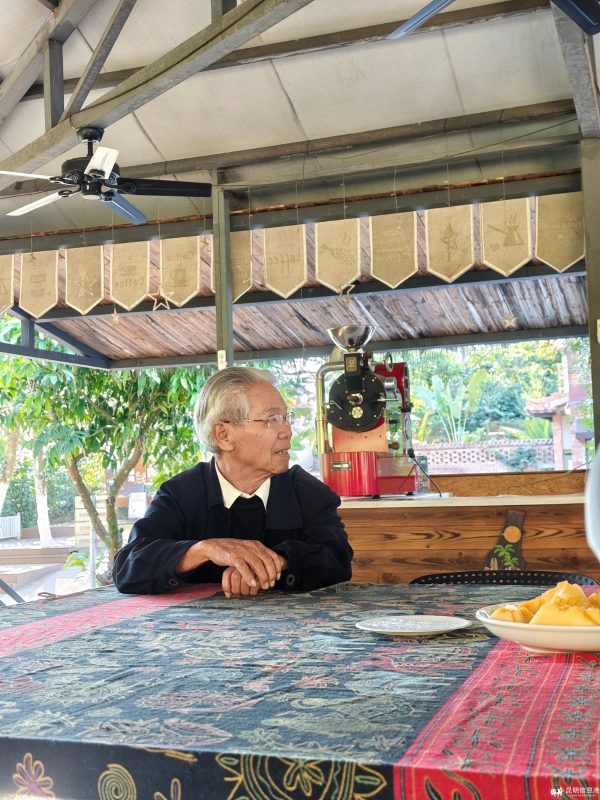
Grandpa Liao in Xiaowaozi. Photo taken by reporter Yu Yawen
This is not just sentiment but agricultural wisdom. Through shade planting, the estate has not only created a natural, self-sustaining pest control system but also slowed ripening cycle of 1 to 1.5 months—a delay that grants 1,200-meter beans flavor complexity rivaling those from 1,600 meters.
2019 marked a pivotal turning point. For years, like many in Yunnan, the estate was trapped at the low end of the value chain—its specialty beans undervalued and its prices dictated by international futures markets. To change this, they transformed into the first experiential estate in Pu'er, beginning to directly tell the story of Chinese coffee to consumers.
Faced with widespread misunderstandings about coffee flavors in the market, the estate started systematic coffee cultural education: Through daily in-depth tasting sessions, they guide visitors taste 11 distinct coffee varieties to understand how terroir and processing methods shape flavor differences.
Instead of following the e-commerce playbook for high sales numbers, they strive to focus on turning visitors into long-term enthusiasts who appreciate their craft. Through direct communication and on-demand customization, so that the value of coffee flows back to the land and culture, thereby gradually shifting pricing power into the hands of producers.
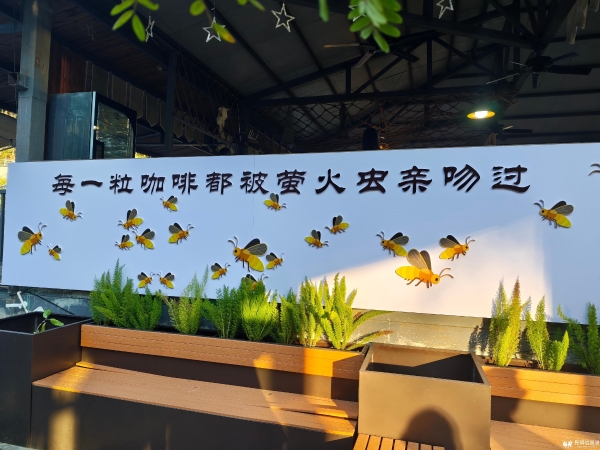
Xiaowaozi Coffee Estate. Photo taken by reporter Yu Yawen
Conclusion: More Than One Answer
In recent years, Pu'er coffee industry has undergone a profound transformation from a “raw material base” to a “value-producing region.” The specialty coffee rate has risen from less than 10% to 46.15%, while the fine processing rate has jumped from 8% to 50.2%. Pu'er has also become the country’s largest coffee-producing region in terms of cultivation area and output.
A day of exploration revealed the multiple possibilities of coffee from seed to cup: the “growing together” of Youfeng Coffee|Forst Garden, the “adopt a coffee tree” of Wild Duck Pond Valley, the “treasure hunting from waste” of BeanGreat, and the “firefly-kissed” coffee of Xiaoaozi Estate…Yet together, they trace a common path forward and sketch a transformative vision for Chinese coffee: the value of coffee is no longer defined by international exchanges but has become a vehicle for ecological ethics, digital connectivity, industrial resilience, and cultural awakening.
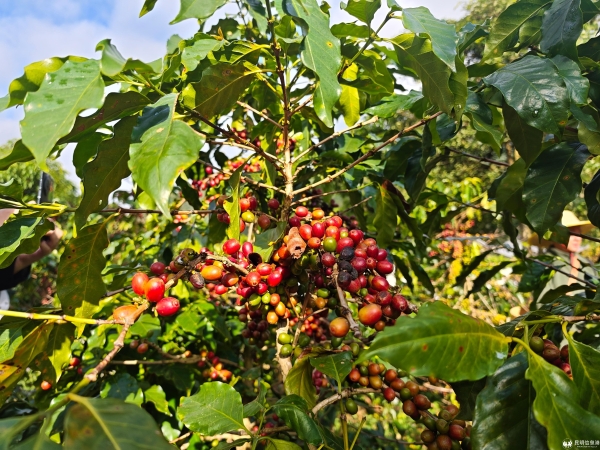
Coffee Tree. Photo taken by reporter Yu Yawen
Representatives from Guiyang also noted that while while the city grows no coffee beans, its ecosystem of over 3,000 cafes and string of international awards are turning it into a new hub for coffee culture. This forms a complementary dynamic in a way that, if Pu'er is the source, then Guiyang is the sea.
Pu'er provides a different model for coffee-growing regions in China and globally, going beyond a purely commodity-driven model. And the best answer lies in the next piece of land waiting to be discovered. (Reporter Yu Yawen)
Profile: He Yiran, Cultural Tourism Ambassador of Youfeng Coffee|Forst Garden
Director of A Fu Huangshi Garden, holds a degree in public service preschool education. He previously served as Assistant to the Principal of the Affiliated High School of Peking University Education Group, Vice Principal of the Henan Branch of Peking University Affiliated High School for Distance Education, and guest director for CCTV Children’s Channel “Growing Online.” He is also the Chief Experience Specialist at the Forest Experience Center of the Red Panda Manor Pu’re in Yunnan Pu'er National Park, an expert on the Natural Education Technical Expert Committee of the China Green Development Foundation, and a guest professor at Yunnan Pu'er University and the Tropical Crops College of Yunnan Agricultural University. He has been awarded Outstanding Presenter and Most Popular Presenter at the 7th and 8th Yunnan Provincial Science Popularization Explanation Competitions.
Click here to view the Chinese report
(Editors: Evan, Rachel)
You May Like
-
Yunnan expands coffee production, processing
As Chinese consumers become increasingly sophisticated coffee drinkers, Yunnan province in Southwest China aims to grow more premium beans and build itself into...
InKunming 2022-09-08 -
Yunnan coffee basically forms complete industry chain
In 2021, the scale of China's coffee market has exceeded 387 billion yuan, and China’s coffee consumption ranked 8th in the world.
InKunming 2022-07-29 -
Bean bonanza as Pu'er coffee gains specialty status
One hundred and thirty years after the first coffee bean arrived in Pu'er city in Southwest China's Yunnan province, the quality of the beans grown there and lo...
InKunming 2022-04-28 -
China's coffee region upgrades bean quality, livelihoods
One hundred and thirty years after the first coffee seed arrived in Pu'er City in southwest China's Yunnan Province, the city is seeing upgrades in the beans' q...
InKunming 2022-04-07 -
Starbucks, poverty foundation launch coffee farming initiati...
Leading global coffee house chain Starbucks partnered with the China Foundation for Poverty Alleviation on Thursday to launch a social impact investment to crea...
InKunming 2020-04-20 -
Nestle, Yunnan university strive to improve coffee quality, ...
InKunming 2018-12-19 -
Starbucks opens outlet in China's coffee production base
InKunming 2018-06-22 -
Across China: Walnut producer smells new opportunity in coff...
InKunming 2018-03-29 -
Yunnan's first kiss coffee
InKunming 2016-11-28 -
Nestle to source more coffee from Yunnan
InKunming 2016-11-23