Kunming on the Belt and Road | A French Entrepreneur Decodes Kunming's Development Formula: Livability as the Core Magnet of a Rising Hub City
Source: InKunming | 2025-12-03 | Editor:Jennifer
Editor's Note:
The Belt and Road Initiative has spanned mountains and seas, profoundly reshaping the development logic and talent landscape of cities in its wake. As a once-peripheral city moves toward becoming an international hub, what constitutes its long-term competitiveness?
In this installment of the "Kunming on the Belt and Road" series, we examine the city through the eyes of Mr. Yannick Benichou, a French entrepreneur who has lived in Kunming for nine years and now truly embraces the identity of a "new resident." His reflections—spanning industry, logistics, and the business environment—converge on a simple but telling conclusion: livability itself is a durable form of economic gravity.
For Mr. Yannick Benichou, Kunming's ability to attract and retain global talent does not rely solely on policy incentives or infrastructure upgrades, but on something more fundamental: the quality of everyday life, and the quiet power it exerts in shaping a city's future.
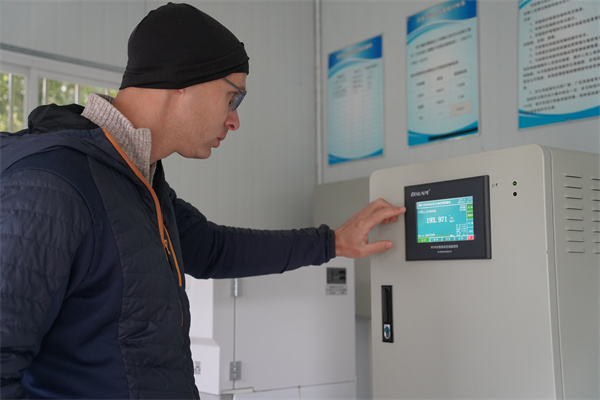
Mr. Yannick Benichou checks the readings on a water-quality monitor, his expression focused. Photo taken by Tan Shiyan
Early winter in Kunming brings a light chill, yet the window in the office of French entrepreneur Mr. Yannick Benichou remains open. At the Anning Decco Biotech Co., Ltd. plant, one of the general manager's daily routines as general manager is checking the latest water-quality data.
Nine years ago, he came to Yunnan drawn by its unique biological resources. Today, he has become a bridge between local forests and global markets—a "shellac mediator," while finding in Kunming a rare balance between work and everyday life. Having witnessed Kunming's transformation under the Belt and Road Initiative from a peripheral outpost into an emerging international hub, he has come to believe that the city's comfort and ease of living are key to attracting global talent and powering industrial growth.
Small Shellac, Big Business: Why Yunnan Was the Logical Choice
"Shellac is a secretion from the Kerria lacca; it's used in fruit preservation, pharmaceutical coatings, even premium varnishes." Sitting in his office, Mr. Benichou pulls an orange from his pocket and rolls it in his hand. "If you transport ten tons of fruit without protection, you might have only nine left on arrival. Shellac helps keep fruit fresh, reduces spoilage, retains moisture, and improves its appearance."
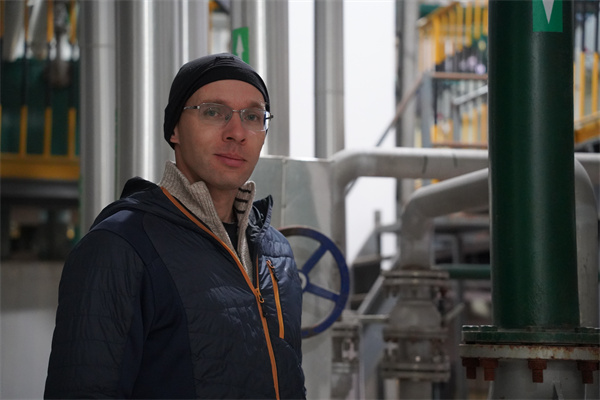
Mr. Benichou walks into the shellac-processing workshop. Photo taken by Tan Shiyan
He moved to Yunnan in 2016 for a job opportunity. What brought him here, he says, was an undeniable industrial advantage: "Yunnan produces 95 percent of China's shellac. That's the core reason we built a factory here."
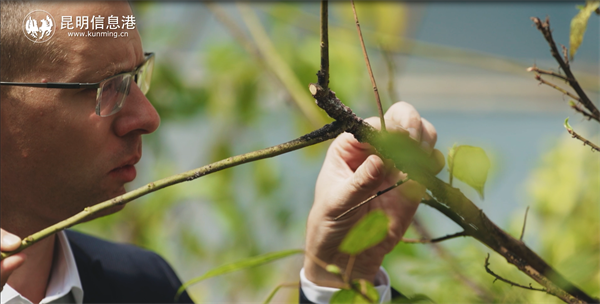
Mr. Benichou examines Kerria lacca on a tree. Screenshot of previous video material
Over time, he realized Yunnan's strengths extended beyond raw materials. The province's dramatic variations in altitude, he says, give the shellac industry a unique form of climatic resilience. "Take Thailand, for example. Much of it is flat. When temperatures rise, entire growing regions are affected. But Yunnan's climate offers flexibility. If one area becomes unsuitable due to warming, moving production a hundred meters up in elevation can restore ideal conditions."
Mature industry infrastructure and long-standing business relationships also influenced the company's decision to deepen its roots. He notes that as early as 1995, his firm partnered with the Anning Chemical Plant to establish a joint venture, becoming the first shellac deep-processing company in Yunnan. "At that time, China had substantial reserves of shellac raw materials but insufficient deep processing capacity, which presented an opportunity for us.," he says. "We chose to establish a joint venture with a state-owned enterprise, and throughout the process, we received sincere support from our Chinese partners. This trust-based relationship was crucial to the success of our investment." In contrast, although Southeast Asia boasts richer shellac resources, its industrial landscape remains relatively stable, leaving limited growth prospects for new entrants. Yunnan, however, demonstrates greater potential and possibilities.
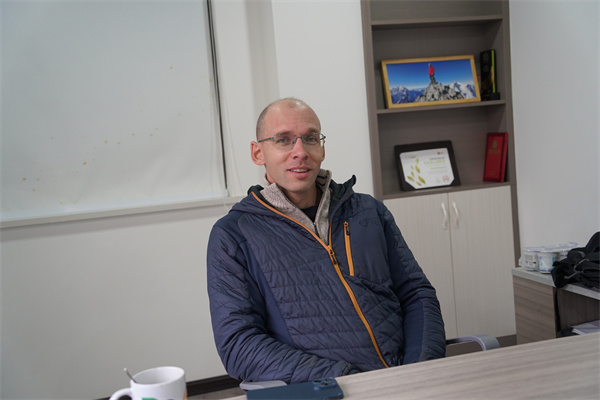
Mr. Benichou is interviewed in his office. Photo taken by Tan Shiyan
Next month, this joint venture will celebrate its 30th anniversary. Reflecting on this journey, he noted with emotion, "We have witnessed the improvement in our employees' living standards, as well as the elevation of production standards—from the old workshops of the past to the beautiful, standardized industrial park of today." Currently, their shellac products have been exported to multiple countries including the United States, Germany, the United Kingdom, Spain, Italy, Israel, South Africa, Mexico, Japan, and others.
A Pragmatic View of the China-Laos Railway: Present Limits, Future Promise
As a business executive, Mr. Benichou speaks candidly and pragmatically about the China-Laos Railway. "In terms of logistics efficiency, the railway is great for tourism to Laos," he says. "But as a freight option, it's not yet useful for our business." The core issue is geography. His company's main market is Thailand, while the railway currently ends in Vientiane, Laos. "We tried it once. Because the shipment had to transit a third country, the paperwork was complicated, and the cost exceeded that of simply trucking our goods to a seaport."
He notes another practical limitation: the railway cannot yet carry refrigerated containers, and shellac raw material is risky to ship at ambient temperatures. "Even in winter, when we tried shipping non-refrigerated material, the total transit time still exceeded sea freight." For now, they continue to transport goods from Thailand to China by sea or by truck to ports such as Shenzhen and Guangzhou.
However, he stressed that this is merely the "current situation" and affirmed the quality of the railway infrastructure: "The infrastructure is indeed exceptionally well-built, so it will certainly lead to changes in the future."
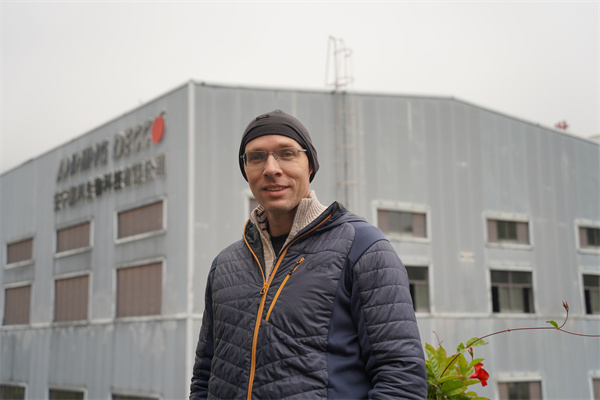
Mr. Benichou on the terrace outside his office. Photo taken by Tan Shiyan
He looks forward to the future with great anticipation: "We are eagerly awaiting the extension of the railway to Thailand, as it is very important for us." He envisions that if it becomes possible to board directly at Vientiane Station on the Thai border and cross-border procedures are streamlined, "we would definitely adopt this method, because it would indeed be very convenient."
He has also observed indirect benefits. He has taken the China-Laos Railway himself. "The stations are well designed," he notes. He was especially struck by improvements within Laos: "The trip from Luang Prabang to Vang Vieng used to take several hours by road. Now it's maybe an hour." Such changes, he says, bring not only convenience to travelers but also new momentum to the regional economy.
A Witness to Growth: A Business Climate that Shifts Gradually
Having lived in Kunming for nine years, Mr. Benichou has witnessed the city's evolution from both a resident's and an entrepreneur's perspective. "When I first arrived, Yunnan didn't even have high‑speed rail. Now you can take a bullet train to Shangri-La, Lincang, Xishuangbanna, and the highway network has transformed completely."
What has impressed him more, however, is the shift in financial policies. "A few years ago, joint-venture companies like ours could hardly get a loan," he recalls. With limited collateral and a joint‑venture structure, financing options were narrow. But around 2020, things changed. "Banks began approaching us, offering credit loans to support business development." The shift reflects Kunming's ongoing reforms to improve services for foreign investors. Mr. Benichou himself successfully secured a mortgage to buy property in Kunming. "These small changes matter—they help retain talent."
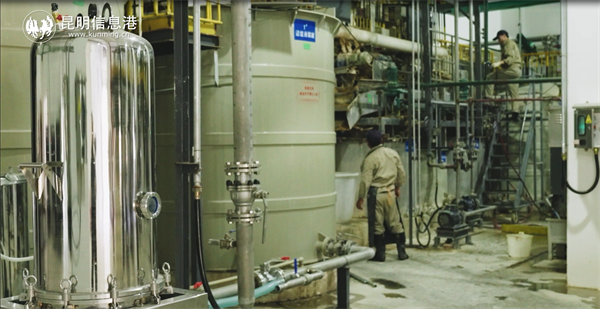
Inside Anning Decco Biotech Co., Ltd.'s production workshop. Screenshot of previous video material
Environmental standards are another area where he says the company leads the industry. "China's laws are very comprehensive," he notes. Compared with shellac processors in Southeast Asia, his company operates with full environmental controls. Wastewater from raw‑material washing contains high levels of organic matter. "In Southeast Asia, it's often discharged directly into fields. We invested heavily in a complete treatment system to ensure everything meets national standards."
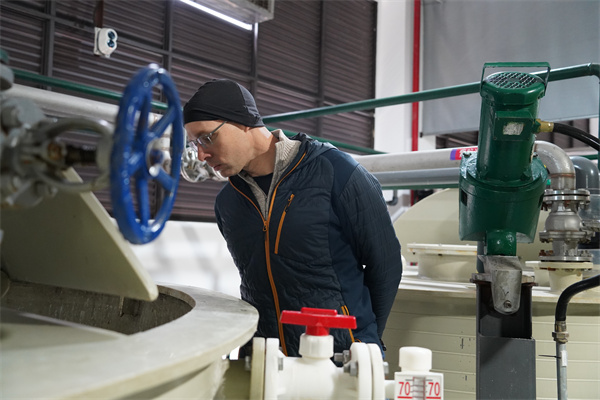
Mr. Benichou walks into the shellac-processing workshop. Photo taken by Tan Shiyan
As China expands freight corridors such as the China-Europe Railway Express and the New International Land-Sea Trade Corridor, his company has also benefited from certain logistics subsidies, which help offset Kunming's distance from major seaports. But he sees these as temporary boosts rather than long‑term pillars. "More than 70 percent of our product goes to customers with no equity relationship with us. That means we've earned our place in the market." From relying entirely on shareholder orders to selling widely across Europe and the United States, the joint venture has found renewed vitality in Kunming's soil.
Looking Ahead: Building a "Livability Appeal" to Draw Talent from Near and Far
Mr. Benichou's vision for Kunming's future extends beyond commercial considerations; it reflects the deep sentiment of a "new resident" who views the city as home. To him, Kunming's next leap—from transport gateway to dynamic hub—depends on cultivating a powerful "livability appeal," transforming its climate and environment into a magnet for global talent.
"As a provincial capital, Kunming's overall livability—its climate, air quality, and urban functions—may be the best in China," he says. To illustrate, he returns to the details of daily life. "Here, you don't have to stay in air-conditioned rooms all the time. My office window stays open year‑round. This natural ventilation, simple as it is, represents a significant appeal for people who value quality of life."
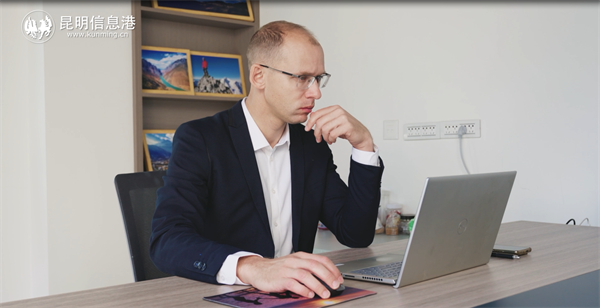
Mr. Benichou diligently at work. Screenshot of previous video material
Yet he believes that Kunming must continue strengthening its "soft environment" to turn natural advantages into lasting talent appeal. He points in particular to international education. Some foreign professionals he knows left Yunnan because of limited schooling options for their children. "High‑quality international education is still scarce. That weakens Kunming's appeal."
Beyond education, he also stresses the importance of "hard connectivity." He hopes to see Kunming restore and expand direct flights to Europe and India, and push forward the connection to the China–Thailand Railway.
"When the physical infrastructure of the Belt and Road Initiative is perfectly integrated with the intangible livability of the city, Kunming's potential will be fully unleashed," Mr. Benichou says. In his eyes, the future Kunming should be a city that creates a virtuous cycle—one where lucid waters and lush mountains attract top talent, and the concentration of outstanding talent in turn fosters high-end industries. It will be a true hub city where locals thrive at home and newcomers are drawn from afar.
Click here to view the Chinese report
(Editors: Rachel, Jennifer)
You May Like
-
Colorful Kunming·Global Stories | Maestro Gergiev and the Ma...
On the evening of October 18th, Maestro Valery Gergiev, alongside the world-class Mariinsky Symphony Orchestra, marked their debut in Southwest China in Kunming...
InKunming 2025-10-23 -
From Madrid to Kunming: A Journey Caught by Flowers and Smil...
Kunming, September is a braid of late-summer warmth and the first whiff of osmanthus on the wind. Javier Gil, a line producer with the program Beijing Express, ...
InKunming 2025-10-09 -
Canadian Rouhieh: Devoted to Education in Yunnan, Exemplifyi...
In the winter sunlight of Kunming, golden ginkgo leaves carpet on the ground and students hurry across the campus. Amidst them, a foreigner with golden hair and...
InKunming 2024-12-19 -
Dreamlike Encounters: David's Extraordinary Adventures in Ku...
In the corner of a quiet café, the reporter meets David. Dressed in a light blue shirt, his demeanor exudes a quiet elegance and calm. His hair has turned silve...
InKunming 2024-11-08 -
German Michael Hermann: With a Passion for International Cha...
Michael's story is like the subtle fragrance of osmanthus flowers on the streets of Kunming—unassuming yet capable of warming hearts and inviting reflection.
InKunming 2024-10-15 -
Li Yingxiong’s “Heroic Dream” Coming to Fruition in Kunmi...
Propriety, righteousness, probity, a sense of shame, perseverance, self-restraint, and indomitable spirit are the twelve-word-spirit of Taekwondo engraved in Li...
InKunming 2024-05-28 -
Jaruwan Records Yunnan's Story with Sincerity
The Thai Chen Muyun, who is active on various social platforms, came to Kunming for the first time 13 years ago with the initial intention of pursuing education...
InKunming 2023-08-02 -
Andre falls in love with the ethnic culture of Yunnan
He is Andre Jacques du Plessis from South Africa, a son-in-law of Yunnan, and also a short video blogger.
InKunming 2023-01-20 -
French sinologist Yin Dongming: Spring Festival is a window ...
In a French restaurant in Kunming sat a foreigner with brown hair and blue eyes, wearing a very eye-catching ethnic necklace. She is Yin Dongming (Dorothée Riha...
InKunming 2023-01-30 -
Dwight's adventurous and curious "life experiments" in Kunmi...
Press the "play" button! The crackling rock music was on. Dwight Goldwinde started an improvised dance and invited the people sitting nearby to dance with him. ...
InKunming 2022-07-29