Lincang City of China's Yunnan integrates coffee industry with rural tourism
Source: Xinhua | 2026-09-15 | Editor:Evan

A drone photo shows tourists posing for a selfie at Xigui coffee estate in Xigui Village of Lincang City, southwest China's Yunnan Province on Sept. 13, 2026. As one of the important coffee production areas in Yunnan Province, Lincang City, relying on its unique natural resources, has vigorously developed a business model integrating coffee industry and tourism. Tourists can experience coffee culture in an immersive way at the coffee estates, unlocking new experiences of rural leisure.
By the end of 2025, the coffee planting area in Lincang City had reached approximately 290,000 mu (about 19,333 hectares). The coffee industry is becoming an important engine driving the development of local agricultural, cultural and tourism economy. (Xinhua/Chen Xinbo)
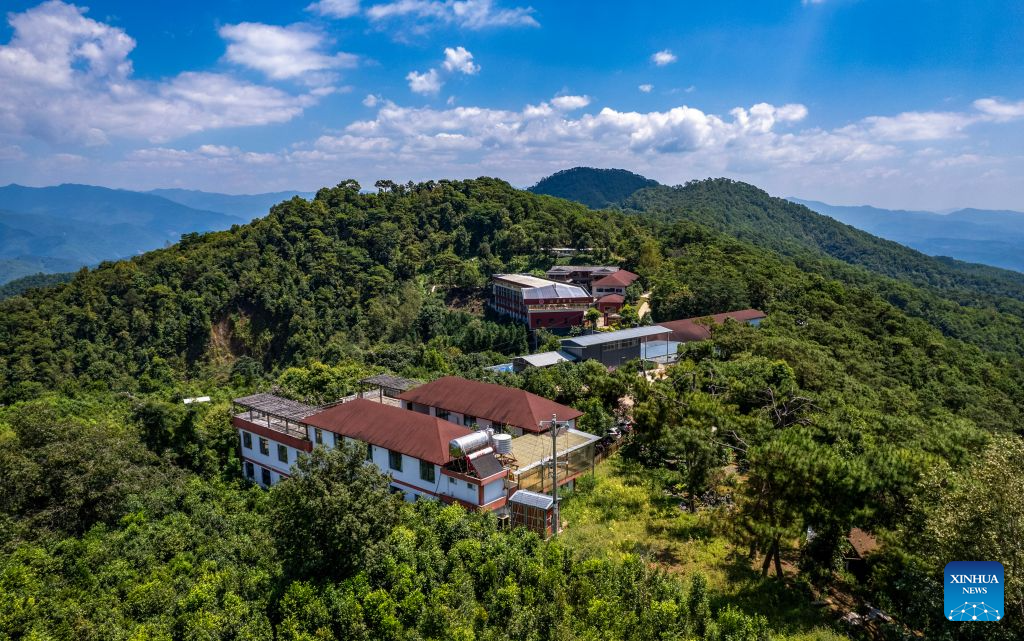
A drone photo taken on Sept. 13, 2026 shows a view of Xigui coffee estate in Xigui Village of Lincang City, southwest China's Yunnan Province. As one of the important coffee production areas in Yunnan Province, Lincang City, relying on its unique natural resources, has vigorously developed a business model integrating coffee industry and tourism. Tourists can experience coffee culture in an immersive way at the coffee estates, unlocking new experiences of rural leisure.
By the end of 2025, the coffee planting area in Lincang City had reached approximately 290,000 mu (about 19,333 hectares). The coffee industry is becoming an important engine driving the development of local agricultural, cultural and tourism economy. (Xinhua/Chen Xinbo)
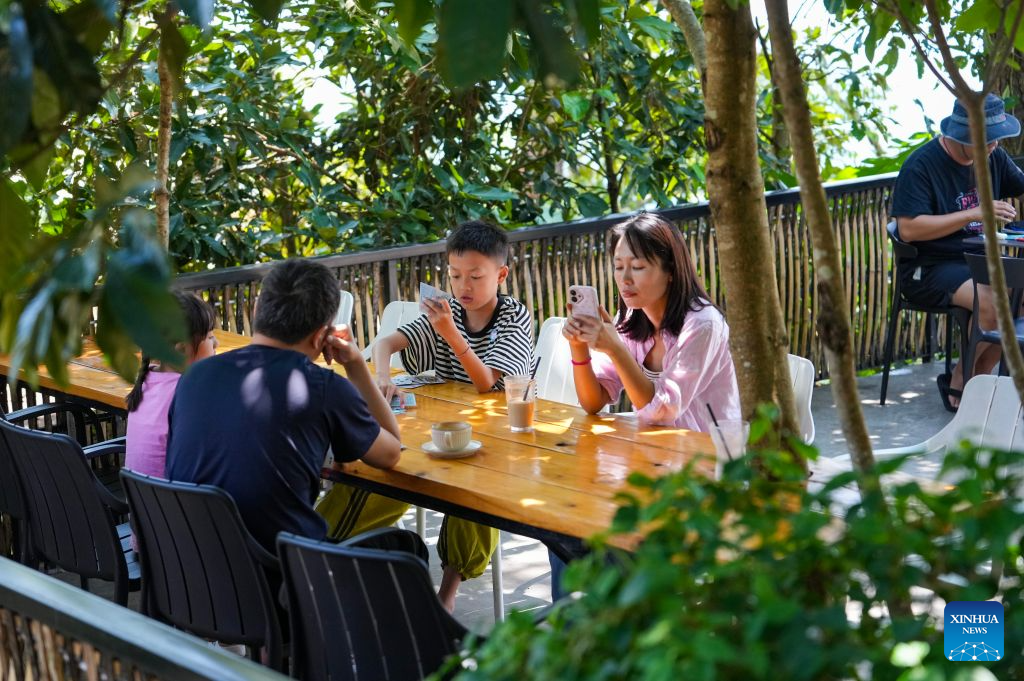
Tourists enjoy leisure time at Xigui coffee estate in Xigui Village of Lincang City, southwest China's Yunnan Province on Sept. 13, 2026. As one of the important coffee production areas in Yunnan Province, Lincang City, relying on its unique natural resources, has vigorously developed a business model integrating coffee industry and tourism. Tourists can experience coffee culture in an immersive way at the coffee estates, unlocking new experiences of rural leisure.
By the end of 2025, the coffee planting area in Lincang City had reached approximately 290,000 mu (about 19,333 hectares). The coffee industry is becoming an important engine driving the development of local agricultural, cultural and tourism economy. (Xinhua/Chen Xinbo)
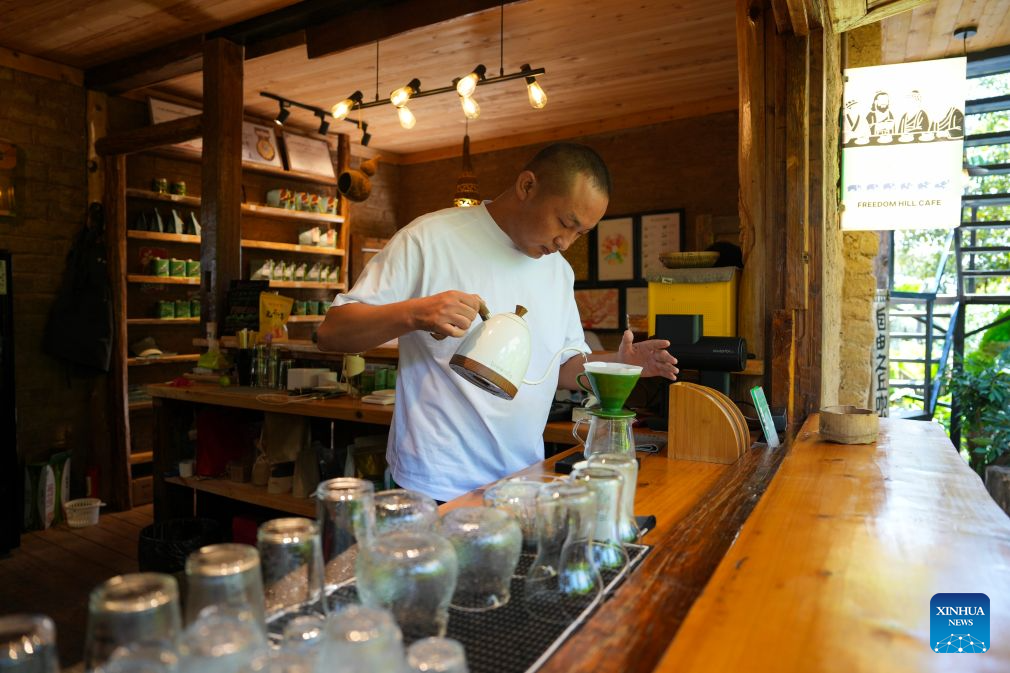
A barista makes coffee for customers at Xigui coffee estate in Xigui Village of Lincang City, southwest China's Yunnan Province on Sept. 13, 2026. As one of the important coffee production areas in Yunnan Province, Lincang City, relying on its unique natural resources, has vigorously developed a business model integrating coffee industry and tourism. Tourists can experience coffee culture in an immersive way at the coffee estates, unlocking new experiences of rural leisure.
By the end of 2025, the coffee planting area in Lincang City had reached approximately 290,000 mu (about 19,333 hectares). The coffee industry is becoming an important engine driving the development of local agricultural, cultural and tourism economy. (Xinhua/Chen Xinbo)
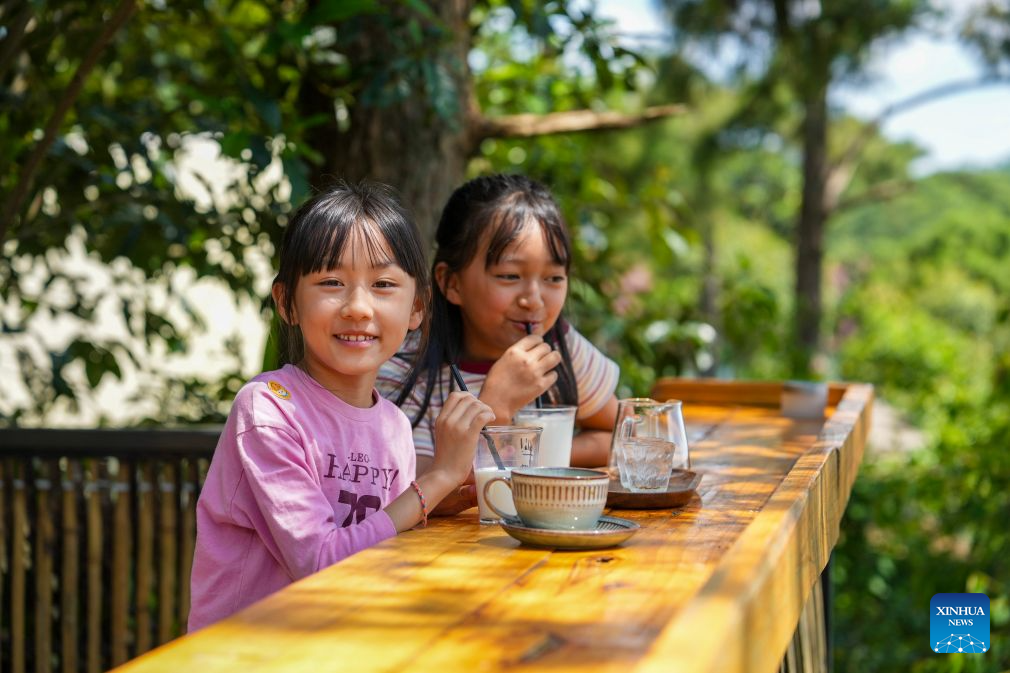
Children enjoy leisure time at Xigui coffee estate in Xigui Village of Lincang City, southwest China's Yunnan Province on Sept. 13, 2026. As one of the important coffee production areas in Yunnan Province, Lincang City, relying on its unique natural resources, has vigorously developed a business model integrating coffee industry and tourism. Tourists can experience coffee culture in an immersive way at the coffee estates, unlocking new experiences of rural leisure.
By the end of 2025, the coffee planting area in Lincang City had reached approximately 290,000 mu (about 19,333 hectares). The coffee industry is becoming an important engine driving the development of local agricultural, cultural and tourism economy. (Xinhua/Chen Xinbo)
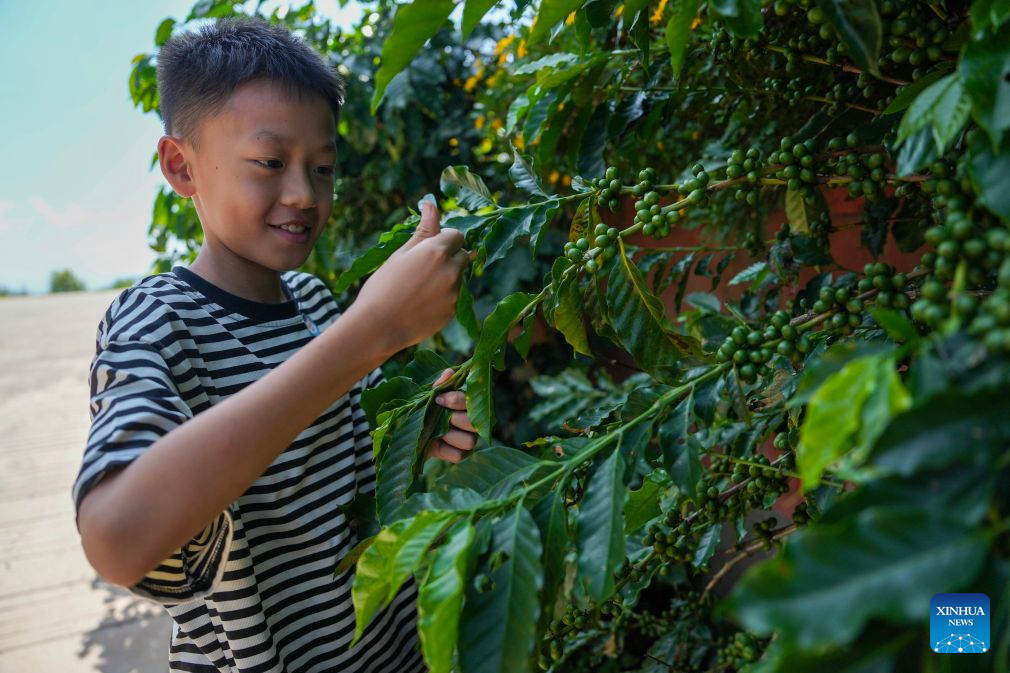
A child looks at coffee cherries in Xigui Village of Lincang City in southwest China's Yunnan Province on Sept. 13, 2026. As one of the important coffee production areas in Yunnan Province, Lincang City, relying on its unique natural resources, has vigorously developed a business model integrating coffee industry and tourism. Tourists can experience coffee culture in an immersive way at the coffee estates, unlocking new experiences of rural leisure.
By the end of 2025, the coffee planting area in Lincang City had reached approximately 290,000 mu (about 19,333 hectares). The coffee industry is becoming an important engine driving the development of local agricultural, cultural and tourism economy. (Xinhua/Chen Xinbo)
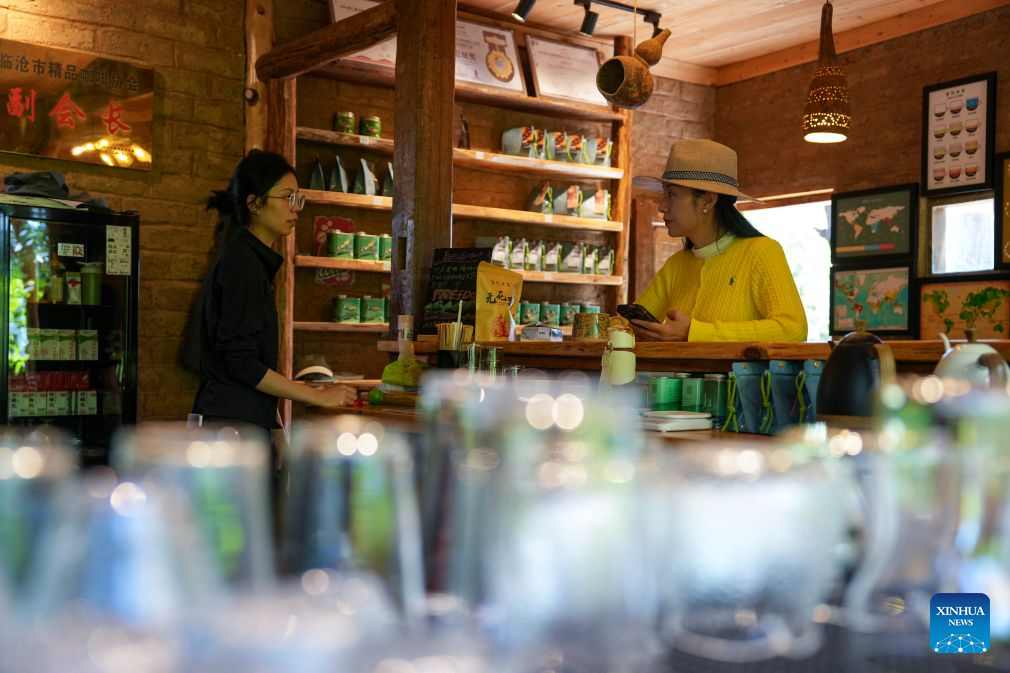
A tourist (R) enjoys coffee at Xigui coffee estate in Xigui Village of Lincang City, southwest China's Yunnan Province on Sept. 13, 2026. As one of the important coffee production areas in Yunnan Province, Lincang City, relying on its unique natural resources, has vigorously developed a business model integrating coffee industry and tourism. Tourists can experience coffee culture in an immersive way at the coffee estates, unlocking new experiences of rural leisure.
By the end of 2025, the coffee planting area in Lincang City had reached approximately 290,000 mu (about 19,333 hectares). The coffee industry is becoming an important engine driving the development of local agricultural, cultural and tourism economy. (Xinhua/Chen Xinbo)
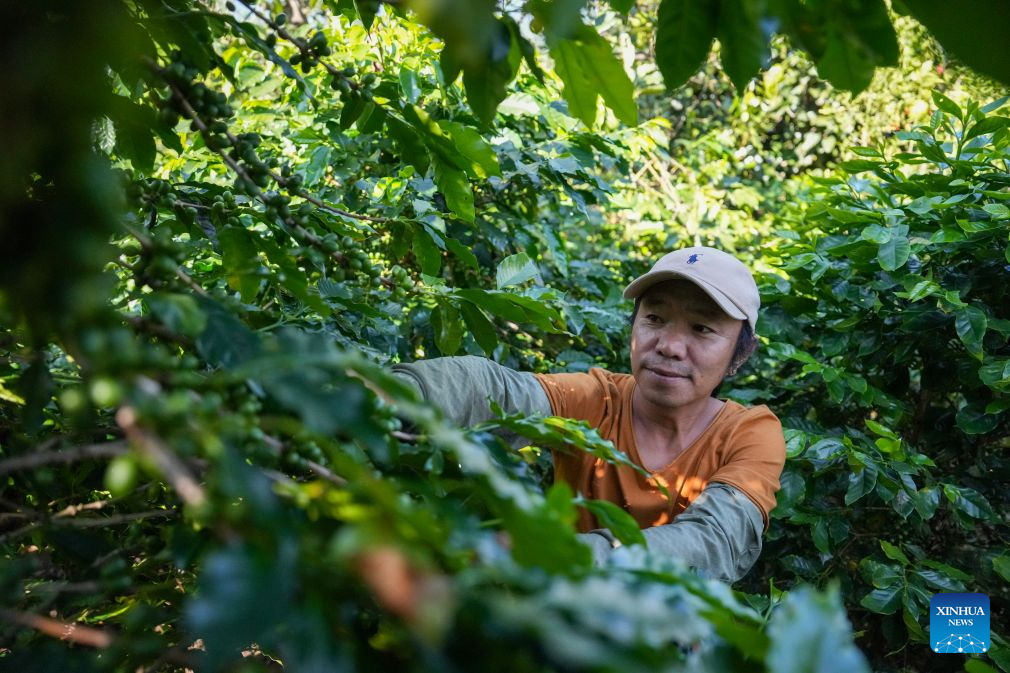
Zhu Hong, curator of Xigui coffee estate, inspects the growth of coffee cherries in Xigui Village of Lincang City, southwest China's Yunnan Province on Sept. 13, 2026. As one of the important coffee production areas in Yunnan Province, Lincang City, relying on its unique natural resources, has vigorously developed a business model integrating coffee industry and tourism. Tourists can experience coffee culture in an immersive way at the coffee estates, unlocking new experiences of rural leisure.
By the end of 2025, the coffee planting area in Lincang City had reached approximately 290,000 mu (about 19,333 hectares). The coffee industry is becoming an important engine driving the development of local agricultural, cultural and tourism economy. (Xinhua/Chen Xinbo)
You May Like
-
Tour along Yellow River becomes popular choice for summer tr...
An aerial drone photo taken on Aug. 10, 2026 shows a view of the Yellow River's Hukou Waterfall on the border of north China's Shanxi Province and northwest Chi...
InKunming 2026-08-20 -
SW China's Guizhou becomes popular summer retreat with rich ...
Visitors are seen at a market in Nanming District of Guiyang, southwest China's Guizhou Province, Aug. 14, 2026.
InKunming 2026-08-18 -
Xizang Story: Legacy of love -- A family's 55-year dedicatio...
Wild plateau red deer are instinctively wary of humans and always stay away.
InKunming 2026-08-17 -
Lotus flowers in full bloom at East Lake scenic area in Wuha...
InKunming 2026-08-12 -
Porcelain heritage enters the game
The game's goal seems simple enough: become a master porcelain maker.
InKunming 2026-08-07 -
Cultural tourism thrives in Shijiazhuang, China's Hebei
Tourists enjoy rafting at the grand canyon rafting scenic area in Pingshan County of Shijiazhuang, north China's Hebei Province, July 26, 2026.
InKunming 2026-07-27 -
Ethnic artists perform at concert in Chongqing, SW China
Singers of the Dong ethnic group from southwest China's Guizhou Province perform at the concert "Western China's Melody" in southwest China's Chongqing Municipa...
InKunming 2026-07-27 -
"Smiles: Imprints of the Chinese Spirit in Cultural Relics" ...
A visitor takes a photo at the exhibition "Smiles: Imprints of the Chinese Spirit in Cultural Relics" at the Liaoning Provincial Museum in Shenyang, northeast C...
InKunming 2026-07-27 -
Musical event featuring performing arts of Dong ethnic group...
InKunming 2026-07-14 -
90 years after Edgar Snow, a journey through China's revolut...
At the entrance to the Red Army's western expedition memorial hall in Tongxin County, in northwest China's Ningxia Hui Autonomous Region, a bronze sculpture o...
InKunming 2026-07-09