Cultural tourism injects new vitality into SW China's village
Source: Xinhua | 2026-03-27 | Editor:Doe
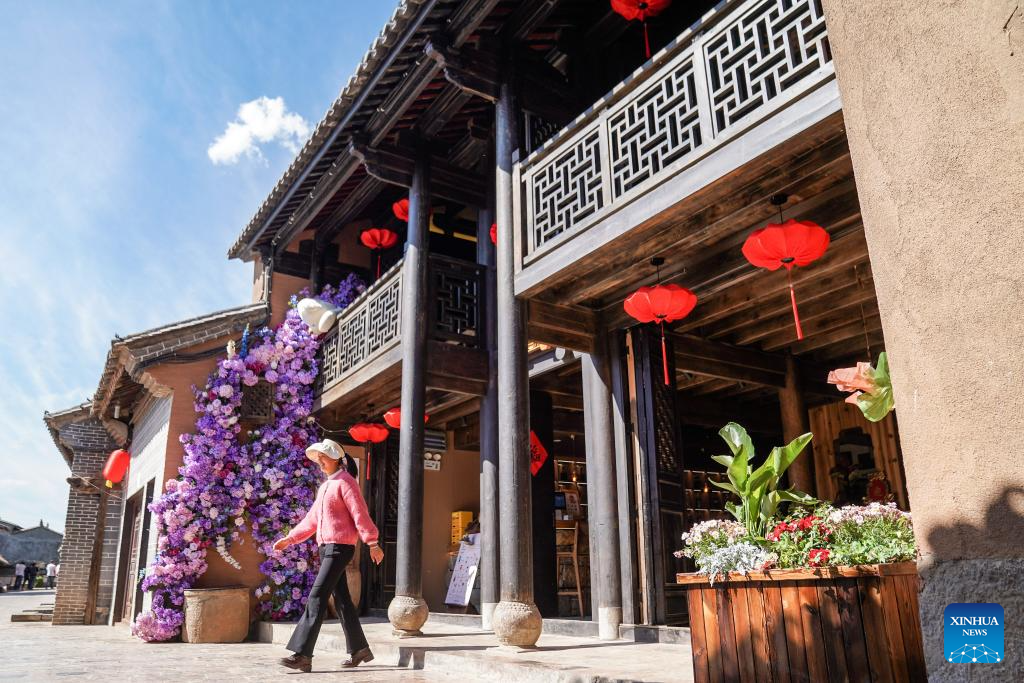
A tourist walks out of a homestay in Baiwu Village of Huize County, southwest China's Yunnan Province, March 24, 2026.
Baiwu Village once served as a major hub for south-to-north copper transport during the Ming and Qing dynasties (1368-1911), giving birth to many ancient dwellings and copper transport heritage.
In recent years, local authorities have endeavored to boost cultural tourism in the village by preserving and utilizing its traditional architecture, while introducing new businesses including bookstores, coffee shops, and homestays.
In 2025, the village received about 245,000 visitors, with 188 households involved in the local tourism industry. (Xinhua/Peng Yikai)
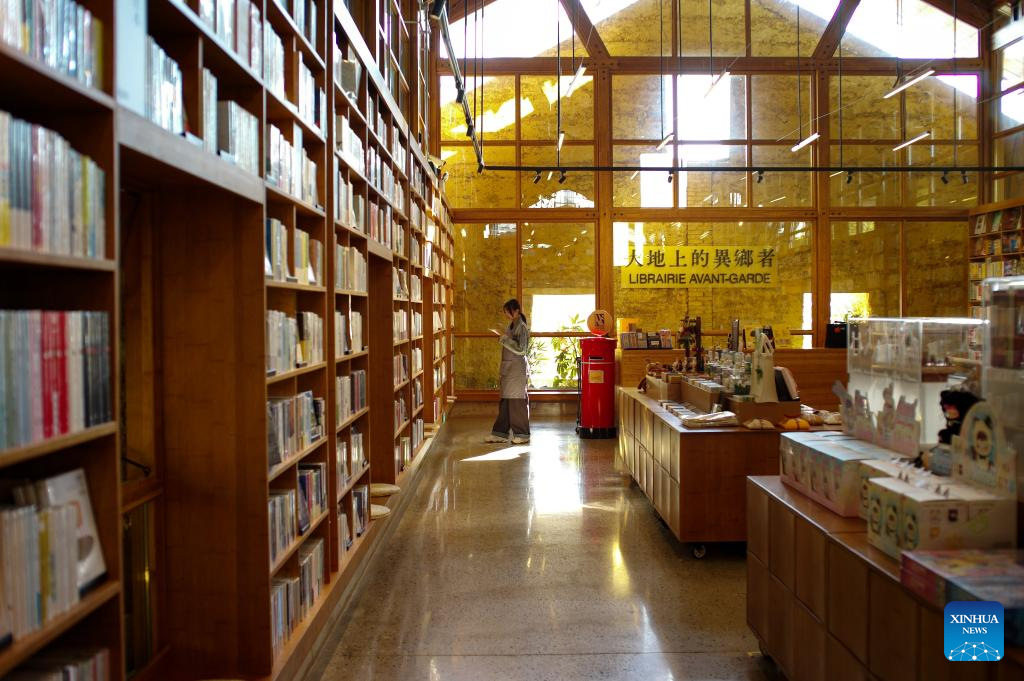
A staff member arranges books at Huize rural bookstore of Librairie Avant-Garde in Baiwu Village of Huize County, southwest China's Yunnan Province, March 24, 2026.
Baiwu Village once served as a major hub for south-to-north copper transport during the Ming and Qing dynasties (1368-1911), giving birth to many ancient dwellings and copper transport heritage.
In recent years, local authorities have endeavored to boost cultural tourism in the village by preserving and utilizing its traditional architecture, while introducing new businesses including bookstores, coffee shops, and homestays.
In 2025, the village received about 245,000 visitors, with 188 households involved in the local tourism industry. (Xinhua/Zhang Cheng)
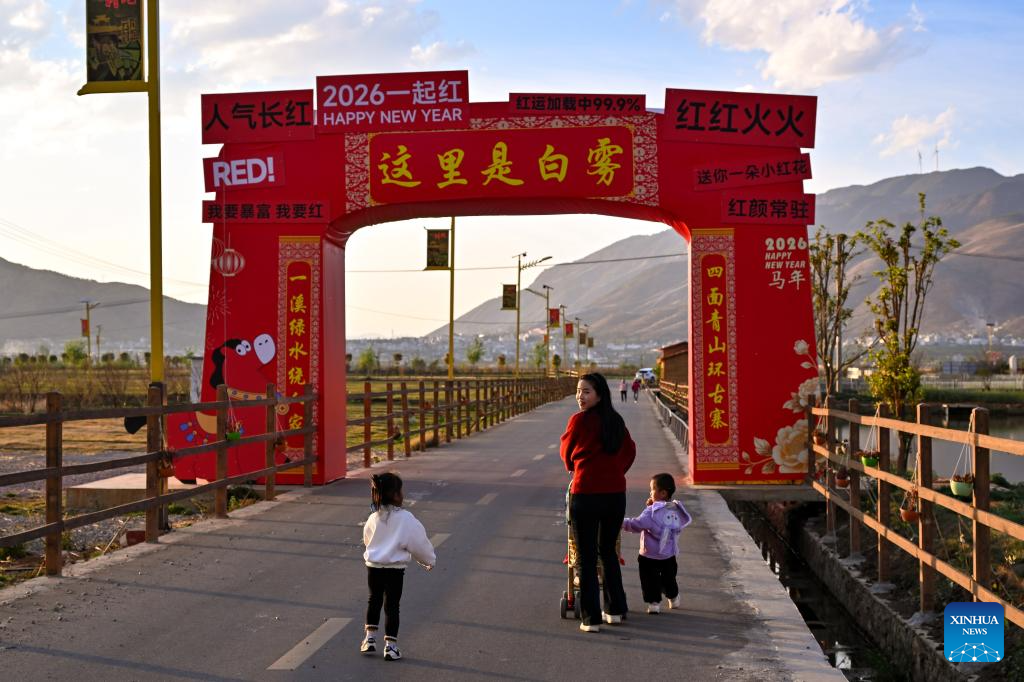
Villagers stroll in Baiwu Village of Huize County, southwest China's Yunnan Province, March 24, 2026.
Baiwu Village once served as a major hub for south-to-north copper transport during the Ming and Qing dynasties (1368-1911), giving birth to many ancient dwellings and copper transport heritage.
In recent years, local authorities have endeavored to boost cultural tourism in the village by preserving and utilizing its traditional architecture, while introducing new businesses including bookstores, coffee shops, and homestays.
In 2025, the village received about 245,000 visitors, with 188 households involved in the local tourism industry. (Xinhua/Zhang Cheng)
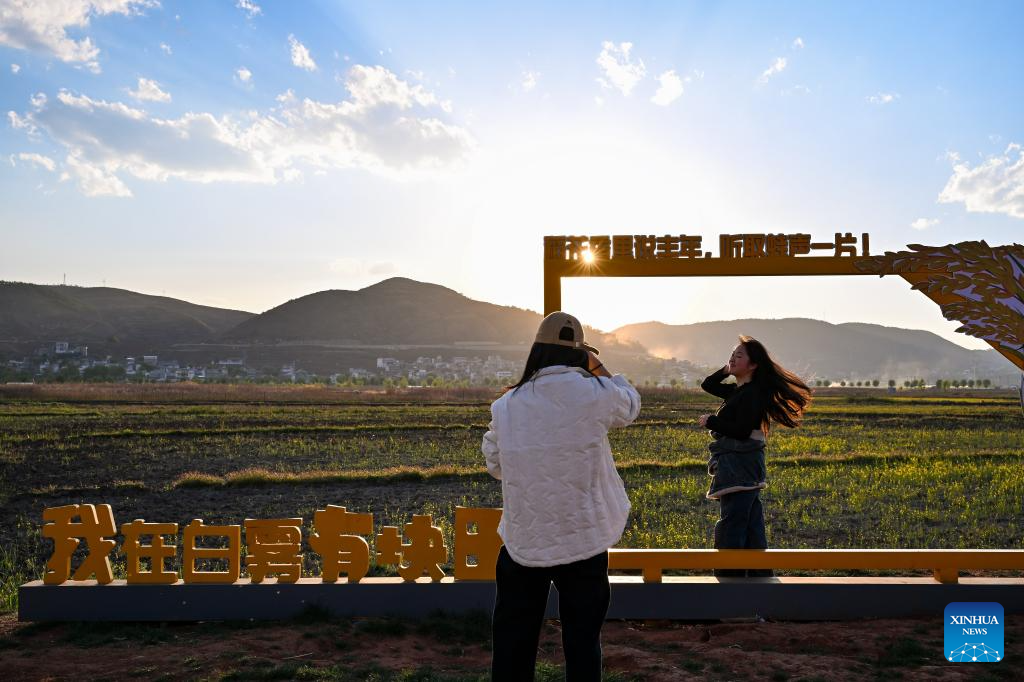
Tourists take photos in Baiwu Village of Huize County, southwest China's Yunnan Province, March 24, 2026.
Baiwu Village once served as a major hub for south-to-north copper transport during the Ming and Qing dynasties (1368-1911), giving birth to many ancient dwellings and copper transport heritage.
In recent years, local authorities have endeavored to boost cultural tourism in the village by preserving and utilizing its traditional architecture, while introducing new businesses including bookstores, coffee shops, and homestays.
In 2025, the village received about 245,000 visitors, with 188 households involved in the local tourism industry. (Xinhua/Zhang Cheng)
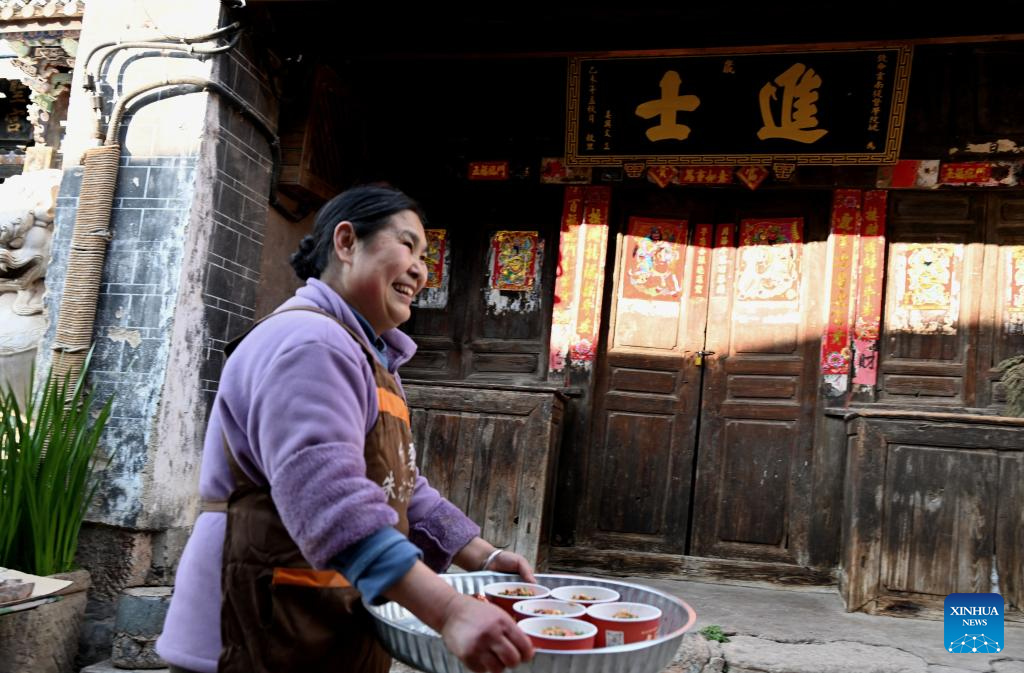
A villager serves cold bean jelly noodles in Baiwu Village of Huize County, southwest China's Yunnan Province, March 24, 2026.
Baiwu Village once served as a major hub for south-to-north copper transport during the Ming and Qing dynasties (1368-1911), giving birth to many ancient dwellings and copper transport heritage.
In recent years, local authorities have endeavored to boost cultural tourism in the village by preserving and utilizing its traditional architecture, while introducing new businesses including bookstores, coffee shops, and homestays.
In 2025, the village received about 245,000 visitors, with 188 households involved in the local tourism industry. (Xinhua/Huang Xiaoyong)

Tourists have fun in Baiwu Village of Huize County, southwest China's Yunnan Province, March 24, 2026.
Baiwu Village once served as a major hub for south-to-north copper transport during the Ming and Qing dynasties (1368-1911), giving birth to many ancient dwellings and copper transport heritage.
In recent years, local authorities have endeavored to boost cultural tourism in the village by preserving and utilizing its traditional architecture, while introducing new businesses including bookstores, coffee shops, and homestays.
In 2025, the village received about 245,000 visitors, with 188 households involved in the local tourism industry. (Xinhua/Huang Xiaoyong)

People take a walk in Baiwu Village of Huize County, southwest China's Yunnan Province, March 24, 2026.
Baiwu Village once served as a major hub for south-to-north copper transport during the Ming and Qing dynasties (1368-1911), giving birth to many ancient dwellings and copper transport heritage.
In recent years, local authorities have endeavored to boost cultural tourism in the village by preserving and utilizing its traditional architecture, while introducing new businesses including bookstores, coffee shops, and homestays.
In 2025, the village received about 245,000 visitors, with 188 households involved in the local tourism industry. (Xinhua/Peng Yikai)

An aerial drone photo taken on March 24, 2026 shows a view of Baiwu Village of Huize County, southwest China's Yunnan Province.
Baiwu Village once served as a major hub for south-to-north copper transport during the Ming and Qing dynasties (1368-1911), giving birth to many ancient dwellings and copper transport heritage.
In recent years, local authorities have endeavored to boost cultural tourism in the village by preserving and utilizing its traditional architecture, while introducing new businesses including bookstores, coffee shops, and homestays.
In 2025, the village received about 245,000 visitors, with 188 households involved in the local tourism industry. (Xinhua/Peng Yikai)

A child has fun in Baiwu Village of Huize County, southwest China's Yunnan Province, March 24, 2026.
Baiwu Village once served as a major hub for south-to-north copper transport during the Ming and Qing dynasties (1368-1911), giving birth to many ancient dwellings and copper transport heritage.
In recent years, local authorities have endeavored to boost cultural tourism in the village by preserving and utilizing its traditional architecture, while introducing new businesses including bookstores, coffee shops, and homestays.
In 2025, the village received about 245,000 visitors, with 188 households involved in the local tourism industry. (Xinhua/Peng Yikai)
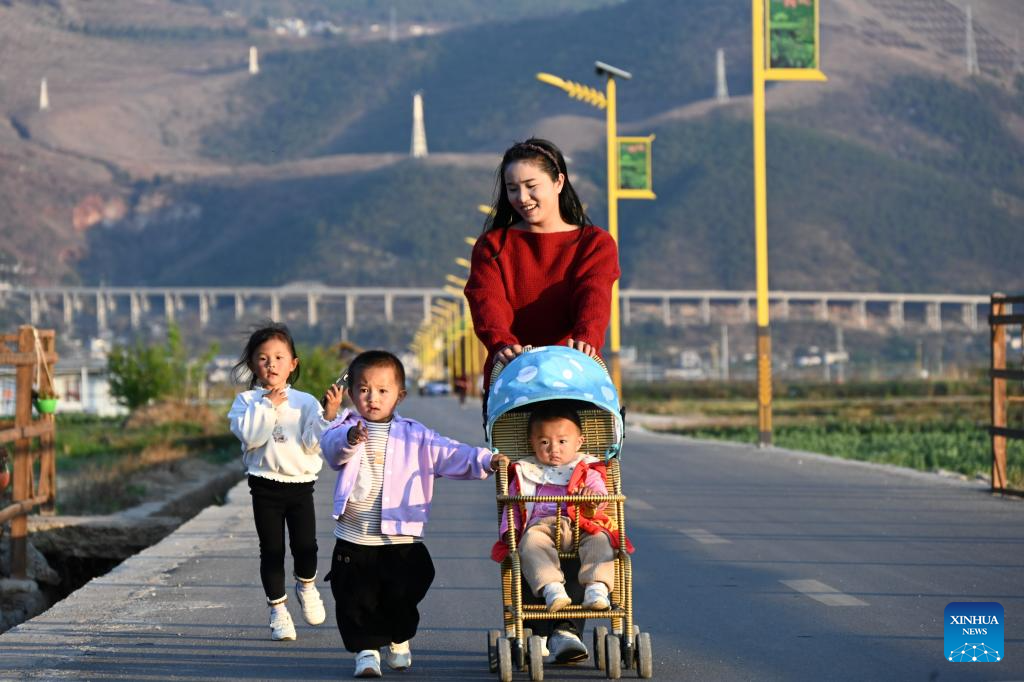
Villagers stroll in Baiwu Village of Huize County, southwest China's Yunnan Province, March 24, 2026.
Baiwu Village once served as a major hub for south-to-north copper transport during the Ming and Qing dynasties (1368-1911), giving birth to many ancient dwellings and copper transport heritage.
In recent years, local authorities have endeavored to boost cultural tourism in the village by preserving and utilizing its traditional architecture, while introducing new businesses including bookstores, coffee shops, and homestays.
In 2025, the village received about 245,000 visitors, with 188 households involved in the local tourism industry. (Xinhua/Huang Xiaoyong)

Tourists visit Baiwu Village of Huize County, southwest China's Yunnan Province, March 24, 2026.
Baiwu Village once served as a major hub for south-to-north copper transport during the Ming and Qing dynasties (1368-1911), giving birth to many ancient dwellings and copper transport heritage.
In recent years, local authorities have endeavored to boost cultural tourism in the village by preserving and utilizing its traditional architecture, while introducing new businesses including bookstores, coffee shops, and homestays.
In 2025, the village received about 245,000 visitors, with 188 households involved in the local tourism industry. (Xinhua/Zhang Cheng)

Villagers ride past a household in Baiwu Village of Huize County, southwest China's Yunnan Province, March 24, 2026.
Baiwu Village once served as a major hub for south-to-north copper transport during the Ming and Qing dynasties (1368-1911), giving birth to many ancient dwellings and copper transport heritage.
In recent years, local authorities have endeavored to boost cultural tourism in the village by preserving and utilizing its traditional architecture, while introducing new businesses including bookstores, coffee shops, and homestays.
In 2025, the village received about 245,000 visitors, with 188 households involved in the local tourism industry. (Xinhua/Huang Xiaoyong)

An aerial drone photo taken on March 24, 2026 shows ancient dwellings in Baiwu Village of Huize County, southwest China's Yunnan Province.
Baiwu Village once served as a major hub for south-to-north copper transport during the Ming and Qing dynasties (1368-1911), giving birth to many ancient dwellings and copper transport heritage.
In recent years, local authorities have endeavored to boost cultural tourism in the village by preserving and utilizing its traditional architecture, while introducing new businesses including bookstores, coffee shops, and homestays.
In 2025, the village received about 245,000 visitors, with 188 households involved in the local tourism industry. (Xinhua/Peng Yikai)
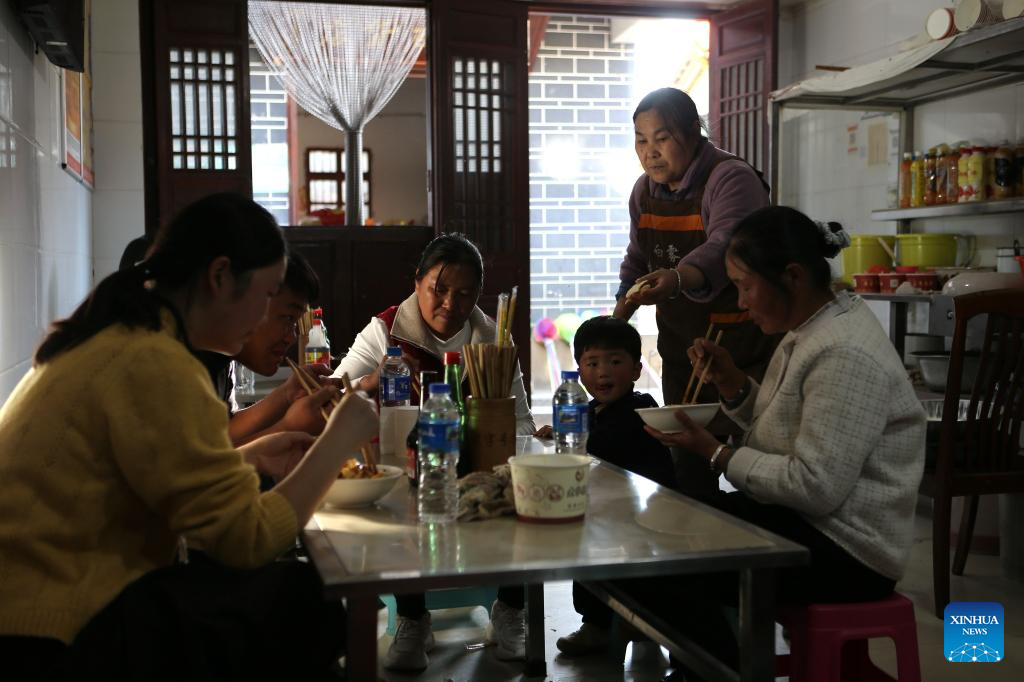
People enjoy cold bean jelly noodles in Baiwu Village of Huize County, southwest China's Yunnan Province, March 24, 2026.
Baiwu Village once served as a major hub for south-to-north copper transport during the Ming and Qing dynasties (1368-1911), giving birth to many ancient dwellings and copper transport heritage.
In recent years, local authorities have endeavored to boost cultural tourism in the village by preserving and utilizing its traditional architecture, while introducing new businesses including bookstores, coffee shops, and homestays.
In 2025, the village received about 245,000 visitors, with 188 households involved in the local tourism industry. (Xinhua/Lin Liping)

This photo taken on March 24, 2026 shows a view of Baiwu Village of Huize County, southwest China's Yunnan Province.
Baiwu Village once served as a major hub for south-to-north copper transport during the Ming and Qing dynasties (1368-1911), giving birth to many ancient dwellings and copper transport heritage.
In recent years, local authorities have endeavored to boost cultural tourism in the village by preserving and utilizing its traditional architecture, while introducing new businesses including bookstores, coffee shops, and homestays.
In 2025, the village received about 245,000 visitors, with 188 households involved in the local tourism industry. (Xinhua/Huang Xiaoyong)
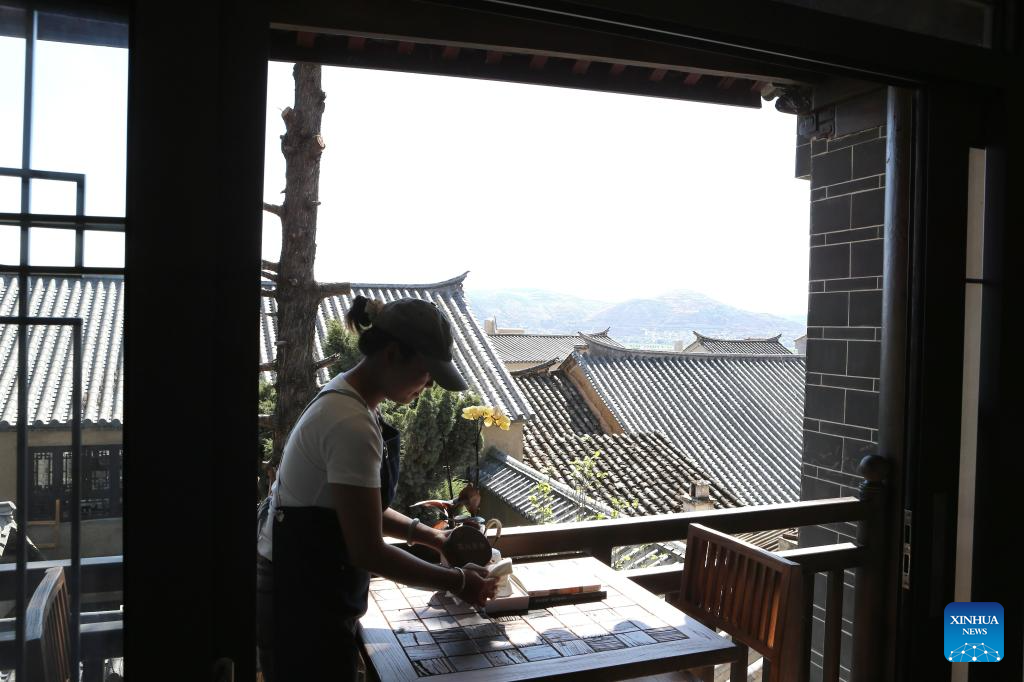
A staff member does the cleaning at a homestay in Baiwu Village of Huize County, southwest China's Yunnan Province, March 24, 2026.
Baiwu Village once served as a major hub for south-to-north copper transport during the Ming and Qing dynasties (1368-1911), giving birth to many ancient dwellings and copper transport heritage.
In recent years, local authorities have endeavored to boost cultural tourism in the village by preserving and utilizing its traditional architecture, while introducing new businesses including bookstores, coffee shops, and homestays.
In 2025, the village received about 245,000 visitors, with 188 households involved in the local tourism industry. (Xinhua/Lin Liping)
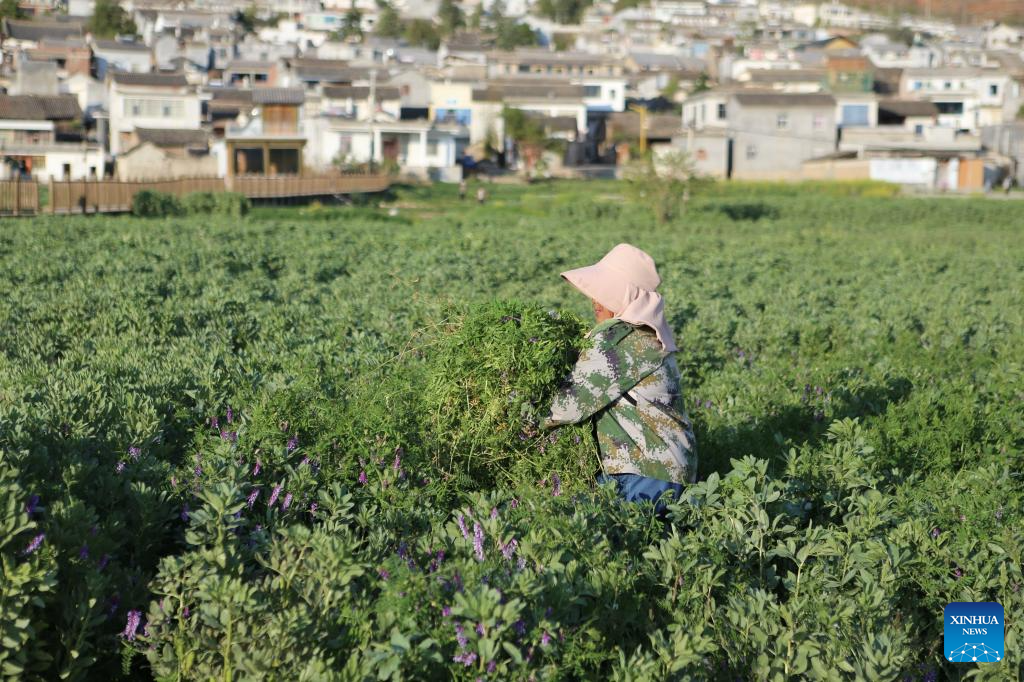
A villager weeds in a field in Baiwu Village of Huize County, southwest China's Yunnan Province, March 24, 2026.
Baiwu Village once served as a major hub for south-to-north copper transport during the Ming and Qing dynasties (1368-1911), giving birth to many ancient dwellings and copper transport heritage.
In recent years, local authorities have endeavored to boost cultural tourism in the village by preserving and utilizing its traditional architecture, while introducing new businesses including bookstores, coffee shops, and homestays.
In 2025, the village received about 245,000 visitors, with 188 households involved in the local tourism industry. (Xinhua/Lin Liping)
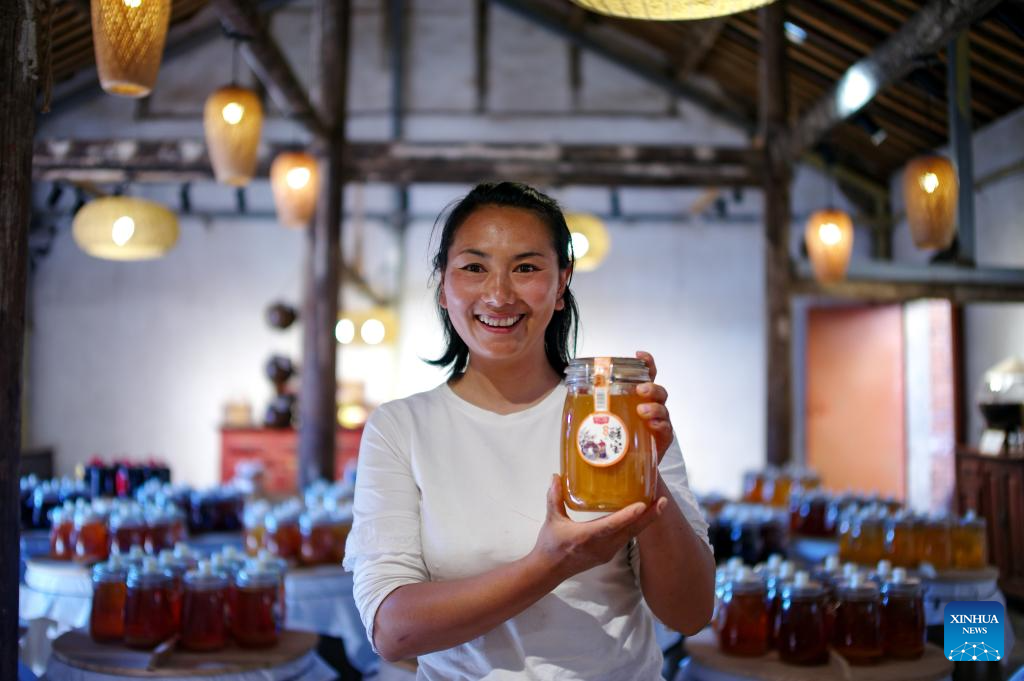
A villager shows a local beverage in Baiwu Village of Huize County, southwest China's Yunnan Province, March 24, 2026.
Baiwu Village once served as a major hub for south-to-north copper transport during the Ming and Qing dynasties (1368-1911), giving birth to many ancient dwellings and copper transport heritage.
In recent years, local authorities have endeavored to boost cultural tourism in the village by preserving and utilizing its traditional architecture, while introducing new businesses including bookstores, coffee shops, and homestays.
In 2025, the village received about 245,000 visitors, with 188 households involved in the local tourism industry. (Xinhua/Zhang Cheng)
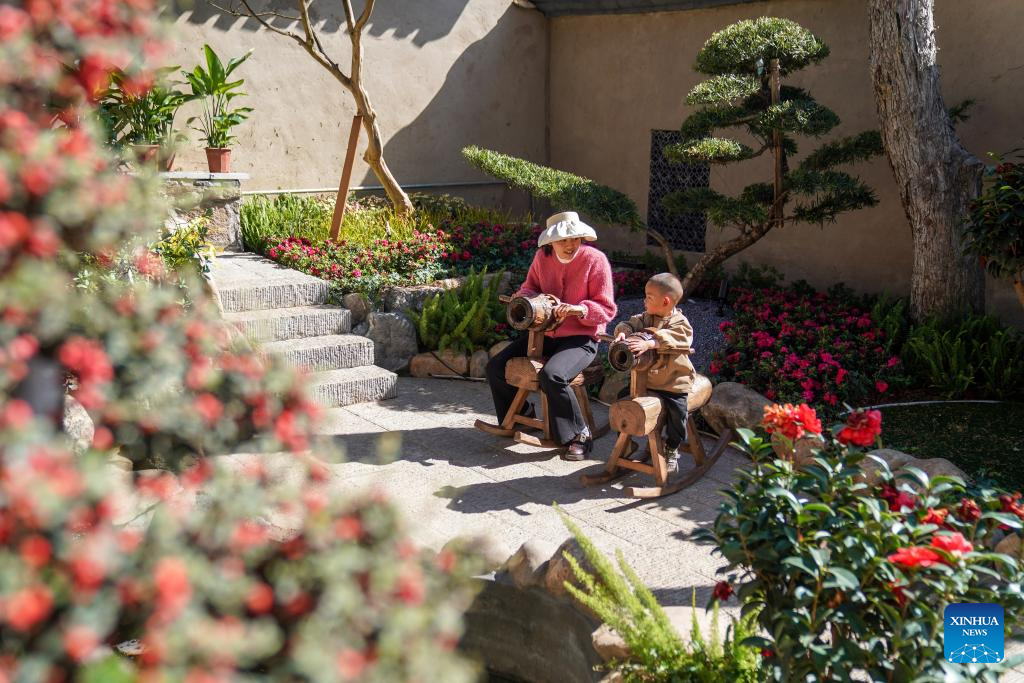
Tourists have fun in Baiwu Village of Huize County, southwest China's Yunnan Province, March 24, 2026.
Baiwu Village once served as a major hub for south-to-north copper transport during the Ming and Qing dynasties (1368-1911), giving birth to many ancient dwellings and copper transport heritage.
In recent years, local authorities have endeavored to boost cultural tourism in the village by preserving and utilizing its traditional architecture, while introducing new businesses including bookstores, coffee shops, and homestays.
In 2025, the village received about 245,000 visitors, with 188 households involved in the local tourism industry. (Xinhua/Peng Yikai)
You May Like
-
Over 200 Han Dynasty relics on display in Hong Kong to feast...
The opening ceremony of the exhibition titled "The Majestic Han: A Golden Age of Vigor and Cultural Integration" was held on Thursday in Hong Kong, featuring ...
InKunming 2026-03-23 -
Market showcasing charm of intangible cultural heritage held...
People visit a market featuring intangible cultural heritage activities in Haikou, south China's Hainan Province, March 21, 2026.
InKunming 2026-03-23 -
Rapeseed flowers, peach flowers in full bloom in Bomi County...
A drone photo taken on March 20, 2026 shows peach blossoms and a field of rapeseed flowers in Bomi County of Nyingchi City, southwest China's Xizang Autonomous ...
InKunming 2026-03-23 -
Letter from Lhasa: Planting green miracle on "roof of world"
When I first arrived in Lhasa, capital of southwest China's Xizang Autonomous Region, for work, I would often hear a story: in northern Xizang's Nagqu, anyone...
InKunming 2026-03-23 -
People enjoy spring across China
People view various kites in Xin'an County of Luoyang, central China's Henan Province, March 21, 2026. People step outdoors and embrace nature as spring unfolds...
InKunming 2026-03-23 -
1st Int'l Day of Taijiquan celebrated in Europe
Taijiquan enthusiasts across Europe performed the Chinese traditional martial arts together to mark the first International Day of Taijiquan on Saturday.
InKunming 2026-03-23 -
Why foreign artists move to China's "porcelain capital?"
Drawn by centuries-old craftsmanship, specialized skills and a vibrant creative community, artists from around the world are choosing to live and create in Jing...
InKunming 2026-03-20 -
Culture helps strengthen exchanges
During a visit to the Palace Museum in Beijing in January, veteran guide Wang Xiaoxin had the opportunity to give visiting Finnish Prime Minister Petteri Orpo a...
InKunming 2026-03-19 -
Thai youth immersed in culture of Quanzhou, China-Xinhua
Chinese and Thai youth recently came together for a week of international cultural exchange in Quanzhou, east China. The group toured heritage sites and cultura...
InKunming 2026-03-18 -
Sour soup from Guizhou makes a splash overseas too
While its strange scent may put some off at first, its bright red hue hints at a thrilling taste adventure of sour and spicy flavor. Yet once you hold your nose...
InKunming 2026-03-17