Kunming Institute of Botany Unveils the Science Behind Coffee Flavor
Source: InKunming | 2026-03-17 | Editor:Rachel
Have you ever wondered whether the unique floral and fruity notes in a cup of coffee might originate from invisible “micro-factories” within the coffee cherry? A recent breakthrough study by the Kunming Institute of Botany, Chinese Academy of Sciences, offers a compelling answer.
A research team led by Qiu Minghua at the State Key Laboratory of Phytochemistry and Natural Medicines, Kunming Institute of Botany, has for the first time demonstrated that endophytic fungi in coffee are a key source of flavor enhancement during fermentation. This finding offers a novel “precision fermentation” strategy for Yunnan’s coffee industry, as Yunnan enters a critical phase in its shift toward specialty coffee production.
As China’s largest Arabica coffee–producing region, Yunnan has in recent years transformed from a supplier of low-cost raw materials into an emerging force in the specialty coffee sector. Data show that specialty-grade coffee accounted for 31.6% of Yunnan’s total output in 2024. However, achieving consistent and stable flavor profiles remains a key technical challenge for the industry’s sustainable development.
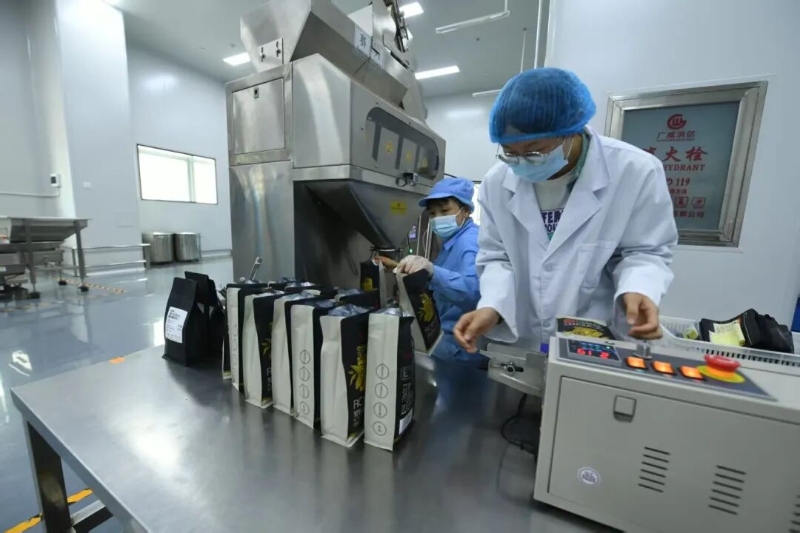
To address this challenge, a research team at the Kunming Institute of Botany carried out systematic sampling and analysis of five major Arabica coffee varieties in Yunnan. They established a fungal resource library comprising 655 endophytic strains and identified a standout strain. This endophyte, native to Yunnan coffee plants, acts as a powerful driver of flavor development. Experiments showed that, when used as a fermentation agent, it can increase the coffee’s sensory score by 1.5 points—pushing it above the specialty threshold of 80 points—while imparting distinctive vanilla and cinnamon notes. Metabolomic analysis further revealed that the strain significantly boosts sucrose content in coffee by 17.11%.
“Traditional fermentation relies on externally introduced microorganisms, making it difficult to reproduce the complex flavor profiles unique to local coffee,” the researchers explained. “Endophytic fungi function as a built-in ‘primary processing plant’ within the coffee cherry, efficiently degrading pectin polysaccharides and enhancing the formation of flavor precursors.” This study is the first to scientifically elucidate the concept of “microbial flavor,” demonstrating that specific microbial communities play a critical role in shaping the distinctive regional profile of Yunnan coffee.
The findings were published in the international journal Food Chemistry. The study was supported by the National Natural Science Foundation of China, the Yunnan Joint Fund, and other funding sources.

As Yunnan’s coffee industry shifts from selling raw materials to building brands, the industrial value of this research is already becoming evident. In the past, homogenized flavor profiles often pushed Yunnan coffee into price-based competition. Now, with the average price of green coffee beans exceeding 41 yuan per kilogram, demand for more distinctive and recognizable flavor profiles is growing increasingly strong.
“This study highlights the potential of using indigenous microorganisms to capture Yunnan’s distinctive flavor profiles,” industry experts noted. “Precision fermentation based on native endophytic fungi can not only increase the share of specialty-grade coffee, but also help create flavor signatures with clear geographical identity. For instance, the vanilla and cinnamon notes identified in the study could, in the future, serve as a sensory ‘signature’ for specific coffee-growing regions in Yunnan.
Just as Kunming is evolving from a distribution hub into the “nerve center” of China’s coffee industry, the growing input of scientific research is steadily raising the value of every cup. From varietal improvement to microbial management, Yunnan coffee is charting a technology-driven path toward premiumization—from bean to cup.
Click here to view the Chinese report
(Editors: Doe, Rachel)
You May Like
-
Embark on a Romantic Coffee Journey in Kunming
Today, Yunnan has developed into the largest coffee-growing province in China, and the "presence" of Yunnan coffee in the international market is also growing s...
InKunming 2025-03-31 -
"Coffee Matters" Praised for Telling China's Poverty Relief ...
On November 27th, 2020, Coffee Matters, a Chinese-English bilingual short animation film was jointly released by China Story Database and Fuxing Road Studio, an...
InKunming 2021-01-13 -
Coffee production in Ximeng, Yunnan
Aerial photo shows villager drying coffee beans in Lisuo Village of Wa Autonomous County of Ximeng, southwest China's Yunnan Province, Dec. 21, 2020.
InKunming 2020-12-23