Explainer: Four years on, what has the China–Laos Railway delivered?
Source: Xinhua | 2025-12-03 | Editor:Evan
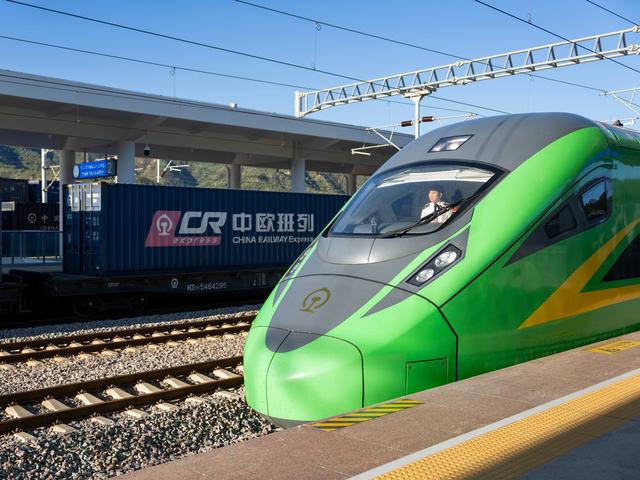
The China-Laos Railway marks its fourth anniversary on Dec. 3. Since its launch four years ago, the 1,035-kilometer railway, connecting Kunming in southwest China with the Lao capital Vientiane, has quickly become a major corridor for travel, trade and regional connectivity.
How has the railway performed?
--Passenger services
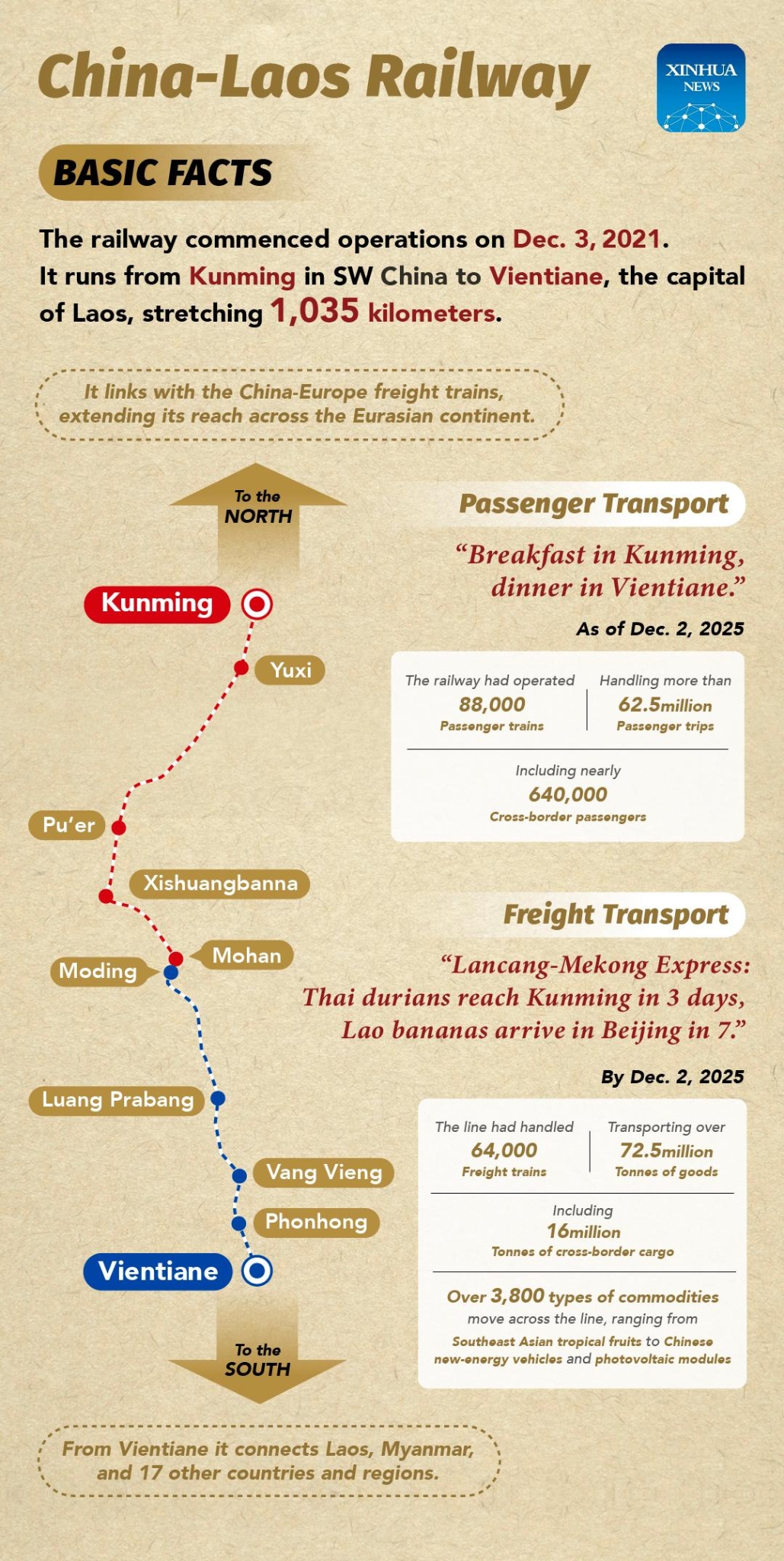
Locals often sum up the convenience with a simple phrase: "Breakfast in Kunming, dinner in Vientiane."
The fastest end-to-end journey now takes 9 hours and 36 minutes, effectively shrinking the distance between the two cities to a single day's travel.
According to official data, by December 2, 2025, the line had operated 88,000 passenger trains, handling more than 62.5 million passenger trips, including nearly 640,000 cross-border travelers.

--Freight services
Its freight operations have expanded just as rapidly. "On the Lancang-Mekong Express, Thai durians reach Kunming in three days, Lao bananas reach Beijing in seven."
By Dec. 2, 2025, the line had run 64,000 freight trains, transporting over 72.5 million tonnes of goods, including 16 million tonnes of cross-border freight.
Over 3,800 types of commodities now move across the line, ranging from Southeast Asian tropical fruits to Chinese new-energy vehicles and photovoltaic modules.
Why does the line matter for the region?
As a landmark project of high-quality Belt and Road Cooperation, the railway has enhanced regional connectivity and served as a new driver of regional economic growth.
--A land-locked country becomes land-linked
For Laos, the railway now gives the country direct access to wider Asian and European markets.
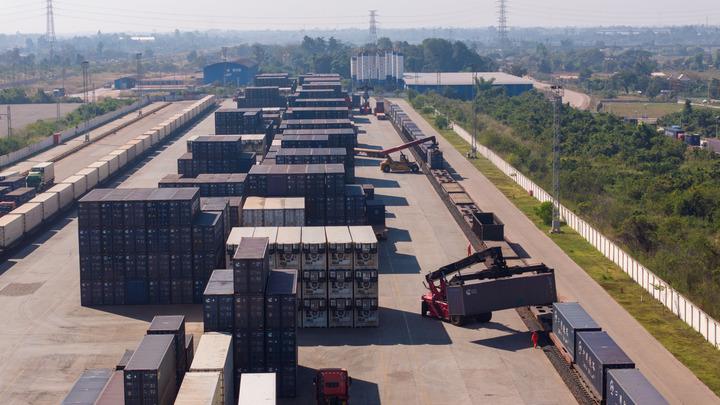
To the north, it connects to the China-Europe freight trains, also known as China Railway Express, enabling goods from Laos and Thailand to reach Europe in as little as 15 days via transfer hubs in China. To the south, it links to Laos, Myanmar and 17 other countries and regions, forming a growing web of overland transport routes.
The opening of the Vientiane South transshipment hub has further integrated Lao rail operations with networks in Thailand and Malaysia. This has shortened delivery times for regional specialties, such as durians, mangosteens and beer, into both Chinese and European markets.
Another less visible impact of the railway lies in skills development. China has sent 1,252 technical and managerial staff to Laos, who have helped train 1,475 local railway workers, including 32 fully qualified Lao locomotive drivers, effectively forming the country's first generation of railway talent.
--Cuts in transport costs
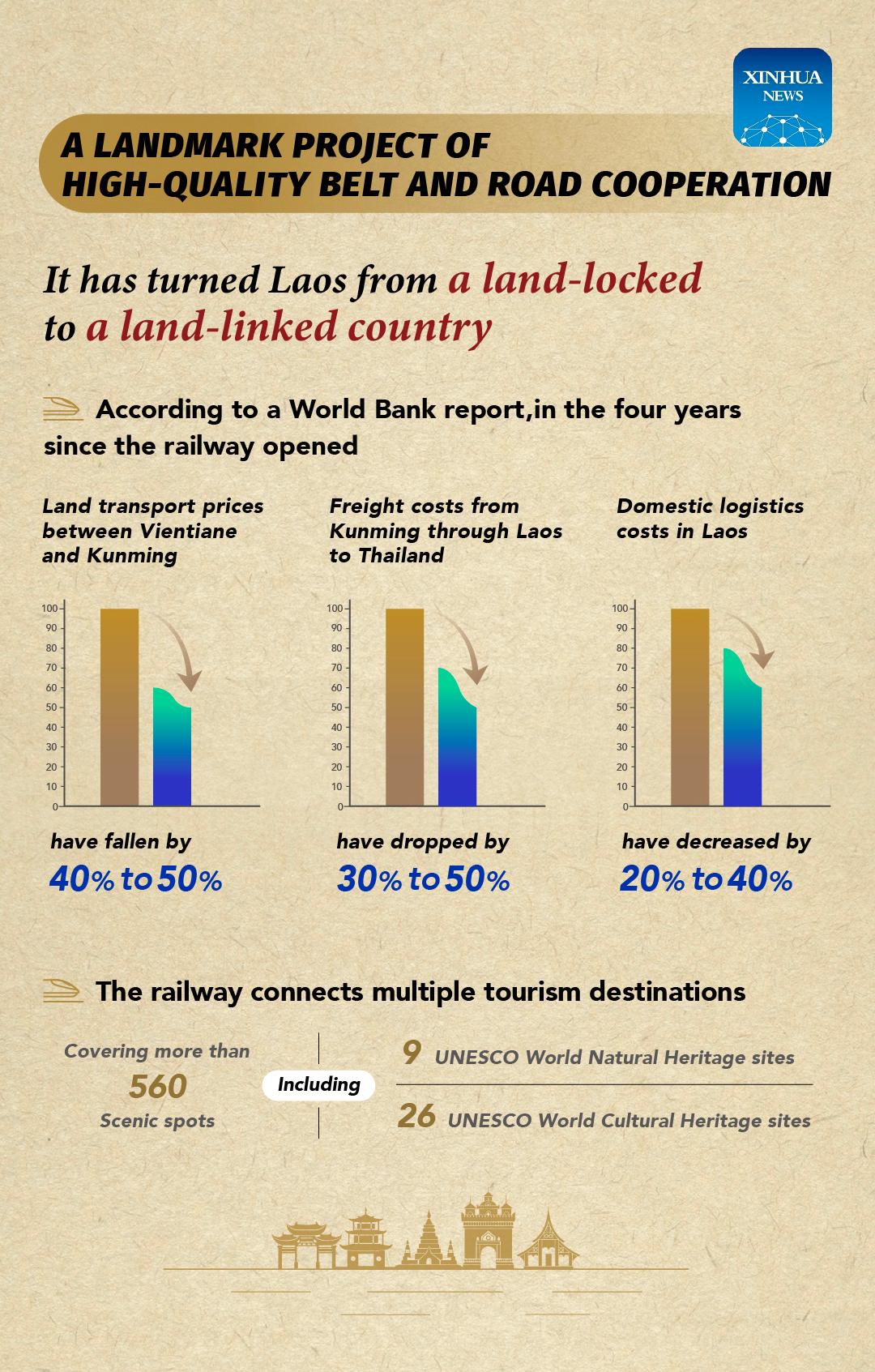
According to a World Bank report, in the four years since the railway opened, land transport prices between Vientiane and Kunming have fallen by 40% to 50%, and freight costs from Kunming through Laos to Thailand have dropped by 30% to 50%. Meanwhile, domestic logistics costs in Laos decreased by 20% to 40%.
--A rising tourism corridor
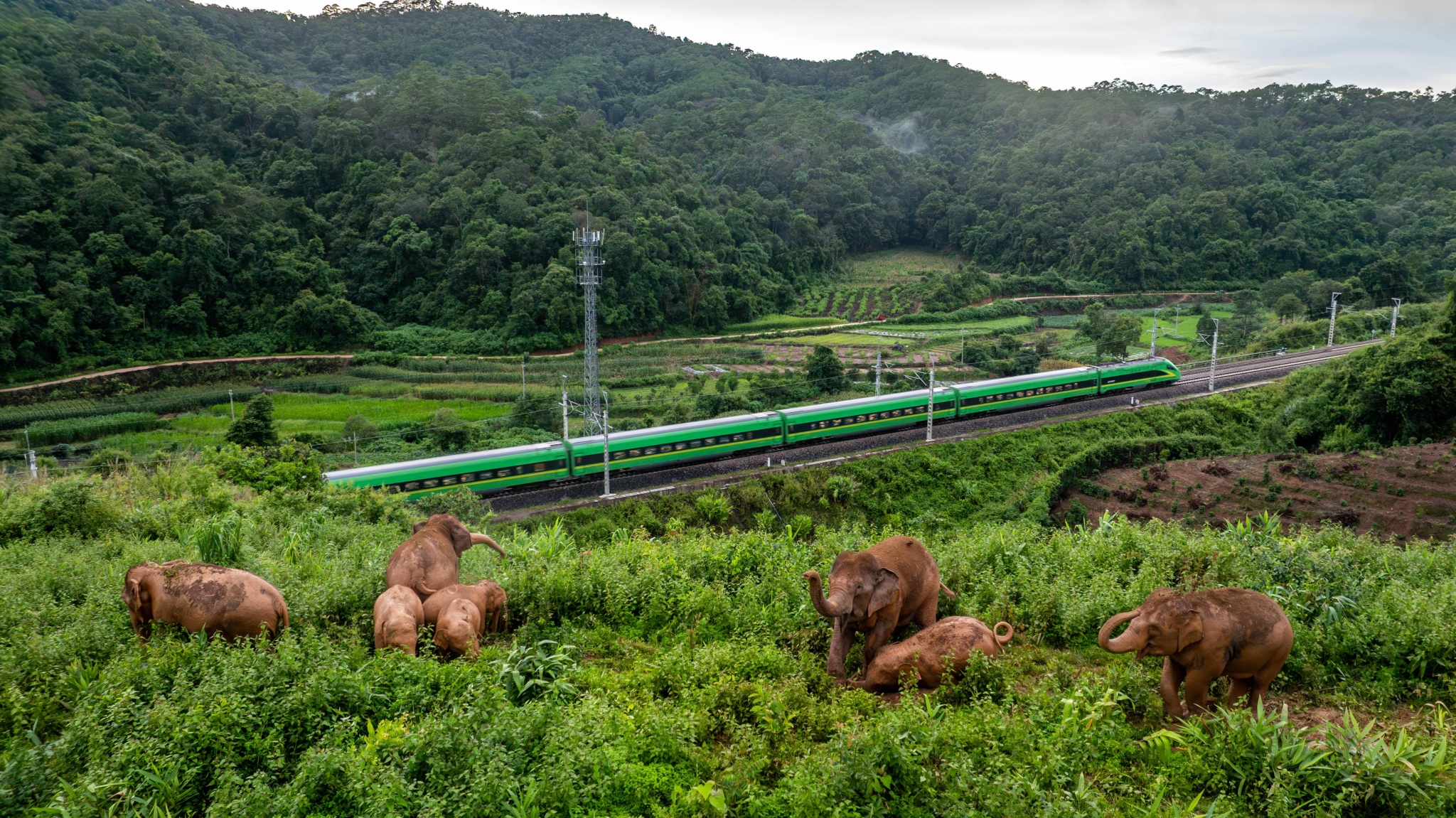
The railway is also emerging as a major tourism route. Since opening, it has operated 2,674 international passenger trains. Daily border crossings have surged from around 300 at the start to a peak of 1,400. Travellers from more than 120 countries have used the service to visit Vientiane, explore Yunnan or travel deeper into China.
Along its length, the railway links more than 560 scenic attractions, including nine UNESCO world natural heritage sites and 26 world cultural heritage sites, turning it into a rising tourism belt.
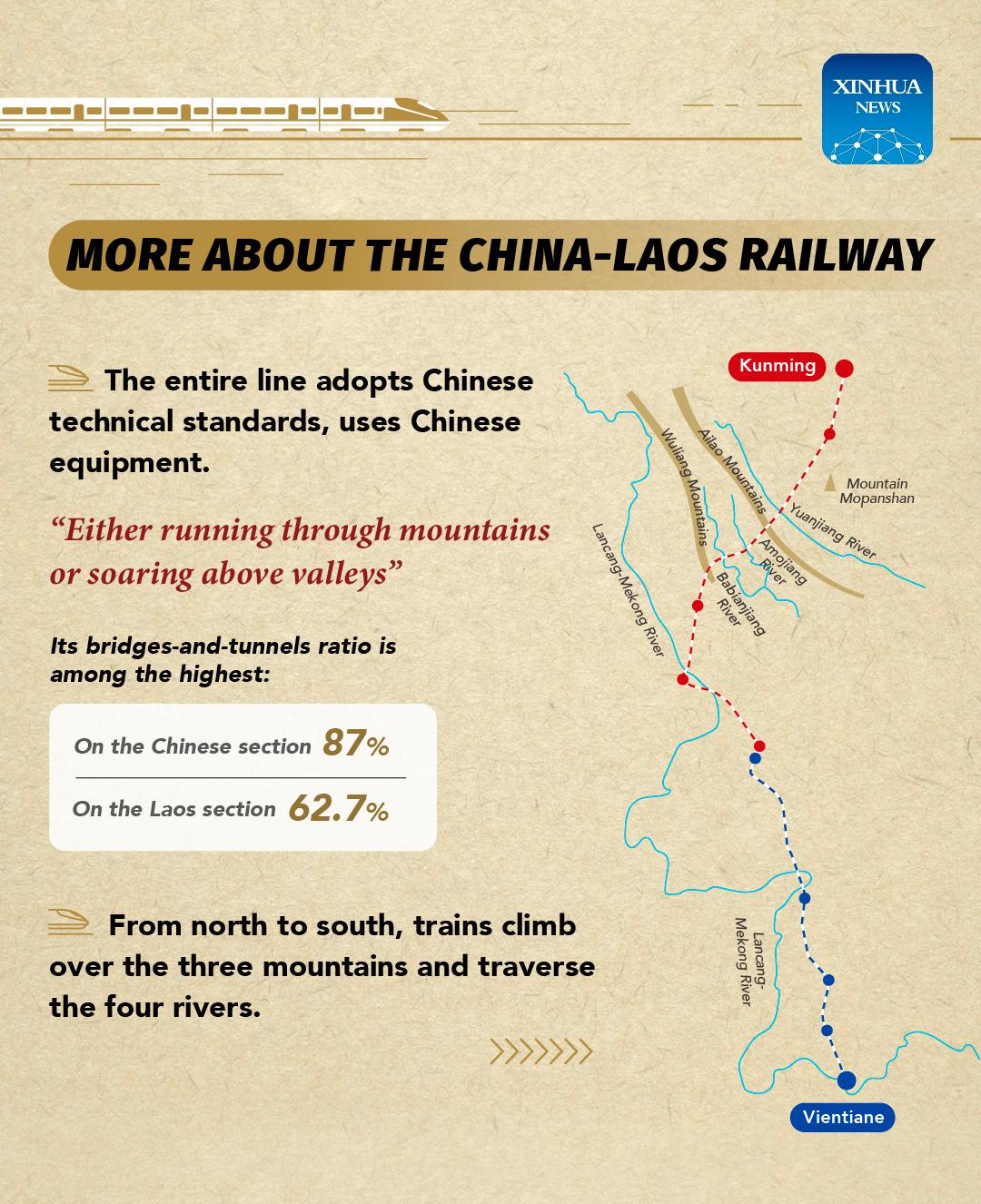
Four years on, the China–Laos Railway has grown from a new cross-border link into a "golden corridor," reshaping transport, trade and travel across mainland Southeast Asia.
---
By Xinhua Reporters Wang Jingyun, Ding Yiquan
All data is provided by China State Railway Group Co., Ltd.
You May Like
-
Chinese yuan strengthens to 7.0796 against USD Wednesday
The central parity rate of the Chinese currency renminbi, or the yuan, strengthened 30 pips to 7.0796 against the U.S. dollar Wednesday, according to the China ...
InKunming 2025-11-26 -
China's Shenzhou-22 spaceship docks with space station combi...
China's Shenzhou-22 spaceship successfully docked with the space station combination Tuesday, according to the China Manned Space Agency.
InKunming 2025-11-26 -
AI-related skills prove to be hot commodity
As all sectors in China prepare for "smart" transformation due to rapidly developing AI technology, market demand for AI-related talent continues to grow, with ...
InKunming 2025-11-22 -
Pet-friendly Spaces on the Rise in China
InKunming 2025-11-22 -
Xinhua Headlines: China's historic National Games highlights...
InKunming 2025-11-22 -
GLOBALink | China "very important to us": CEO of U.S. Soybea...
China is "very important to us," said Jim Sutter of the U.S. Soybean Export Council, noting that the Asian country is the world's largest soybean importer and t...
InKunming 2025-11-21 -
Global mayors connect with Nanjing's 600-year-old heritage
InKunming 2025-11-21 -
China's new C919 is given a Dubai debut
China's homegrown C919 aircraft made its debut at the 19th Dubai Airshow.
InKunming 2025-11-21 -
The code of ethnic harmony on Barkhor Street
With a history of over 1,300 years, Barkhor Street in Lhasa stands as a vivid example of cultural exchange and integration among different ethnic groups.
InKunming 2025-11-20 -
Hong Kong aims to capitalize on National Games
By successfully co-hosting the ongoing 15th National Games, the Hong Kong Special Administrative Region has demonstrated that it has what it takes to evolve bey...
InKunming 2025-11-20