China Focus: Millennium-old sites on Silk Road open in China, offer gateway to history
Source: Xinhua | 2025-05-07 | Editor:Ines
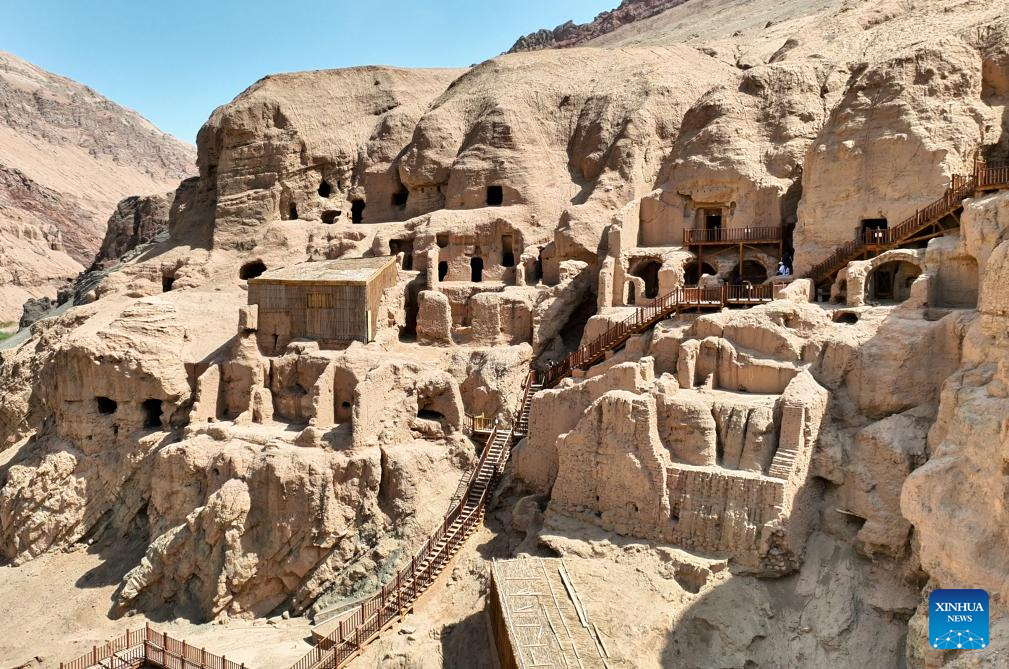
A drone photo shows a view of the Tuyugou Grottoes in Turpan, northwest China's Xinjiang Uygur Autonomous Region May 1, 2025. Two major archaeological sites along the ancient Silk Road opened to the public in northwest China on Thursday, the first day of the May Day holiday, offering new choices for travelers keen to explore the exchanges between Eastern and Western civilizations over a millennium ago. (Xinhua)
Two major archaeological sites along the ancient Silk Road opened to the public in northwest China on Thursday, the first day of the May Day holiday, offering new choices for travelers keen to explore the exchanges between Eastern and Western civilizations over a millennium ago.
One of these newly opened sites, the Tuyugou Grottoes, is located in the city of Turpan, Xinjiang Uygur Autonomous Region. This complex, built around the fifth century, boasts 157 caves carved into cliffs, three temples and nine pagodas.
Five caves and a Buddhist temple at the grottoes have opened to the public, offering 300 visitor slots per day, said Liu Yi, a cultural relics preservation official of Turpan's cultural heritage bureau.
Ten archaeological excavations since 2010 at the site have unearthed abundant artifacts, including Buddhist scriptures in multiple languages as well as documents like taxation records and loan contracts.
China has invested more than 77 million yuan (about 10.7 million U.S. dollars) in restoring and reinforcing these grottoes in recent years.
"The Tuyugou Grottoes are a vivid testimony to the cultural and religious exchanges in the Turpan Basin," said Xia Lidong, associate researcher at the Institute of Archaeology, Chinese Academy of Social Sciences.
The ruins of Xuanquanzhi in the city of Dunhuang, Gansu Province, also opened to the public on Thursday.
Dating back some 2,000 years to the Western Han Dynasty, the site back then served as a comprehensive post station for mail and information deliveries, as well as the reception of messengers, officials and foreign guests. It is one of the Silk Road sites that were added to the UNESCO World Heritage List in 2014.
Following excavations in the early 1990s, the site was accessible only to research teams. Thanks to investments totaling over 309 million yuan, China strengthened preservation of the site and developed tourism facilities.
"Through its remarkable efforts in cultural preservation, China has reminded the world that heritage is not static. It lives, breathes and teaches," said Qaiser Nawab, chairman of the Belt and Road Initiative for Sustainable Development.
Addressing the needs of international tourists, the site's guiding and interpretation services are available in multiple languages.
Samuel Fanning, a tourist and history lover from Canada, was attracted by Turpan's ancient architecture.
"I planned to stay in Xinjiang for seven days, but it will end up being 12 days. I think this can speak to how enjoyable it is to visit here," Fanning said, adding that he will also visit Dunhuang.
Qiu Jian, head of the Gansu provincial cultural heritage bureau, revealed that global interest in the ancient Silk Road is steadily rising.
"Through the gradual opening of more cultural heritage sites, we aim to present an overall and more diverse picture of the Silk Road culture to the public," said Qiu.
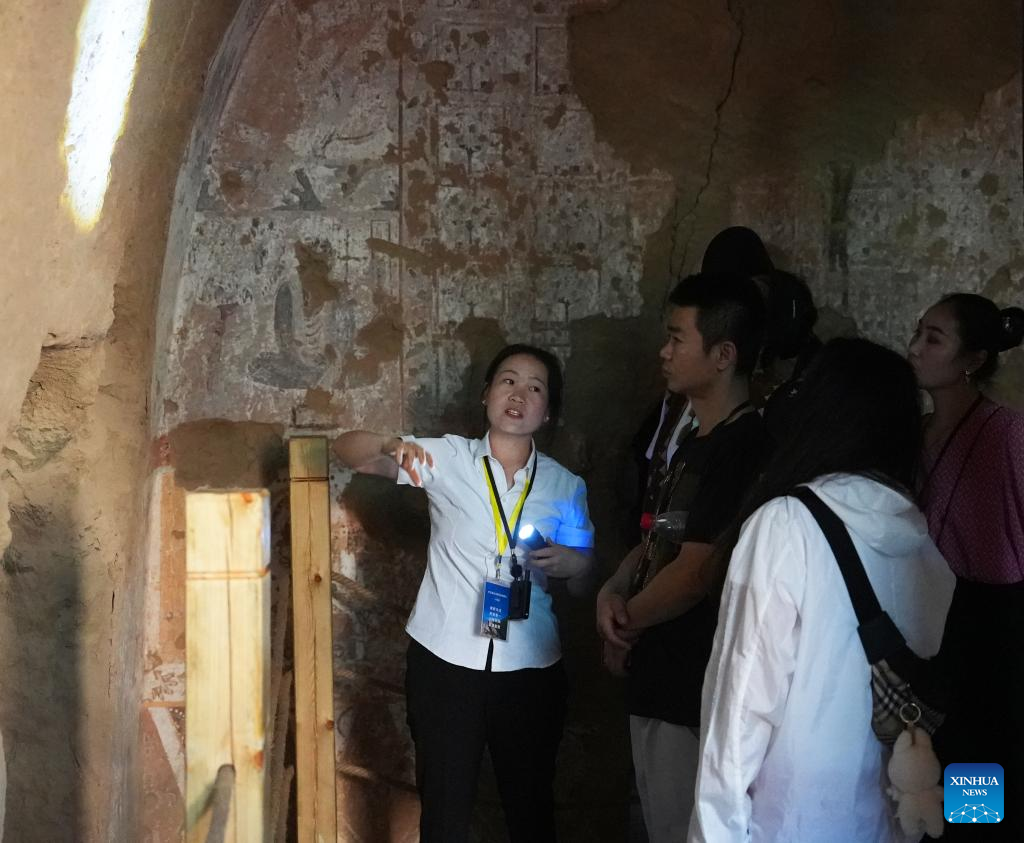
A guide introduces the murals to visitors at the Tuyugou Grottoes in Turpan, northwest China's Xinjiang Uygur Autonomous Region, May 1, 2025. Two major archaeological sites along the ancient Silk Road opened to the public in northwest China on Thursday, the first day of the May Day holiday, offering new choices for travelers keen to explore the exchanges between Eastern and Western civilizations over a millennium ago. (Xinhua)
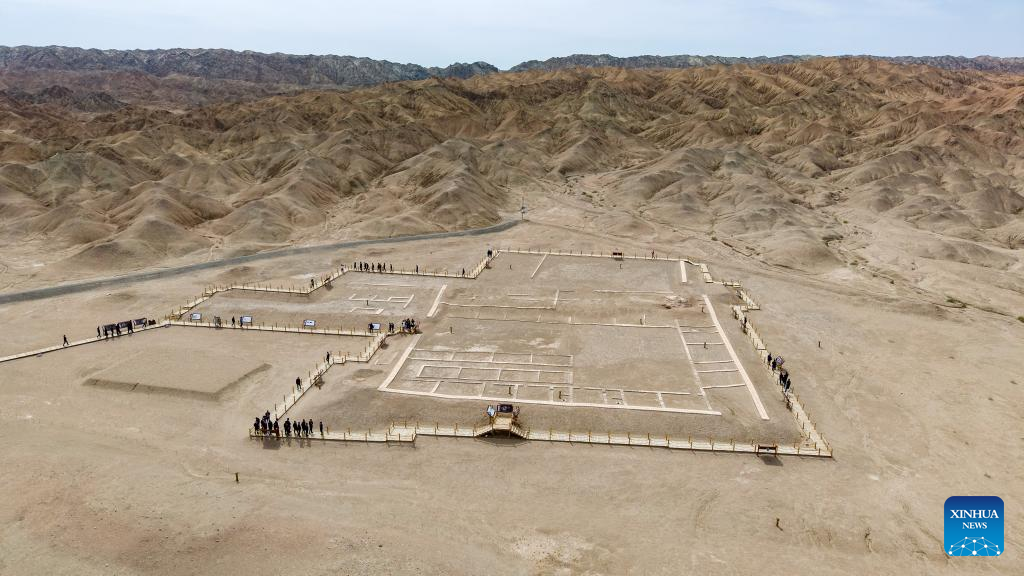
A drone photo shows guests visiting the ruins of Xuanquanzhi in Dunhuang, northwest China's Gansu Province, April 29, 2025. Two major archaeological sites along the ancient Silk Road opened to the public in northwest China on Thursday, the first day of the May Day holiday, offering new choices for travelers keen to explore the exchanges between Eastern and Western civilizations over a millennium ago. (Xinhua/Lang Bingbing)
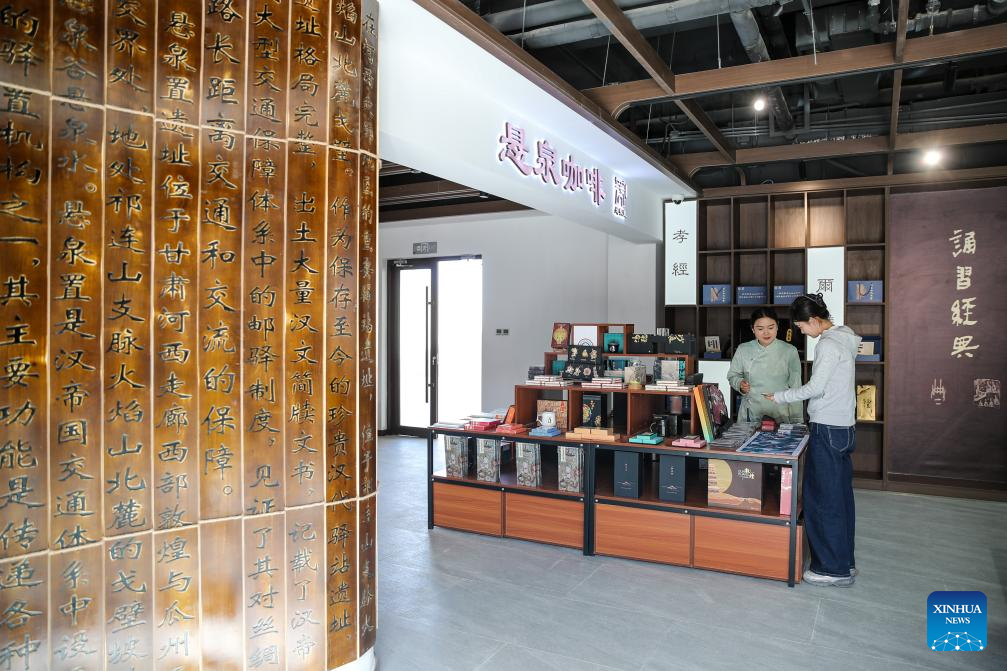
A visitor buys souvenirs at the tourist site of the ruins of Xuanquanzhi in Dunhuang, northwest China's Gansu Province, April 29, 2025. Two major archaeological sites along the ancient Silk Road opened to the public in northwest China on Thursday, the first day of the May Day holiday, offering new choices for travelers keen to explore the exchanges between Eastern and Western civilizations over a millennium ago. (Xinhua/Lang Bingbing)

Performers dance at the opening ceremony of the ruins of Xuanquanzhi in Dunhuang, northwest China's Gansu Province, April 29, 2025. Two major archaeological sites along the ancient Silk Road opened to the public in northwest China on Thursday, the first day of the May Day holiday, offering new choices for travelers keen to explore the exchanges between Eastern and Western civilizations over a millennium ago. (Photo by Zhang Xiaoliang/Xinhua)
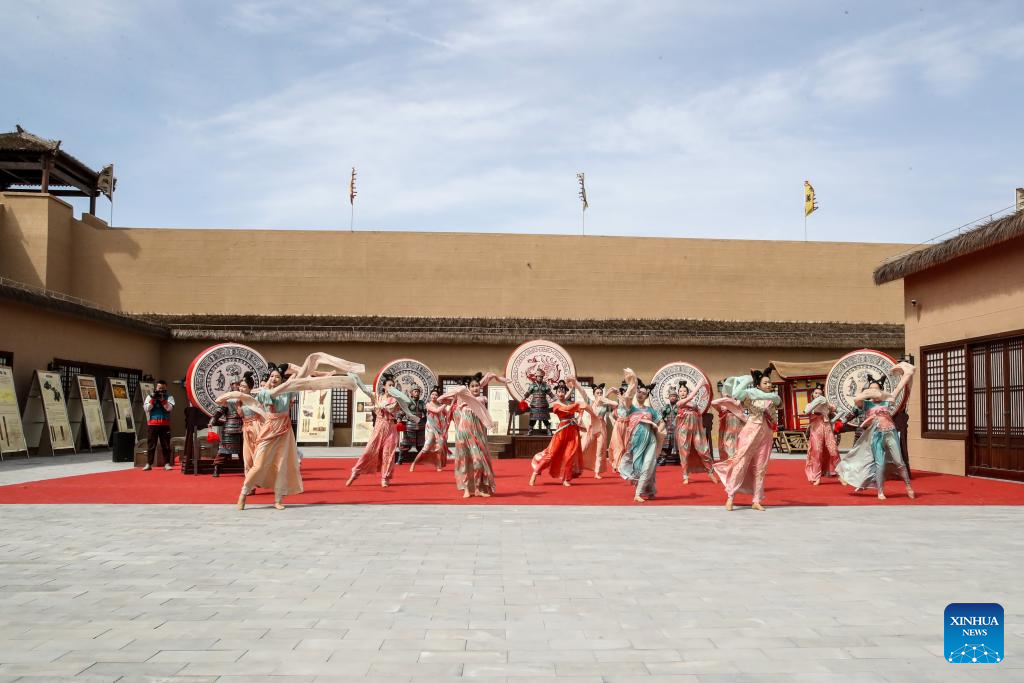
Performers dance at the opening ceremony of the ruins of Xuanquanzhi in Dunhuang, northwest China's Gansu Province, April 29, 2025. Two major archaeological sites along the ancient Silk Road opened to the public in northwest China on Thursday, the first day of the May Day holiday, offering new choices for travelers keen to explore the exchanges between Eastern and Western civilizations over a millennium ago. (Xinhua/Lang Bingbing)
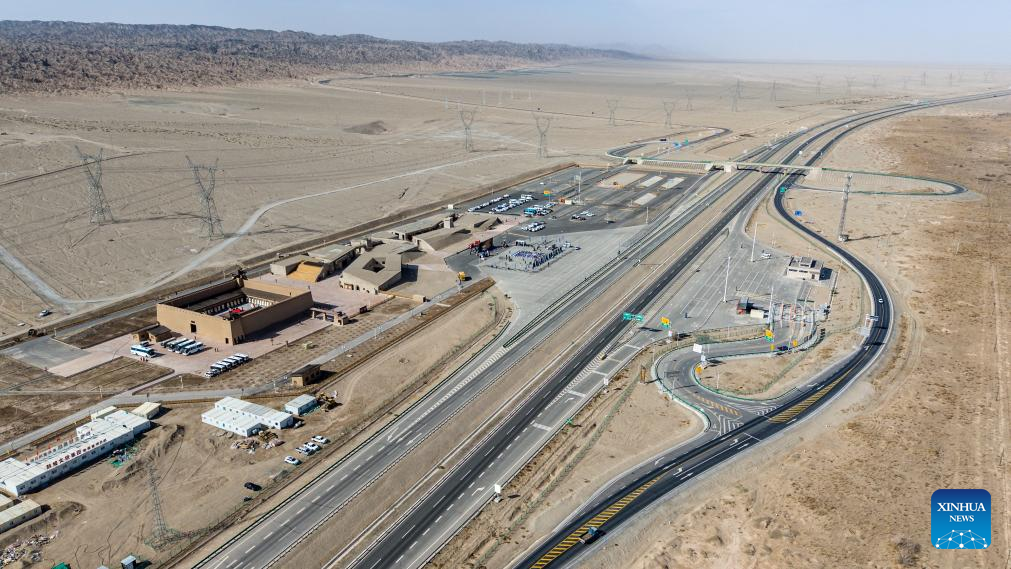
An areial drone photo shows a view of the ruins of Xuanquanzhi in Dunhuang, northwest China's Gansu Province, April 29, 2025. Two major archaeological sites along the ancient Silk Road opened to the public in northwest China on Thursday, the first day of the May Day holiday, offering new choices for travelers keen to explore the exchanges between Eastern and Western civilizations over a millennium ago. (Xinhua/Lang Bingbing)
You May Like
-
AmazingChina | Unveiling Hexi Corridor: A trip to ancient Si...
As her journey to China's Gansu Province concludes, Xinhua reporter Maria Alekseeva remains captivated by the 1,600-year-old Mati Temple Grottoes, the dramatic ...
InKunming 2025-04-27 -
Unveiling Hexi Corridor: A trip to ancient Silk Road hub
As her journey to China's Gansu Province concludes, Xinhua reporter Maria Alekseeva remains captivated by the 1,600-year-old Mati Temple Grottoes, the dramatic ...
InKunming 2025-04-25 -
China-Laos Railway: a Golden Corridor and New Silk Road of H...
With the support of the China-Laos Railway, Kunming’s potential for growth is limitless, promising a bright future ahead.
InKunming 2024-11-11 -
Silk Road int'l cultural expo participants call for cooperat...
More than 800 representatives from 50 countries, regions and international organizations have gathered at the 7th Silk Road (Dunhuang) International Cultural ...
InKunming 2024-09-23 -
'Green Silk Road' a major step on clean energy journey
The world's biggest single-site PV plant, built with Chinese expertise, underlines the UAE's desire to tackle climate change. Wang Yuke reports from Hong Kong.
InKunming 2023-09-25 -
Ancient Silk Road shines with new vitality
Dunhuang, a major stop on the ancient Silk Road which witnessed the trade of silk and porcelain over 2,000 years ago, is seeing new vitality and booming trade...
InKunming 2023-09-14 -
Feature: Air Silk Road connects dreams and hearts
Kiplagat Kenneth Kiptoo, a young man from Kenya, took a flight in May for east China's Hangzhou city, where he would pursue a bachelor's degree in intelligent...
InKunming 2023-07-13 -
GLOBALink | Italian art exhibition highlights cultural excha...
An Italian art exhibition, which was held in China's Xi'an, offered an artistic perspective on how the ancient Silk Road had promoted cultural exchanges along t...
InKunming 2023-07-10 -
Interview: Uzbekistan-China cultural cooperation carries for...
Uzbekistan and China have been actively cooperating in the cultural field in recent years, continuing their millennia-old friendship and exchanges between Silk ...
InKunming 2023-05-18 -
GLOBALink | Ancient Maritime Silk Road port discovered in Ch...
An ancient wharf dating back 1,000 years has been discovered in east China, along with remnants of shipwrecks. Let's take a closer look at what other treasures ...
InKunming 2022-10-21