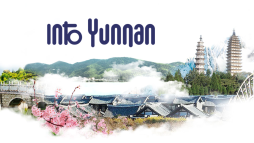
Lijiang in Yunnan Province.
Consisting of five provinces, Yunnan, Guizhou, Guangxi, Sichuan, Tibet, the vast southeast region contains more than 30 ethnic minorities and each has its distinctive folk customs in marriage, language, architecture, religion, festivals and more. Combining all these factors, the southwest has gradually become a hot spot for tourism in China.
Many travelers may have developed the illusion that Lijiang epitomizes the entirety of Yunnan Province; but it only represents a tip of the whole southwestern culture iceberg. Likewise, the Naxi minority doesn't represent all minorities in Yunnan. Yet the largest province with ethnic culture offers a great diversity. Take festivals as an example; one of the most influential festivals in Yunnan Province is the Water-Splashing Festival of Dai in Xishuangbanna. However, in April alone, there are as many as 12 festivals held in Yunnan. As to marriage customs, the Mosuo people adopt a type similar to polygamy system. It's amazing to see how totally different systems, customs and habits blend together perfectly; and how diversification (25 minorities in Yunnan Province) develops within a single entity.
Others provinces are in an awkward position too, buried deeply in the easternmost mountains, ethnic minorities in Guizhou pose a semi-hidden civilization gesture in modern society. The Miao, artistically flourished at home and abroad for their unique silverware, embroidery skills, keeps untouched their mysterious herbal medicine, wine, tea, and a plethora of traditional "green" notions. It's more common today when we see people find their inspirations (music, costume, architecture...) from visiting these areas, participating in their daily activities. The Miao are somewhat lucky, as there are a plenty of ethnic groups (Laohan, Tujia...) in Guizhou.
Go further west in Sichuan--the province of abundance. Amazingly, around 15 cultures (including the nomadic) converge, spark and glow there and live peacefully. If you ever see the book Three cups of tea, you may also be deeply touched by the same hospitality from the Tibetan family who brings you the best of their self-brewed Chhaang. Your entire life may also be changed like Greg Mortenson. (The writer of the book).
In Guangxi Province, the Zhuan/Yao are the two main groups. Their astonishing works have inscribed on the surface of the hills. Longji is the evidence alive –these hardworking people creatively transformed the mountains into farmlands. Also renowned is the Dong Minority, architectural skills--building houses, bridges without using a single nail, and refined craftsmanship and inherited intelligence has yet to be made public.
For certain ethnics, their culture are still like a treasure unnoticed. However diverse in race and distributed sporadically in southwestern lands, these groups all share a common spirit --"One for all, all for one", that's the way they live.