返回顶部
返回顶部
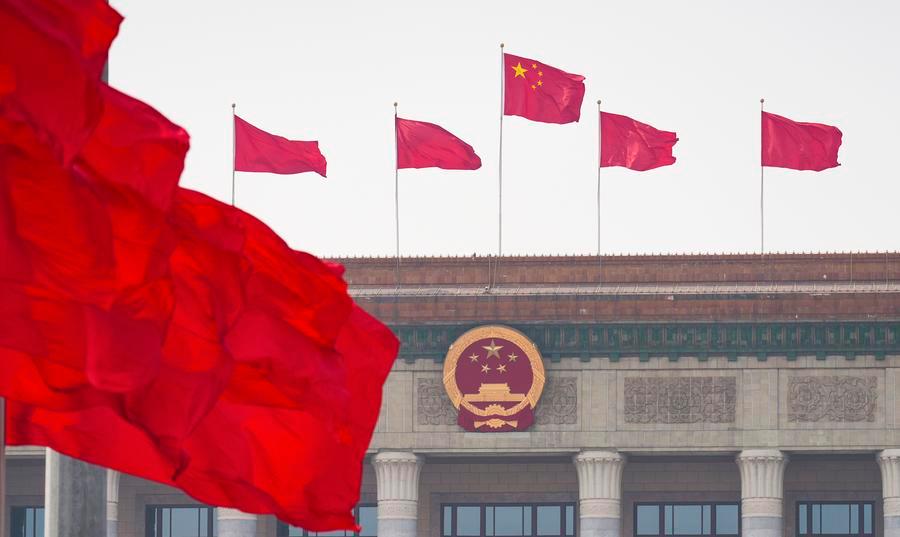
This photo taken on March 12, 2026 shows the Great Hall of the People, the venue for the closing meeting of the fourth session of the 14th National People's Congress (NPC), in Beijing, capital of China. (Xinhua/Li Yan)
China has not only turned green concepts into development outcomes but also translated them into the language of law, setting an example for other nations, said Pavel Troshchinsky, head of the Center for Political Research and Forecasting at the Institute of China and Contemporary Asia of the Russian Academy of Sciences.
BEIJING, March 13 (Xinhua) -- Chinese lawmakers on Thursday voted to adopt the Ecological and Environmental Code at the closing meeting of the fourth session of the 14th National People's Congress. As China's second formal statutory code following the adoption of the Civil Code in 2020, the legislation aims to protect the ecological environment and promote green development through the strictest systems and the most rigorous rule of law.
Overseas media and experts have closely followed the adoption of the code, calling it a milestone in the evolution of China's legal system and a valuable reference for the international community. They believe it also reflects China's long-term commitment to green transformation and addressing climate change amid a rapidly changing global landscape.
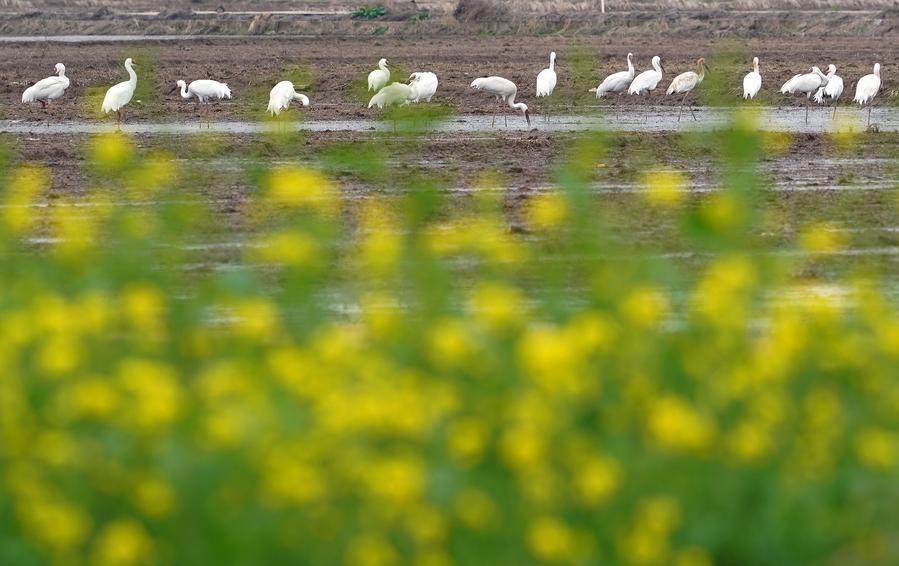
This photo taken on Feb. 27, 2026 shows migratory birds perching and foraging in Yugan County, east China's Jiangxi Province. Poyang Lake, China's largest freshwater lake and an extensive wetland, is a vital wintering and stopover site along the East Asian-Australasian Flyway. (Xinhua/Wan Xiang)
A MILESTONE IN ECOLOGICAL GOVERNANCE
The code aims at safeguarding the harmonious coexistence of humanity and nature, thus consolidating the country's theoretical, institutional and practical achievements in ecological conservation since 2012.
The legislation marks a "very significant step in the evolution of environmental governance in the country," said Meilleur Derek Murindabigwi, CEO of IGIHE, a leading news and media group in Kigali, Rwanda. "For developing countries, this is an important signal. It demonstrates that rapid economic growth and strong environmental protection do not have to be mutually exclusive."
Observers abroad are paying close attention to its concrete provisions. Ado Shaibu, a member of the Tanzanian parliament, noted that the code addresses issues closely related to daily life, including cooking fumes and noise pollution.
Nasser Bouchiba, chairman of the Africa-China Cooperation Association for Development in Morocco, pointed to provisions on emerging environmental issues such as electromagnetic radiation and light pollution, calling them evidence of forward-looking legislation.
Gerd Winter, emeritus professor of law at the University of Bremen in Germany, said the code brings the environmental impact of consumption patterns into the regulatory framework -- an issue often overlooked in Western development models.
Eduardo Tzili-Apango, a researcher at Metropolitan Autonomous University in Mexico City, said that at a time when some countries are reverting to high-carbon development paths, China's continued strengthening of ecological and environmental institutions underscores its leading role in global environmental governance.
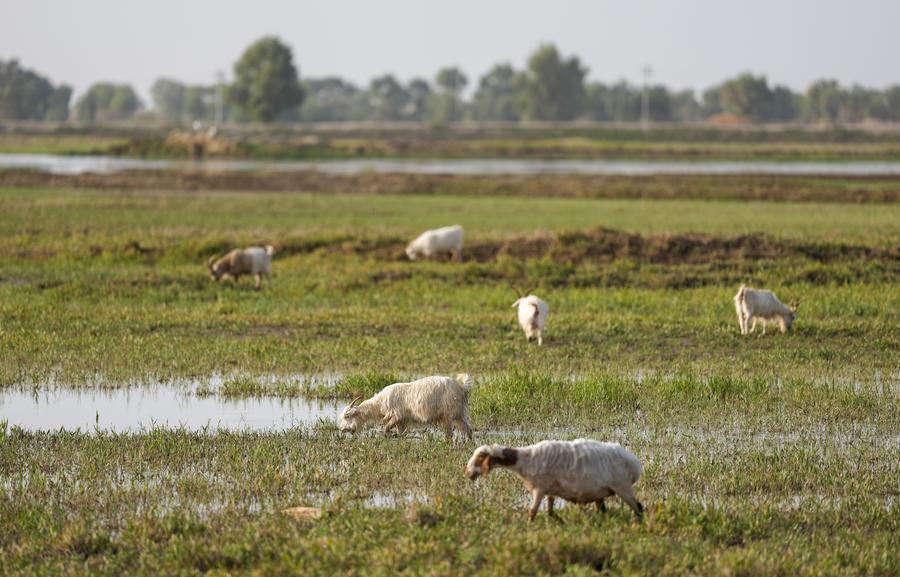
This photo taken on Sept. 20, 2025 shows sheep foraging at a wetland of the Tarim River in Yuli County, Mongolian Autonomous Prefecture of Bayingolin, northwest China's Xinjiang Uygur Autonomous Region. (Xinhua/Jiang Wenyao)
A NEW PATH TO GREEN DEVELOPMENT
China's green development achievements -- from expanding vegetation around the Taklimakan Desert in Xinjiang to the ecological recovery of the Yangtze River, as well as the growing presence of new energy vehicles on Chinese roads -- have drawn global attention.
The international community hopes the new code can provide valuable reference for other countries' green transitions.
Pavel Troshchinsky, head of the Center for Political Research and Forecasting at the Institute of China and Contemporary Asia of the Russian Academy of Sciences, said China has not only turned green concepts into development outcomes but also translated them into the language of law, setting an example for other nations.
China has also contributed practical environmental technologies to the world. Kenya's The Star newspaper reported that as China strengthens environmental governance, its overseas projects in Africa and other regions will benefit local communities.
A commentary on Pakistan's The News International website said the code reflects China's philosophy of harmony between humanity and nature -- pursuing economic growth and public well-being while respecting the environment.
Aly Abdel Aziz, an expert at Egypt's Desert Research Center, said China offers a useful reference for countries seeking to balance economic growth, legal governance and sustainable development.■